• Treasure Hunt
  • Digital Edition
  • Jobs
  • Press Releases
  • Buyers’ Guide
  • TNM Maps
  • Buy Gold & Silver
  • Profile
  • Sign out
  • Regions
    • Canada
    • United States
    • Australia, NZ & South Pacific
    • Mexico and Central America
    • North America
  • Commodities
    • Gold
    • Copper
    • Diamonds
    • Silver
    • Zinc and Lead
    • Nickel
    • Uranium
    • Iron Ore
  • Commentary
    • Commentary
    • Editorial
  • ESG
    • Indigenous Issues
    • Sustainability
    • Environment
  • Suppliers & Equipment
    • Machinery and Equipment
    • Machinery and Equipment Maintenance
    • Technology & innovation
  • Events
    • Submit an Event
    • Upcoming Events
    • Canadian Mining Symposium | October 12 + 13, 2023 | London, UK
    • Superior Glove Webinar | August 15, 2023
  • Contact
  • Subscribe
    • Magazine
    • Newsletter
  • Advertise

COPPER DIVISION: Backbone of the Company

Canadian Mining Journal Staff | June 1, 2000 | 12:00 am

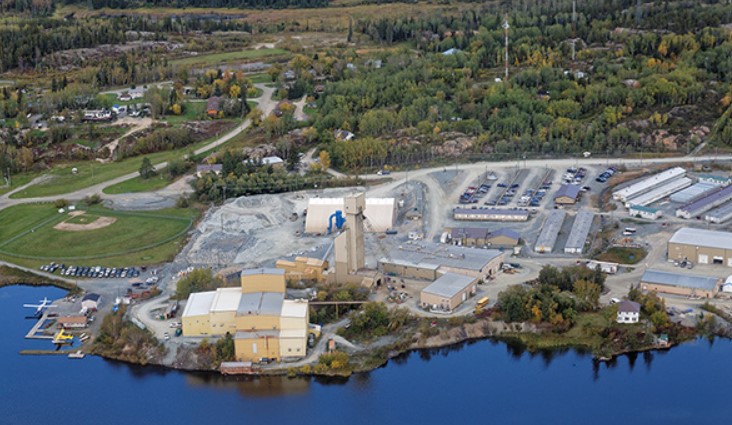
Noranda Inc. began its corporate life in 1922 with the opening of the Horne Au-Cu mine, concentrator and smelter in Rouyn Township, northwest Quebec. Copper remains the largest part of the company and its most lucrative commodity. When the Horne mine closed in 1976, the smelter was upgraded to become one of the world’s largest custom copper smelters. It has been joined by two other copper smelters–one in Quebec’s Gasp region, and the other in northern Chile–plus a copper refinery in Montreal East to form Noranda’s Copper Division today.

The division no longer operates mines, although Noranda (33.75% interest) and partners are developing the large Antamina Cu-Zn-Au mine in Peru, due to open in 2002 (see CMJ, February 2000, p. 21). Through its ownership of 49.9% of Falconbridge Ltd. and 59% of Novicourt Inc., Noranda is credited with copper production from the Kidd Creek, Collahuasi and Louvicout mines.

Since buying Altonorte, Noranda has become the world’s largest custom copper smelter. “Each of the operations has its own advantages and disadvantages, with different locations and technologies,” says Mario Chapados, general manager of the Horne smelter. “We can often offer the right treatment at the right location.” The Horne smelter accepts complex mine concentrate feed and recycled materials, whereas the Gasp is better at treating ‘clean’ mine feed, ideally containing 30-40% Cu with low impurities.

Copper Division operations as of year-end 1999

OperationsLocationEmployeesCu anodes &Refined metalsSulphuric acid (tonnes)
blister (tonnes)
CuAuAg
(tonnes)(000 oz)(000 oz)
Gasp smelterMurdochville, Que.321108,000203,000
Horne smelterRouyn-Noranda, Que.824185,000523,000
Altonorte smelterAntofagasta, Chile481154,000243,000
CCR refineryMontreal East, Que.784311,0001,20241,389
Total2,410447,000311,0001,20241,389969,000

Strategy Behind the Success

Is copper a good business to be in? Let’s ask Yvon Paquin, Noranda’s senior vice-president of copper, who is a metallurgical engineer with an MBA.

CMJ: What are the current trends for copper demand and price?

YP: The consensus is that the 1990s’ average worldwide consumption growth of 2.5% to 3% per year will be maintained throughout this new decade. What has surprised us is that the U.S. economy is still going strong, and has made up for Asia. Europe has low growth, Japan is probably going in the right direction, and South Korea is getting better.

We don’t expect the price to return to its historical average of US$1 per pound until 2003 or so. There’s close to 900,000 tonnes of copper (600,000 tonnes currently) in LME warehouses. There is not necessarily a demand problem, but we have faced a supply increase recently. There have been many new mining projects coming onstream in the last couple of years, but we expect a deficit situation in the next 24 months. The ideal situation would be a gradual price increase until 2003; we don’t like big price swings as we’ve had since 1994.

CMJ: Can you see a time when Noranda copper would become a custom metallurgical operation, with no mines of its own?

YP: No. We need mines. It is not realistic to be 100% integrated, but we need a better balance. With our investment in Antamina and through Falconbridge in Collahuasi, we have a more comfortable position.

I believe that copper mining is still a good business to be in. I remember when copper was supposed to be totally replaced by fibre optic for communications applications. But we now have more copper utilized in electrical connectors, wires and cables, small electrical motors for vehicles, etc. Noranda is still interested in copper mining and is still spending a significant amount of money on exploration for copper and other base metals.

CMJ: When the Gasp mine closed in 1999, why was the smelter not closed?

YP: Without a mine nearby, the long-term viability of the Gasp smelter was questionable. But in North America, this smelter is probably the closest to the sea [100 km from a natural deep-sea port at the town of Gasp], and there is still a good infrastructure there.

We have invested money over the last four to six years on process improvements, and we will continue to improve the efficiency. Actually, low concentrate treatment charges over the short term don’t help, but I am confident we made the right decision, for the long term.

CMJ: What is the most significant issue for the Copper Group right now?

YP: We have to import most of our feed. The concentrate treatment terms were US$100-110 per tonne three years ago, but last year they were as low as $50-55 per tonne, and are now recovering slowly. The main issue is to improve our efficiency and effectiveness to withstand these low prices. We did it successfully last year, and made a positive contribution to the bottom line. We plan to do it again this year.

Last year the profitability of our copper smelting and refining operations was probably above the average of the industry. Our goal is to reach and stay in the top quartile. We have to be very aggressive in controlling our costs, and we have to ensure that our modernization programs are delivering the expected improvements.

CMJ: What is the most interesting technology that the Copper Group is implementing?

YP: The technology that is most challenging is the automated material handling system at our CCR refinery. The current tankhouse layout essentially dates from the 1930s. Doing a retrofit of this magnitude [introduction of permanent cathode technology and automated handling systems] inside an operating unit, while not interfering with operations is really challenging. But the cost to build a new refinery would have been prohibitive.

The conversion is almost completed, and it is working well. It will have been worth it.


Comments

Cancel reply

Your email address will not be published. Required fields are marked *

Subscribe
Digital Edition

Editions

  • Subscribe
  • Digital Editions

About

  • Media Kit
  • Contact Us
  • Policies and Terms

The Northern Miner Group

  • TheNorthernMiner
  • Mining.com

Canadian Mining Journal provides information on new Canadian mining and exploration trends, technologies, mining operations, corporate developments and industry events.

Funded by the Government of Canada
© 2025 The Northern Miner Group, All Rights Reserved