Canada makes mark on global lithium stage with two top projects
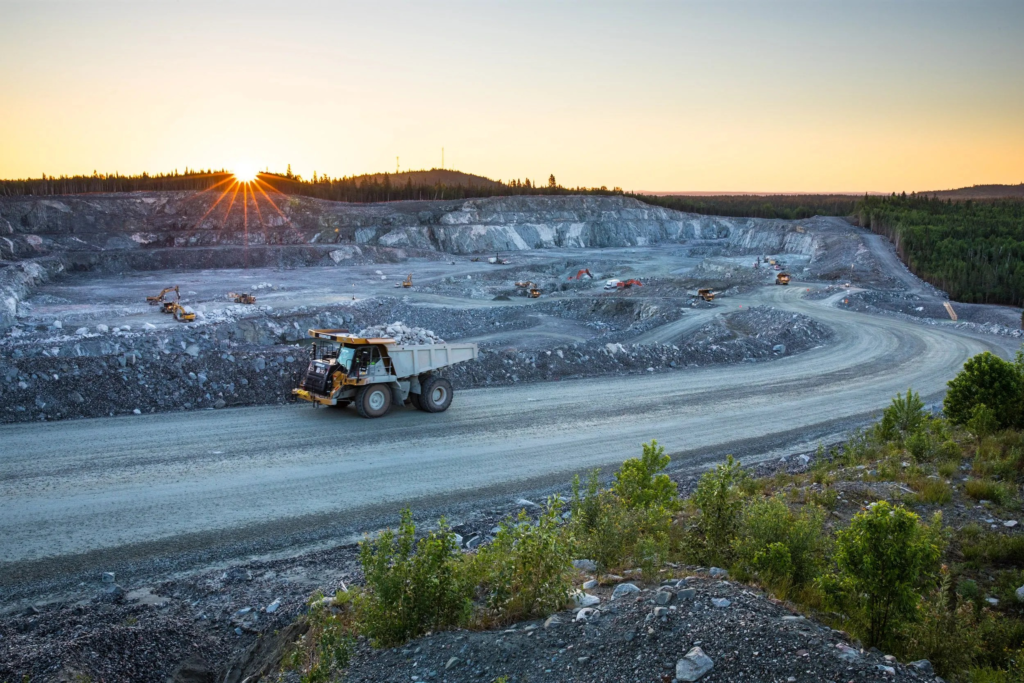
Canada has secured a strong foothold in the global lithium supply chain, with two projects — Galaxy and North American Lithium (NAL) — ranking among the top 15 lithium producers worldwide at the end of 2024. The Galaxy project, located in northern Quebec and owned by Rio Tinto Group, ranked eighth globally with an estimated 57,621 tonnes of lithium carbonate equivalent (LCE) in forecasted production, valued at approximately $977 million. The NAL project, operated jointly by Sayona Mining and Piedmont Lithium, ranked 13th, with an estimated production of roughly 31,078 tonnes of LCE, valued at $527 million.
These rankings place Canada in a competitive position alongside global leaders such as Australia, Chile, and China. Australia’s Greenbushes and Chile’s Salar de Atacama continue to dominate production, but Canada’s emergence signals its growing importance in the international race for battery-grade lithium. The combined contribution of the two Canadian projects represents nearly 7% of global LCE among the top 15 sites. As the global push for electrification and clean technology accelerates, these Canadian assets are expected to play a critical role in meeting long-term demand for lithium, a key component in electric vehicle batteries.
The data shown in Table 1 reflects the forecasted or estimated production levels for each lithium project, as of the end of 2024. In some cases, output is projected rather than actual, particularly for operations still in the preproduction or expansion stages. These estimates are compiled from industry disclosures, company guidance, and analyst forecasts, and are intended to provide a comparative snapshot of each project’s expected performance in the global lithium market.

Galaxy lithium project
The Galaxy lithium project, also known as the James Bay or Cyr deposit, is an open-pit mine site located in northern Quebec. Now fully owned by Rio Tinto Group, the project is in the preproduction phase. The mine is projected to operate until 2042, producing lithium concentrate for electric vehicle batteries and other technologies. As of December 2024, the site contained an estimated 1.4 million tonnes of lithium, placing it among the top 10 global deposits. The total in-situ value is estimated at $18.7 billion.
Development of the property has advanced steadily over the past two decades. In December 2023, Rio Tinto signed an Impact and Benefit Agreement with the Grand Council of the Crees. The project has also received final environmental and social approval from Quebec’s COMEX review board. Recent drilling results confirmed strong lithium grades, including 74.7 metres at 1.52% lithium and 20.9 metres at 1.82%. With key permits secured and stakeholder agreements in place, Galaxy is positioned to support Canada’s critical minerals strategy and contribute to global battery supply chains.
Ownership rollercoaster
The Galaxy lithium project has changed hands several times over the past decade, with Rio Tinto taking full ownership in March 2025. The company acquired the project through its US$6.7-billion purchase of Arcadium Lithium, which was formed in Jan. 2024 from the merger of Allkem and Livent. Before the deal, Allkem held full ownership after acquiring control through a series of transactions beginning in August 2021, when Orocobre Ltd. merged with Galaxy Resources. Galaxy had previously controlled the asset since 2011, either directly or through its Canadian subsidiary, Galaxy Lithium (Ontario) Inc.
The project is also subject to several net smelter return (NSR) royalties held by groups such as Lithium Royalty Corp., Ridgeline Royalties Inc., and Quebec’s Société de développement de la Baie-James. Some areas, particularly within the James Bay region, remain linked to legacy agreements from Galaxy’s early development efforts. Rio Tinto now holds 100 per cent equity and control, making it the sole operator of the project. The acquisition is part of the company’s broader strategy to expand its critical minerals portfolio in North America as demand grows for battery-grade lithium.
North American Lithium (NAL)
The NAL project, also known as La Corne or Quebec Lithium, is a producing lithium mine located in Quebec. Operated as a joint venture between Sayona Mining (75%) and Piedmont Lithium (25%), the site includes both open-pit and underground components. NAL is no longer in pre-production. It is a fully active mine, supplying significant volumes of battery-grade lithium for North American and global markets. It is fully operational as of early 2023.
As of August 2024, the project contained an estimated 988,000 tonnes of lithium, placing it among the world’s top-producing assets. In the 12 months ending June 2024, the mine produced more than 155,000 tonnes of spodumene concentrate with an average grade of 5.4% lithium oxide. Forecasted annual production is approximately 31,000 tonnes of LCE. By Q1 2025, operations remained on track to meet full-year guidance of 190,000–210,000 dry metric tonne (dmt) of concentrate, underscoring sustained, active production.
The site has a long development history, with exploration dating back to the 1940s and intermittent production under different ownership groups. After a period of inactivity, the current operators have revitalized the asset with new drilling, engineering upgrades, and infrastructure improvements. In 2024, Sayona and Piedmont commissioned a new ore dome and re-feed system to support long-term output. With an estimated in-situ value of more than $13 billion, NAL is positioned as a strategic source of battery-grade material for electric vehicle supply chains in Canada and abroad.
Related Posts
SPH Engineering taps Measur for industrial drone distribution
September 17, 2026
SPH Engineering taps Measur for industrial drone distribution
XXIX advances Pluto property option
September 17, 2026
XXIX advances Pluto property option
West Africa key to gold growth, Fortuna CEO says
September 17, 2026
West Africa key to gold growth, Fortuna CEO says
New housing facility opens to support Faro Mine clean-up
September 17, 2026
New housing facility opens to support Faro Mine clean-up
Echo Seismic opens new specialist support division
September 17, 2026
Comments