Canada’s critical advantage: A natural resources superpower
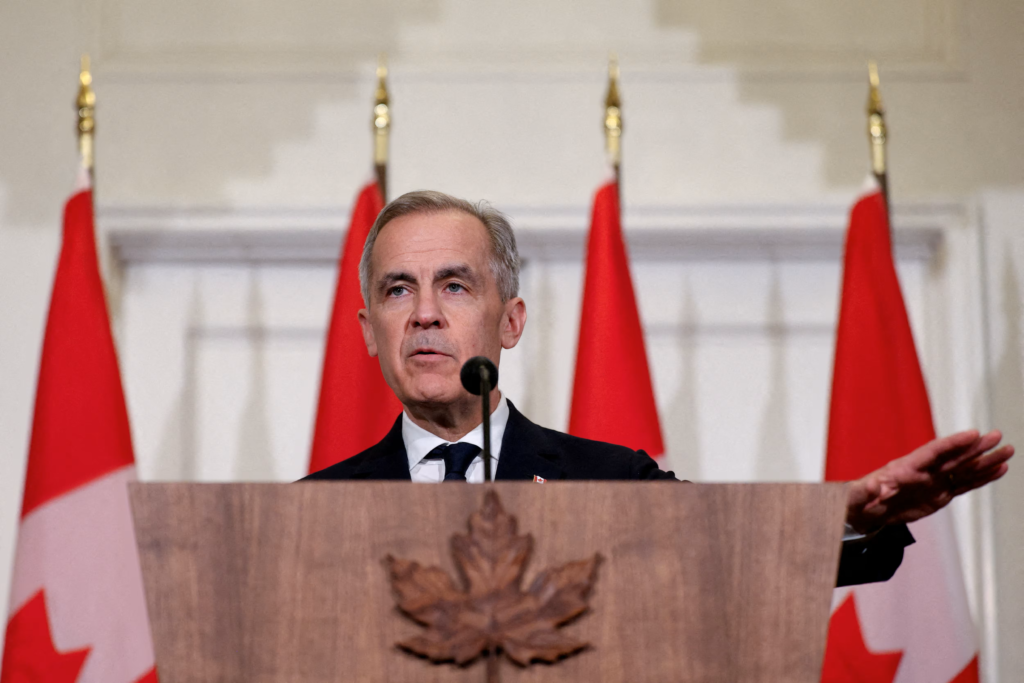
Canada’s mining industry, and particularly its critical minerals sector, was a focus of the 2025 federal election, as each of the primary contenders for the office of Prime Minister homed in on issues related to Canada’s economic security and energy security. The role of critical minerals was again highlighted at the recent G7 meeting hosted by Canada, where the leaders of G7 countries recognized the need to increase investment in critical minerals projects including through “immediate and scaled investment… to secure future supply chains and ensure promising mining and processing projects overcome barriers such as delays in permitting and approval processes.”
In a recent speech, Tim Hodgson, Minister of Energy and Natural Resources said, “No more asking, Why build? The real question is How do we get it done?” Gleaning what we can from statements made by government officials, the platform of the Liberal Party of Canada laid out during the 2025 federal election, and statements from the G7 summit, we explore what the path forward might look like for the mining sector, if the government truly prioritizes its promise of turning Canada into an energy and natural resources superpower, and how this government may get it done.
One project, one review
During the election campaign, discussion of cooperation agreements with the provinces was heralded as a new way forward, allowing the provinces to complete their own reviews on behalf of both levels of government. This was something the government of Canada had been trying to accomplish under the Trudeau government, and so far, B.C. has been the only province to enter into an agreement to allow this type of cooperation.
Beyond the use of provincial reviews to approve projects, the Liberal Party platform includes the concept of a Major Federal Project Office, which is intended to simplify review processes for large projects, such as resource or infrastructure projects, and would operate with a two-year timeline for completion of the review. Minister Hodgson stated that his ministry through the Major Federal Project Office “will identify and fast-track projects of national interest.”
On June 6, 2025, the Building Canada Act was introduced, which provides the legislative framework for these national interest projects, with the Governor In Council (consisting of the Governor General and Privy Council, though under convention effectively means the Cabinet, which advises as to the use of the powers of the Privy Council) to define “national interest” by order within 15 days of coming into force of the Act, failing which the minister must table a report outlining the reasons for the delay and the timeline for issuing the order. The legislation provides a non exhaustive list of considerations, which includes whether the project
- strengthens Canada’s autonomy resilience, and security;
- provides economic or other benefits;
- has a high likelihood of success;
- advances the interests of Indigenous peoples; and
- contributes to clean growth and to meet Canada’s objectives with respect to climate change.
Our expectation is that in the short term, an emphasis will be placed on projects in the mining sector that are either enabling infrastructure, e.g., transmission lines, or nearing production in the critical minerals space, as well as processing and refining — the value-adds to the raw mineral. The category of processing and refining is under particular focus as supply chains for these minerals throughout the world have been disrupted because of the international trade wars and uncertainty, and many such minerals are used in the defense industry.
This process related to national interest projects appears to be intended to include all decisions under federal legislation, which for mining projects specifically can include a variety of regulations to navigate, including the Fisheries Act, the Species at Risk Act, the Navigable Waters Act, and other requirements, and would assign one minister and one department as responsible for the review. That responsible minister would coordinate with all departments of the government and consult with Indigenous peoples with constitutional rights that may be adversely affected. Presumably to accomplish this, increased staffing and funding would be needed to allow for a speedier review time than currently is the case.
Of note, the Building Canada Act exempts national interest projects from the planning phases of the Impact Assessment Act (IAA) and automatically deems such projects as requiring impact assessments and subject to presumably the streamlined process.
Transportation and infrastructure
The Liberal Party platform further identified a need to build new trade infrastructure that connects Canada, by establishing ports, railways, airports, highways, and any other infrastructure needed through a Trade Diversification Corridors Fund, that was to be a new $5 billion fund established by the government. It further identified a need for a First and Last Mile Fund as filling a gap related to infrastructure for mining projects engaged in production, by supporting getting mineral products to transportation routes.
During an election where interprovincial trade and access to ports for international shipping to countries with whom Canada does not share a border were common topics, infrastructure was promoted as being the next step that is needed after a project gets off the ground — specifically, its product needs to be transported. In tandem with the new funds discussed, the Liberal Party platform promised to double the Indigenous Loan Guarantee Program, in a manner that appears designed to align Indigenous community interests with the projects on their territory through an ownership stake. This program has allowed access to loans as capital buy ins for First Nations around projects such as the Enbridge Natural Gas Pipeline System in B.C., announced in May 2025.
Driving investment
The Liberal Party platform prioritized critical minerals as opposed to the mining sector generally, couching this support in the language of promoting a clean economy and Canada’s energy security. Concurrently, there was a recognition that the list of critical minerals would need to be expanded; however, details around which minerals or metals specifically would be considered “critical” were not forthcoming. Unsurprisingly, there was a focus on trying to promote investment into mining projects at different stages.
One of the stated goals is an acceleration of exploration, including through investments in prospecting and increasing recovery of minerals found in existing mine waste. The drivers of these investments however appear to be limited to tax incentives, which largely exist, and a generalized statement that the Canada Growth Fund could be utilized to promote investment. With respect to the critical minerals’ exploration tax credit, it would be expanded to a broader list of minerals and further expanded by allowing eligible activities for exploration expenses, to include costs of technical studies, which are listed as being “engineering, economic, and feasibility studies.” It is currently uncertain whether a technical report, for example under NI 43-101, would qualify if it did not have engineering or economic components. Early-stage exploration companies would not produce reports with economic analysis or feasibility studies, and may not even have resources identified, but would benefit from flow through financings in a more meaningful way than a company operating an advanced project whose underlying economics can be demonstrated to a prospective investor base.
In addition, projects will apparently be able to utilize the Clean Technology Manufacturing Investment Tax Credit (CTMITC) to include development expenses, including processing equipment. Beyond producers of minerals, and specifically critical minerals who are expressly listed as qualifying for CTMITC, the credit would be of great benefit to brownfields projects, as it would reduce costs when bringing older projects back to life using modern processes. The Liberal Party platform noted that they would expand the categories of qualified properties for the CTMITC and expanding the minerals that qualify at the exploitation and processing stage as well, in recognition of the need to include minerals involved in enumerated categories, being defense, semiconductors, energy, and clean technologies.
Additionally, the vision for the Canada Growth Fund, a $15 billion investment fund operating at arm’s length from the Canadian Government, has among its priorities capitalizing on Canada’s natural resources, and strengthening supply chains related to economic and environmental well-being. While the Canada Growth Fund has not to date been a major contributor to mining activity, with a renewed national importance of the industry, combined with government impetus to open more mines as Projects of National Interest, perhaps it could be.
Looking forward
What could happen, if the government implements each of the above measures, and if they work as intended, and what will happen in Canada’s mining landscape will likely not perfectly align. However, Canada has a generational opportunity to develop our natural resources in a way that will ensure jobs in the present day, and a strong economy in the future. The measures of success will be the amount of cash flowing from investors to mining companies, the number of shovels in the ground, and how much product is either shipped or refined. With the ability to look at these hard metrics, the industry can keep the government accountable, and the government can gauge whether its measures are worthwhile. We would encourage the government to consider collaborating with the industry, listening to its needs, and making decisions soberly, based on data, and pivot if needed. Specifically, we have the following recommendations:
Without discounting the need for efficient infrastructure, there is a lack of clarity as to what information was being used to identify the specific instances of funding needed, or what framework would be used in the future. We encourage the federal government to conduct an analysis related to what the infrastructure capacity is for Canada currently to know how to prioritize our financial resources. The primary issue impacting Canada’s competitiveness may be, and our expectation is that it is, with output even more than infrastructure.
We must strengthen our exploration industry by strengthening Canada’s capital markets, which the exploration industry relies on for financing. Promoting investment through tax incentives such as flow through share offerings is helpful but targets the same subset of investors who participate in private placements more generally, specifically being accredited investors who are typically high net worth individuals. Creating incentives to instead invest in operating Canadian mining companies at any stage of operation for all categories of investors, from retail investors to institutions to pension funds, would promote Canada’s growth through redirecting funds from foreign companies that are heavily prioritized because of the rates of return, by reducing or eliminating the gap on an after-tax basis.
Finally, we call on the federal government to support the mining industry generally, and not just today’s critical minerals over other activity in a way that jeopardizes our ability to get projects off the ground fast. What is critical can change, and mines that may target precious metals such as gold for example may also have byproducts that would still be considered “critical.” By strengthening the industry generally, we as a nation can avoid being reactive when global needs shift or alternatives to specific minerals are found. 
Sasa Jarvis is a partner, capital markets and securities at McMillan LLP. Cory Kent is a partner, capital markets and securities, and an office management partner in Vancouver at McMillan LLP.
Related Posts
Sponsored video: Canagold nears build decision at New Polaris
October 9, 2026
Sponsored video: Canagold nears build decision at New Polaris

Sponsored video: Westhaven and Dundee eye a new B.C. gold camp
October 9, 2026
Sponsored video: Westhaven and Dundee eye a new B.C. gold camp
The great Canadian white gold rush
October 9, 2026
The great Canadian white gold rush
Canadian mines need an AI decision log before automation scales
October 9, 2026
Canadian mines need an AI decision log before automation scales
Comments