Underground flow control: Raising the bar in mine dewatering systems

Managing underground water in mining is no small feat. Underground mine dewatering systems were traditionally designed for clean water, relying on large sumps to settle out solids. Today, there is a shift toward faster deployment and a growing recognition among mine operators that mine water is never truly clean — it always contains solids, and that reality must be factored into system planning. As a result, underground mine dewatering systems are increasingly being designed to handle dirty water from the outset. This might mean using more robust materials within a clean water pump or simply designing a pumping system that is capable of handling dirty water.
This latter option has advantages in terms of space and capital expenditure. Put simply, there are obviously space constraints in underground mines, and if the pumping system requires additional space to be excavated for settling sumps or vertical dams, these works are both capital and time intensive. Moreover, dirty water pumps have been specifically designed for higher wear and abrasive duties.
Another common issue is that the sumps are almost always neglected and are rarely cleaned as frequently as they need to be, if at all, to maintain proper settling to produce clean water. As a result, the clean water pumps end up pumping dirty water before long and, inevitably, wear the pumps out much faster than originally anticipated. This then leads to unplanned downtime and increased operating costs, as well as the need to carry higher inventory to, in a sense, plan around the unplanned downtime.
Furthermore, settling solids, which is essentially a waste product, must be brought to the surface; this is typically done via the production skip, which is an inefficient system that is more energy intensive and less sustainable than pumping the solids to the surface. Mine operators want to focus their resources on driving production. Maintaining settling sumps means resources need to be reallocated away from production to keep the clean water pumping system operating reliably. Therefore, this loss of production cost needs to also be considered when choosing the type of dewatering system. Since most operations have already mined the easily accessible ore, existing mines are now going deeper to access the ore bodies. And ore bodies that were once too deep or too expensive to access are today’s greenfield or brownfield expansion projects. This means that underground dewatering systems typically require higher pressures than they did previously.
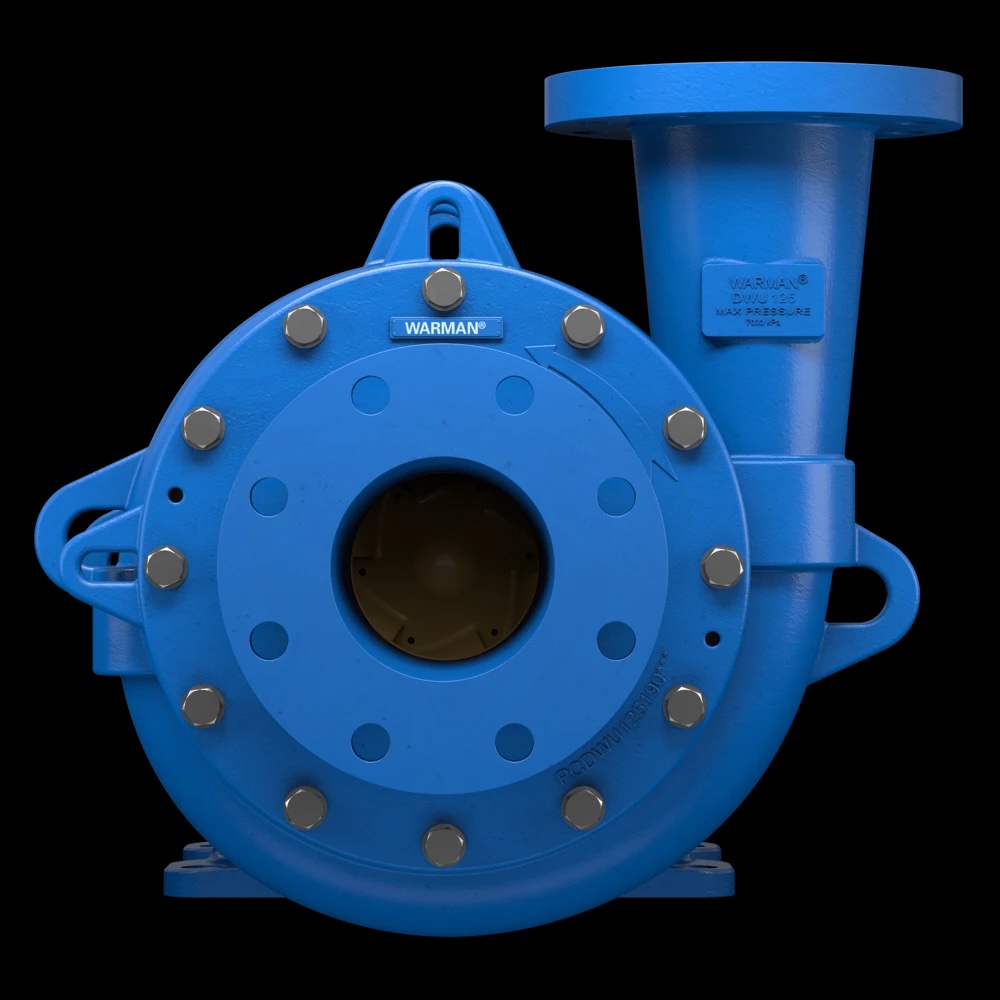
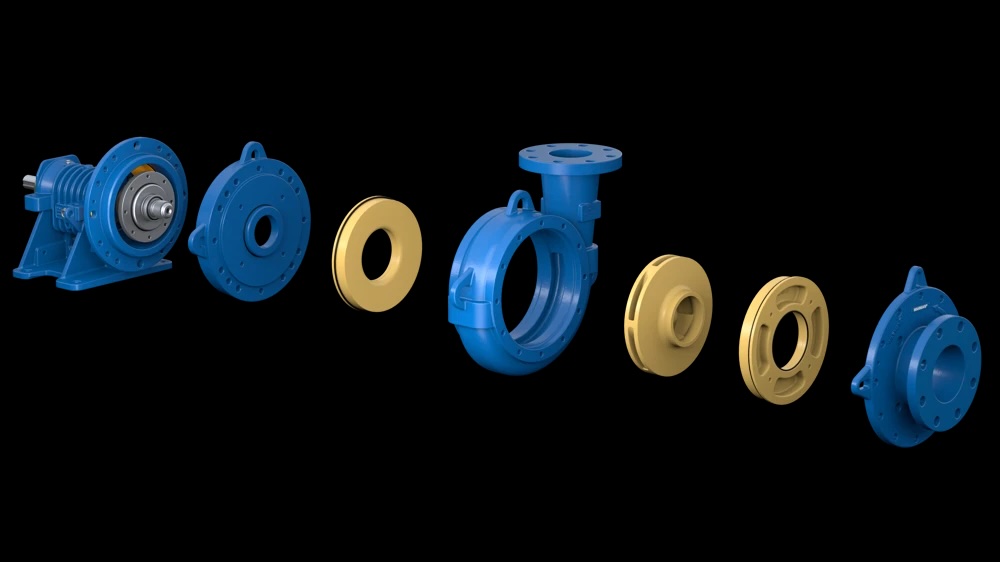
Weir’s WARMAN DWU pump can handle dirty water with 10% w/w solids concentration, with high peaks during temporary upset conditions up to 20% w/w concentration. It is designed with a casing pressure rated at 7000 kPa (1,000 psi), which means it is well-suited to these high-pressure underground dewatering applications. At maximum operating speed, the WARMAN DWU pumps can individually achieve heads of approximately 140 metre at the best efficiency point. However, because of the high casing pressure design, and when combined with the correct pump sealing selection, the pumps can be configured in an in-series solution to achieve discharge pressures of up to 5500 kPa.
Weir has multiple pump sizes within its WARMAN DWU range to deliver various flowrates based on the site’s requirements, from low flow for drier mines to very high capacity in wetter mines. The ability to pump higher heads per pump, while also delivering higher casing pressure, means Weir can produce a higher total discharge than its competitors. Moreover, it typically needs less pumps in a series to achieve the same discharge pressure. As a result, the overall footprint is smaller, requiring less excavation. The reduced number of pumps reduces capital expenditure, while also lowering operating costs because there are less pumps to maintain and service.
Credit: Weir.
As a mine gets deeper, Weir has developed a solution whereby its WARMAN DWU pumping system can be mounted to a skid and dragged down the mine as it is progressively developed. The system obviously needs to be able to handle the higher pressures required at greater depths. To ensure this, Weir utilizes variable frequency drives (VFD), which allows it to simply speed up the pumps to match the required flowrate of the system as required.
The WARMAN DWU pumps’ casing pressure capabilities also provide additional flexibility. For instance, if an operator has a two-pump system and they want to go deeper, they can simply add a third or fourth pump to that system to achieve their head requirements. This also allows more traditional cascade pumping systems operating over many levels using a single pump per station to be optimized by combining pumps in series on a single level, thereby reducing the number of operating systems across many levels that need to be attended to and maintained.
One of the other challenges that many mines must contend with are variable flows throughout the year, depending on climate. For instance, in Canada, underground mines experience a lot of water ingress in spring when the snow melts and rains are higher. During these periods, it might be necessary to have two pumps running at a high flowrate and one on standby or, alternatively, it may be more effective to put them on a VFD to control the speed to ensure they are always operating near the best efficiency point.
Weir partners with miners to develop, trial, and implement dewatering solutions based on their unique operational requirements and their site-specific needs and challenges. Planning for mine dewatering typically happens early in the development of a new underground mine, and there are a multitude of factors to consider. Weir has teams of experts and a portfolio of products that ensure it works with customers to provide the ideal solution based on their needs. 
Nick Lancaster is Weir’s product manager for dewatering, thickened tailings, and mine backfill.
Comments