Advanced Navigation appoints CTO to build “nervous system” for autonomous platforms
Advanced Navigation, a world leader in navigation and autonomous systems, has announced the appointment of Pawel Michalak as chief technology officer (CTO) to […]
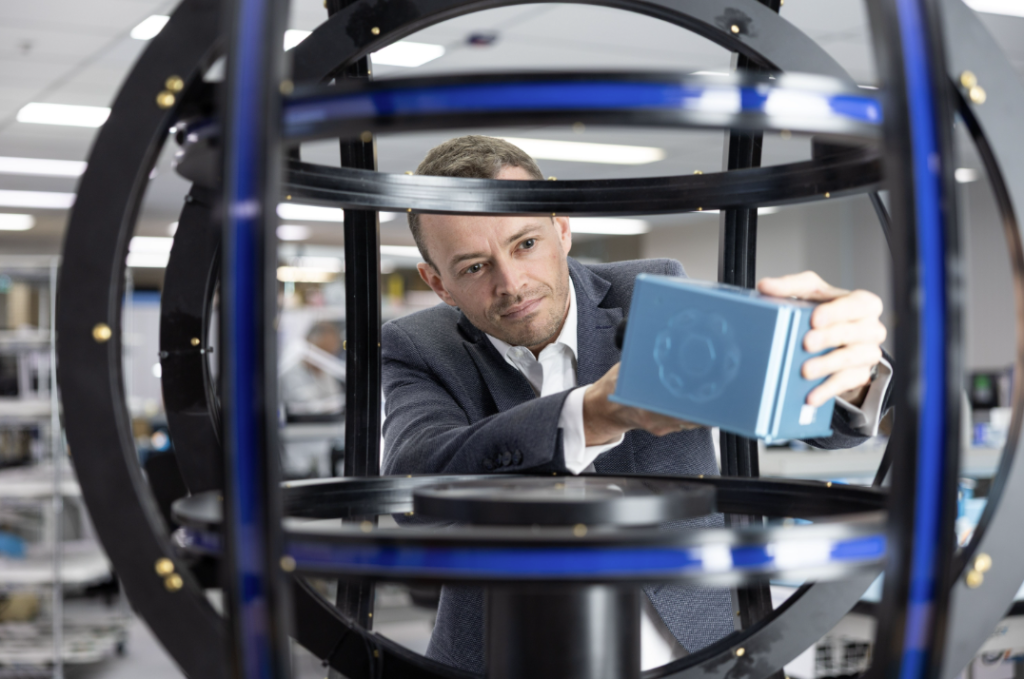
– Advanced Navigation, a world leader in navigation and autonomous systems, has announced the appointment of Pawel Michalak as Chief Technology Officer (CTO) to lead the next phase of its technology evolution. CREDIT: Advanced Navigation.
Advanced Navigation, a world leader in navigation and autonomous systems, has announced the appointment of Pawel Michalak as chief technology officer (CTO) to lead the next phase of its technology evolution.
This appointment arrives at a critical juncture for global positioning, as harsh environments, electronic warfare, and deep-sea or space missions push GPS-only-based navigation to its breaking point.
As CTO, Pawel will lead Advanced Navigation in shifting toward an approach rooted in scientific resilience: a positioning, navigation and timing (PNT) architecture that ensures reliable navigation without reliance on any single signal. This will include the expansion of engineering teams in the United States and globally, powering the creation of entirely new navigation capabilities for the most extreme and contested environments.
Advancing the next phase of the autonomy revolution
“There was once a time where we could rely solely on satellite data for navigation, however that's no longer the case. In today's world, we need to treat signal anomalies, disruptions and unreliability as a given. This requires a fundamental shift in the way we go about building resilience and autonomy," Advanced Navigation CEO Chris Shaw said.
He added: "It demands the discovery of new innovations, new architectures, and new ways of thinking. Pawel has the acumen to translate empirical research into breakthrough technologies for the real world, at speed. He brings the rare combination of academic depth, industrial knowledge and long-term vision required to build the next generation of PNT systems - not just for today’s challenges, but for those yet to emerge.”
Building a "nervous system” for alternative PNT
Pawel will spearhead Advanced Navigation’s mission to industrialize a multi-sensor, inertial-centric architecture, fusing inertial sensing, photonics, robotics, artificial intelligence, quantum sensing, underwater acoustics, and advanced GPS antennas and receivers, among other PNT technologies. Together, these sensors form the “nervous system” of autonomous platforms operating across subsea, land, air and space.
“There is no one silver bullet in navigation. The future of position, navigation and timing will be fully resilient and autonomous, built on the fusion of raw data from inertial, laser, vision, quantum, and other advanced sensors,” Pawel said.
“Together, these technologies form the nervous system of robotics, with inertial navigation acting as the central spine. Like the human body, this architecture feeds trusted signals to the brain, enabling the autonomy controller to understand where it is, how it is moving, and how to make decisions - even when GPS signals disappear.”
Pawel brings decades of senior leadership experience across Europe, the Middle East, the US and Australia. He has driven technology strategy and large-scale digital transformation for industries dependent on spatial intelligence, including energy transition, resilient infrastructure and climate change.
Prior to Advanced Navigation, Pawel led Digital Transformation at Fugro, directing global teams across engineering, AI and robotic programs that pushed spatial intelligence into real-world decision making at a planetary scale. He is a recognized advocate for high-performance, alternative PNT technologies that enable autonomy in environments where hesitation or uncertainty can mean mission failure.
Pawel holds a PhD in Satellite Geodesy, an MBA, and multiple executive postgraduate qualifications from Stanford University in the US, Warsaw University of Technology in Poland, and Business School Lausanne in the Netherlands and Switzerland.
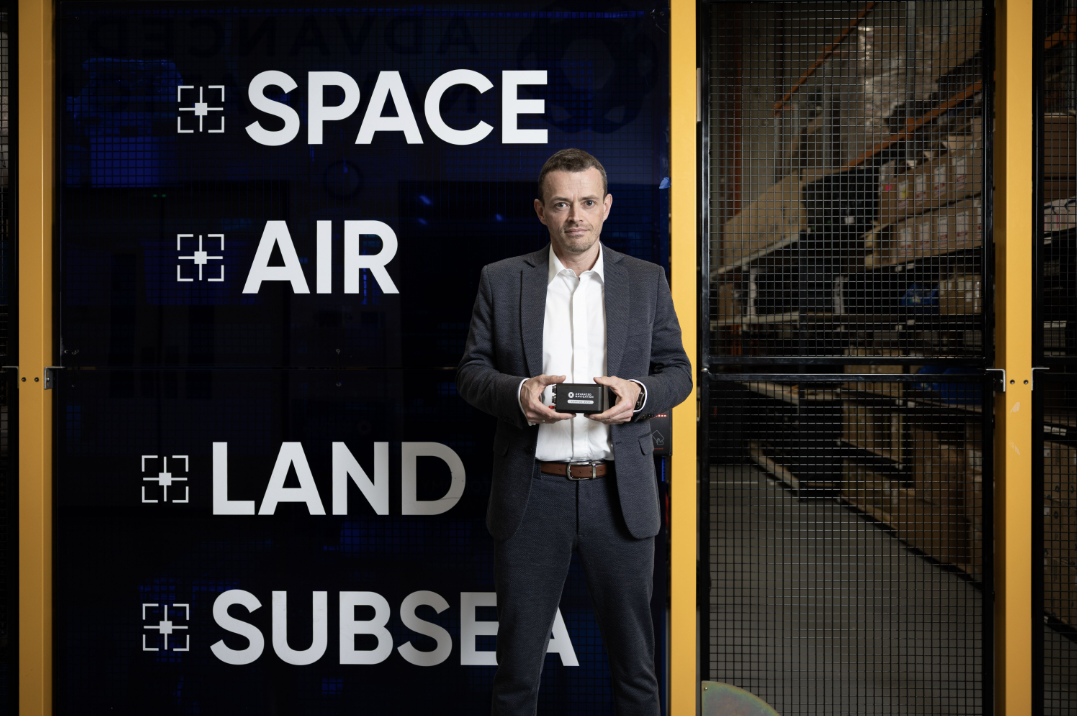
Reliable navigation without reliance on GPS-only-based navigation. CREDIT: Advanced Navigation
The time to build resilience is now
Founded on a culture of research and discovery, Advanced Navigation’s mission is to be the catalyst of the autonomy revolution. By transforming deep research into deployable systems, it is enabling humanity to operate with confidence in environments once considered unreachable.
Leading the execution of this technology vision, Pawel will develop resilient PNT systems for the world’s most extreme environments - from the ocean depths and deserted lands, through to the contested skies and lunar surfaces.
"The opportunity here is not incremental or blindfolded innovation. It is to change how the world navigates, from defense, humanitarian response, energy transition to climate science and autonomous exploration,” Pawel added.
“Advanced Navigation is daring to do what others won’t, and I look forward to bringing this ambitious vision into reality with the team.”

Comments