Lithion Recycling has received $22.5 million in funding from the Quebec government, including a 15 million equity investment in the company’s capital stock through Investissement Québec and $7.5 million in grants from the Fonds d’électrification et de changements climatiques.
Lithion also received funds totalling $125 million earlier this year from Quebec-based Fondaction, and from Korea’s IMM Investment Global, an investment fund that already has established relationships to cathode, cell and battery pack manufacturers, namely LG, Samsung, SK Group, POSCO and Hyundai.
This new infusion of capital is expected to help Lithion carry out the three pivotal steps in its industrialization plan: building and commissioning its first commercial battery dismantling and reprocessing plant in Quebec in 2023; building and launching a state-of-the-art technology development centre; and carrying out detailed engineering studies for the construction of the company's own hydrometallurgical plant in Quebec.
At the same time, Lithion is continuing its discussions with partners in the U.S. and Europe interested in licensing the Lithion solution to serve their local markets.
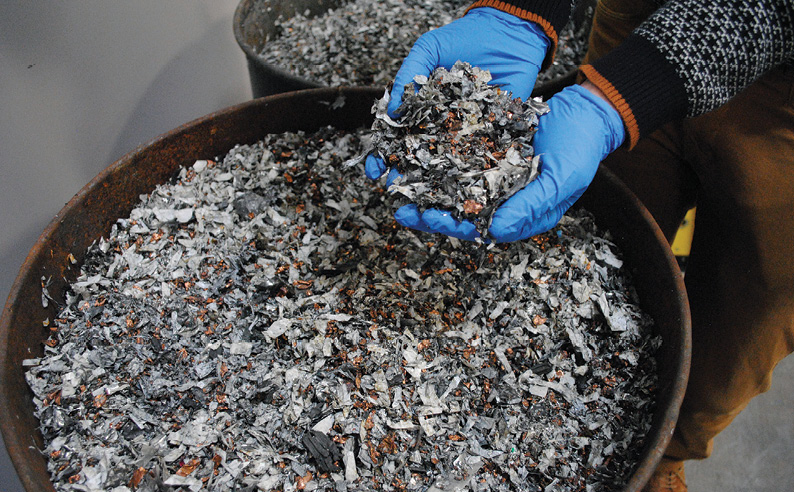
Lithion has developed a cost-effective process to recover 95% of strategic materials from end-of-life lithium-ion batteries and production wastes. According to the company, this technology accelerates the transition to green energy and helps meet decarbonization targets by reducing the need for natural resource extraction.
In 2023, Lithion plans to launch its first commercial dismantling and shredding plant, using operating and engineering data from its industrial-scale Quebec demonstration plant commissioned in January 2020. In 2025, it plans to open its first hydrometallurgy plant, also in Quebec, to complete the circularity of battery materials. Its goal is worldwide deployment, through licensing agreements, with a target of 25 recycling plants by 2035.
“We are very pleased to confirm today the Quebec government’s participation in our project to build a commercial lithium-ion battery recycling plant and a technology development centre. Lithion aims to provide the industry with the sustainable development technology required to build a circular economy for batteries," Benoit Couture, president and CEO of Lithion, stated.
More information is available at www.LithionRecycling.com.
Comments