This is not a revolution: It is a reveal
Mining has always been grounded in geology, chemistry, physics, and engineering. Biology has been there too, quietly operating in the background, shaping mineral systems long before humans learned to blast, crush, or leach ore. Microbes have been moving electrons, breaking down pyrite, oxidizing iron and sulfur, generating heat, and forming small, stable ecosystems inside rock for billions of years.
The biology is not new. What is new is that we can finally measure it with precision, instead of treating it like folklore. What is new is our ability to see it.
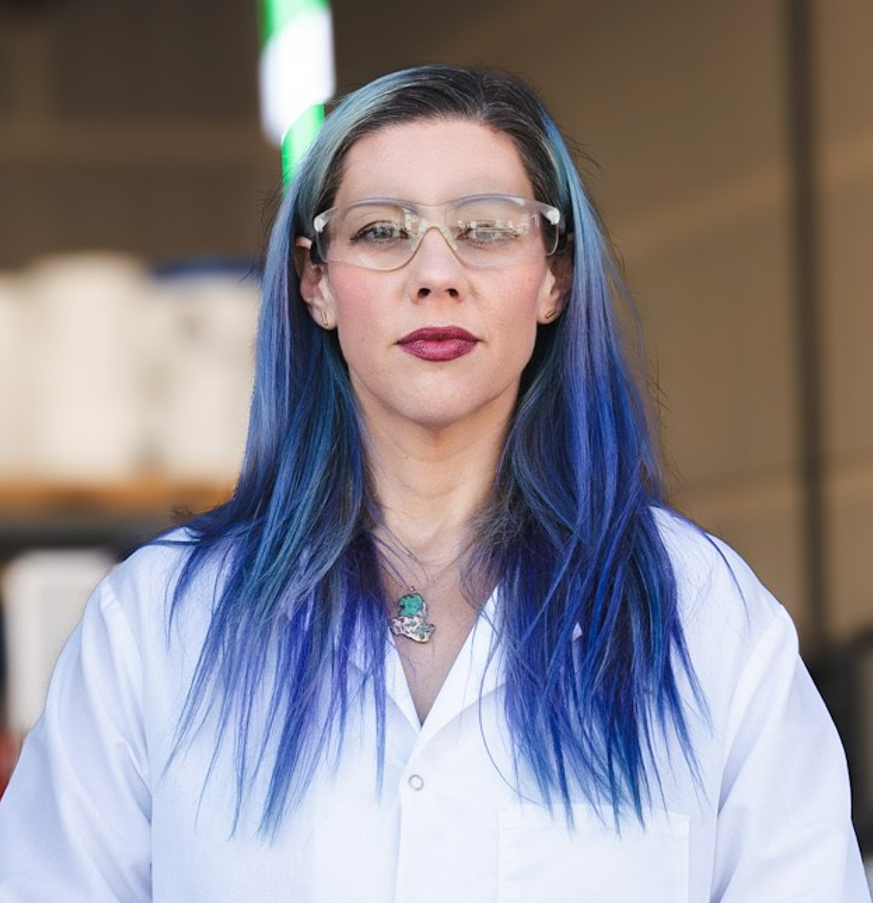
CEO and founder
of Endolith
For decades, bioleaching was treated as a black box. Operators could observe outcomes, but not the activity inside the heap. Without visibility, biology felt unpredictable. Sometimes it worked beautifully. Sometimes it stalled. Sometimes nothing happened at all. Biology did not fail. We just were not measuring it.
Early efforts plateaued because the industry lacked sequencing tools, real-time sensors, and the computing power needed to understand what organisms were actually doing. You cannot guide a system you cannot measure.
My own path into mining came through astrobiology. I have spent years studying life in volcanic fields, acidic lakes, and places where the pH is low enough to melt a probe, but not low enough to deter microbes. When I first stood on a mine site and looked at a heap, it felt surprisingly familiar — an engineered system full of chemical gradients and microbial potential. The industry did not lack biology. It lacked instrumentation.
Those tools exist now. Sequencing costs have fallen faster than semiconductor prices. Sensors are smaller, cheaper, and rugged enough for mine environments. Cloud computing can interpret complex biological and mineral data in near real time. These advances transformed biology from an interesting idea into a practical lever for mining operations. The heap stopped acting like a mystery and started acting like an ecosystem we could finally hear.
Meanwhile, pressure on metals keeps building. Electrification, AI infrastructure, energy storage, advanced manufacturing, and national security all depend on a wide range of minerals. These include copper, nickel, lithium, cobalt, graphite, rare earths, and other transition metals that influence electron behaviour. Demand is rising faster than new deposits can move through permitting, construction, and commissioning. Declining head grades, complex mineralogy, and higher processing costs now shape nearly every operational decision.
Every miner I know feels this tension. Some explain that they are moving more rock than ever for the same pound of copper. Others describe the difficulty of lowering cutoffs without compromising certainty. The International Energy Agency (IEA) projects a steep climb in copper requirements through 2040, and S&P Global estimates copper demand could double by 2035. Add the rapid growth of AI data centers, which few analysts forecasted, and the strain on supply becomes clear. The system needs more tools, not just more rock moved.
Microbial communities exist naturally in acid-mine drainage, volcanic systems, deep subsurface regions, and sulfide-rich ore bodies. They already know how to metabolize minerals under conditions most organisms cannot tolerate: salinity swings, arsenic, acidity, and temperatures from 20°C to 75°C. If you put them on a normal surface, they die almost instantly. But inside a heap, they behave like tiny biochemical reactors.
One of our earliest discoveries was that the right microbes are not always present — or active — inside a heap. Sequencing heaps at multiple depths revealed communities that were incomplete, dormant, or dominated by organisms that contributed little to leaching. That challenged a long-held assumption that biology would simply “figure itself out.” It will not. Not reliably. Not at scale. Biology adapts, but it does not self-optimize without support.
Earlier bioleaching approaches relied on single organisms, often grown under ideal lab conditions that did not reflect the heterogeneity of a mine site. That is the equivalent of asking the same athlete to play every position on the field. A single microbe can perform one function well. A community can adapt to gradients, stress, and shifts in mineralogy. Mining environments reward functional diversity.
Precision biology is the shift. Today, we can screen microbial communities, adapt them to high salinity or arsenic, and identify which genes are linked to behaviours like pyrite oxidation. This reaction drives temperature profiles in heaps. We can track pH, ORP, iron, sulfur, and copper concentrations in real time. We can match microbial activity to mineralogical changes. When you can finally “hear” a heap, you can guide it. Once the signals made sense, the heap felt less like a black box and more like a conversation.
Watching sequencing data aligning with mineral changes felt like the heap was introducing itself for the first time. Suddenly, the signals made sense — the heat, the recovery curve, and the shifts in oxidation. For the first time, decisions were driven by evidence instead of intuition.
Why does this matter? Because biology helps miners do what they already care about: pull more value from existing ore. Improving recovery on low-grade material, reducing run-of-mine cutoffs from 0.3% to lower thresholds, improving performance in complex mineralogy, and making legacy stockpiles productive again all create meaningful economic impact. An 8% to 12% increase in recovery on large operations is not incremental; it is transformative. At a time when demand outpaced supply, every additional pound matters. The next step-change in copper supply will not come from a discovery. It will come from better recovery.
There is also a national security angle. Countries are reevaluating their mineral strategies, and the U.S. recently added copper to the critical minerals list. Canada has long recognized the strategic importance of domestic and North American supply. Any method that improves recovery from existing infrastructure strengthens resilience across energy, manufacturing, and technology sectors.
Safety and permitting remain central. The responsible approach is to use non-GMO, naturally adapted communities with long operational histories. These organisms survive only within very narrow chemical conditions and die rapidly when removed from them. That predictability, combined with improved analytics, creates a transparent framework for environmental review. Regulators do not want surprises. Biology, when well-characterized, removes them. Predictability builds trust, and trust accelerates deployment.
The next five years will focus on translating consistent lab and column results into field validation. That requires engineering discipline, patient operators, and a willingness to let data guide decisions. Mining rewards evidence. Biology now produces it. The operators who succeed will be the ones who treat biology as intelligence, not an afterthought.
Biology does not replace metallurgy, chemistry, or engineering. It is becoming another tool — one that finally lets us observe and support the life that has always been part of these systems. The rock stays the rock. Chemistry stays the chemistry. What has changed is our ability to understand the organisms that have been quietly interacting with minerals since Earth formed.
This is not a revolution. It is a reveal. Biology is finally visible, measurable, and ready for deployment at scale. 
Liz Dennett is the founder and CEO of Endolith. She brings deep experience across biology, mining, and cloud-scale data systems, with prior leadership roles at Amazon Web Services, Wood Mackenzie, and the NASA Astrobiology Institute. She holds a PhD in Geoscience from the University of Wisconsin–Madison.
Comments