Leading the future of mining through education, innovation, and community partnership
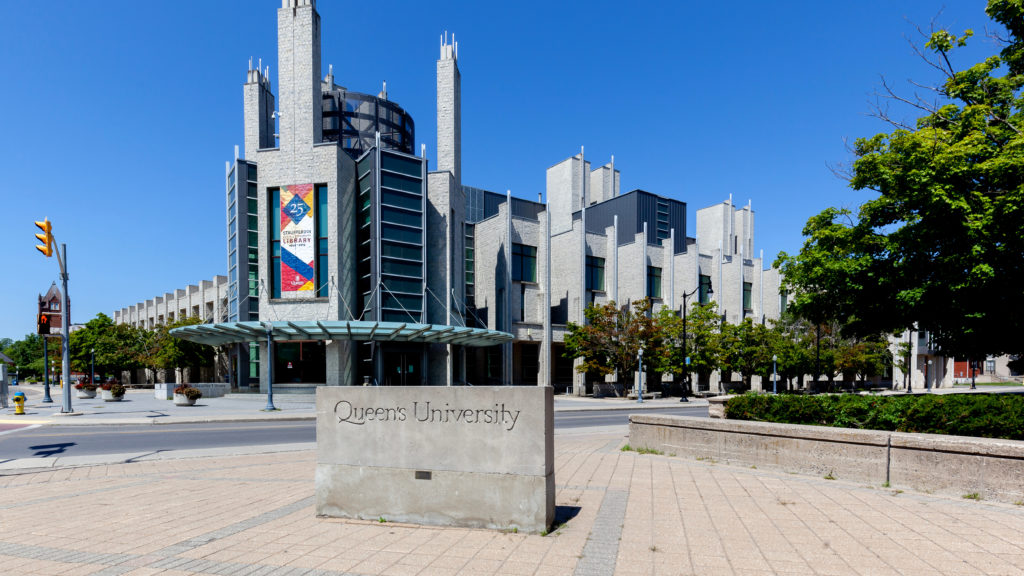
The Robert M. Buchan Department of Mining at Queen’s University is shaping the next generation of mining professionals through a blend of educational excellence, research innovation, and deep engagement with industry and communities. As the largest undergraduate mining program in North America, the department continues to grow in size, diversity, and impact, reflecting the evolving needs of a rapidly transforming sector.
Education built for a changing industry
Queen’s mining programs combine rigorous technical education and training with hands-on learning, preparing graduates for global careers in an industry defined by technological and environmental change. Undergraduate students benefit from experiential opportunities, including internships, co-op placements, and practical design courses. Graduate students pursue advanced research in MASc, MEng, and PhD programs that align with both academic and industry priorities. Complementing these on-campus offerings is a suite of fully online professional programs designed for working practitioners. These include the Social Performance Management in the Extractive Industries (SPMEI) graduate diploma, the six-course Queen’s Certificate in Mining Technologies (CMT), and specialized short courses in mineral processing, mining fundamentals, and data science. Together, these pathways ensure that learners at every stage of their careers can access modern, flexible education.
A human-centered approach to engineering
The Robert M. Buchan Department of Mining plays a pivotal role in transformation of engineering education. This initiative emphasizes human-centered design, encouraging students to consider the broader societal, environmental, and community implications of the technologies and systems they create. With this renewed focus, graduates enter the workforce with a holistic understanding of responsible mining.
Record growth and increasing diversity
Over the past decade, the department has seen remarkable expansion. Second-year enrollment has surged from 16 students in 2017 to 54 in 2025, while total undergraduate enrollment has grown from 87 to 171. Female representation has more than doubled, rising from 14% to 32%. These trends reflect both the department’s revitalized curriculum and the broader recognition of mining’s central role in the global energy transition.
Research driving the industry forward
The mining sector is undergoing significant transformation as electrification, automation, artificial intelligence (AI), and Indigenous-led governance models reshape operational and strategic priorities. These shifts align closely with Ontario’s strengths in key critical minerals including nickel, cobalt, and chromite — and underscore the importance of innovation. Key research themes emerging across academia and industry include machine learning (ML) for mining operations and mineral processing; electrified fleets and renewable integration; advanced processing of battery metals; robotics, automation, and remote mining; and Indigenous partnership models grounded in shared decision-making. Mining faculty, students, and research staff at Queen’s University are engaged in cutting-edge work that addresses these emerging priorities.
Supported by government and industry partners, their research focuses on transforming mineral processing and critical mineral recovery; enabling digital and autonomous mining systems; enhancing safety in deep and high-stress mines; advancing low-carbon metal extraction and electrification; promoting sustainable, transparent, and community-trusted mining practices; supporting a more diverse and inclusive workforce; and delivering state-of-the-art testing and collaborative industry solutions. These combined efforts contribute to a mining future that is smarter, safer, and more sustainable.
Critical minerals and northern partnerships
Ontario’s Ring of Fire, Sudbury Basin, and Timmins regions are cornerstones of Canada’s critical minerals strategy. Unlocking their full potential requires coordinated research, infrastructure planning, and meaningful partnership with Indigenous communities. Strategic policy opportunities include targeted R&D investment, alignment of transportation and energy infrastructure, expansion of advanced technical training, and Indigenous capacity-building initiatives. The department’s commitment to reconciliation is reflected in ongoing events and partnerships.
On the National Day for Truth and Reconciliation, the department hosted Christy Smith, senior vice-president of Indigenous Engagement and Human Environment at Falkirk and a member of the K’ómoks First Nation, for a compelling lecture on First Nation leadership in mining. Events like this reinforce the department’s dedication to building respectful and enduring relationships.
Closing the talent gap
Canada faces a significant mining talent shortage as demographic changes and new technology demands impact workforce availability. This challenge is particularly pressing, given rising global demand for critical minerals essential to the clean-energy transition. Addressing the gap requires coordinated action among universities, industry, colleges, government, and Indigenous communities. The Robert M. Buchan Department is committed to helping lead these efforts by expanding pathways into mining careers and delivering the education and research capacity needed to meet future workforce demands.
Looking ahead
Research at the department will continue to advance data-driven discovery, autonomous technologies, AI, sustainability assessment, and low-carbon mining, which are core priorities for Canada’s critical minerals strategy. These themes will increasingly shape both academic programs and professional training offerings. Strengthening Indigenous partnerships, diversifying talent pipelines, and enhancing experiential learning will remain central to the department’s long-term mission. As the mining industry continues its transformation, the department is well-positioned to maintain and grow its leadership in mining education, research, and innovation. By integrating technical excellence with responsible development, the Robert M. Buchan Department of Mining is helping build a mining industry that is safer, smarter, and more sustainable — for Canada and the world. 
Vladislav Kecojevic is a professor and head, Noranda-Falconbridge Chair in Mine Mechanical Engineering, The Robert M. Buchan Department of Mining, Smith Engineering, Queen’s University.
Related Posts
The trillion-dollar gold question:
September 16, 2026
The trillion-dollar gold question:
Gold refining goes electric
September 16, 2026
Gold refining goes electric
Electra releases preliminary battery recycling results
September 16, 2026
Electra releases preliminary battery recycling results
Kootenay Silver reports strong silver grades at Columba
September 16, 2026
Kootenay Silver reports strong silver grades at Columba
New Found Gold reaches commercial output at Hammerdown
September 16, 2026
Comments