[caption id="attachment_1003733266" align="aligncenter" width="450"]
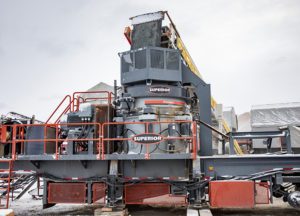 P500 Patriot Cone Crusher Credit: Superior
[/caption]
MINNESOTA -
Superior Industries, a U.S.-based manufacturer and supplier of bulk material processing and handling systems, will add a new model to its line of Patriot Cone Crushers at CONEXPO-CON/AGG 2020 in March. It’s one of a dozen new products the company will introduce during the Las Vegas trade show.
The P500 model Patriot Cone Crusher is engineered to operate most effectively at 500 hp. (350 kW). Other specifications unique to the P500 include a head diameter of 59 in. (1,500 milimetres), maximum feed opening of 13.5 in. (343 milimetres) and closed side settings of 3/8 in. to 2 in. (10 milimetres to 50 milimetres).
Notable features of the P500 model cone crusher include:
- Inverted or reverse design of tramp relief cylinders which ensures that the hydraulic seals are not exposed to contamination during operation.
- Tramp relief system with fewer accumulators for less maintenance. An automatic pressure relief valve means additional protection.
- Universal crushing chamber design requires no major, time-consuming change-outs when transitioning from secondary to tertiary applications.
- If loss of clamping pressure occurs, counterclockwise countershaft rotation causes the crusher to open rather than turn down.
Superior manufactures its full line of Patriot Cone Crushers in 200, 300, 400, 500 and 600 hp. models. Each purchase comes with a lifetime warranty to protect the cone’s major components including the adjustment ring, bowl, eccentric, head, mainframe and main shaft.
Superior Industries at CONEXPO-CON/AGG 2020
Superior will launch a dozen new products for crushing, screening, washing and conveying applications. Displayed equipment will include the brand new Sentry Horizontal Shaft Impact crusher, Fusion Modular Platform, belt drive Valor Vertical Shaft Impact crusher, bolted model Liberty Jaw Crusher, Alliance Low Water Washer and Portable Spirit Wash Plant. Additionally, aftermarket solutions will be displayed alongside a multimedia experience showcasing several turnkey projects completed by the company’s construction management division.
Superior engineers and manufactures bulk material processing and handling equipment and components. The manufacturer supplies bulk crushing, screening, washing and conveying systems and related parts for the aggregates, mining, bulk terminals, agriculture, power and biomass industries.
For more information, visit
www.Superior-Ind.com.
Comments