Beyond the blast: How mines are optimizing rock before it moves
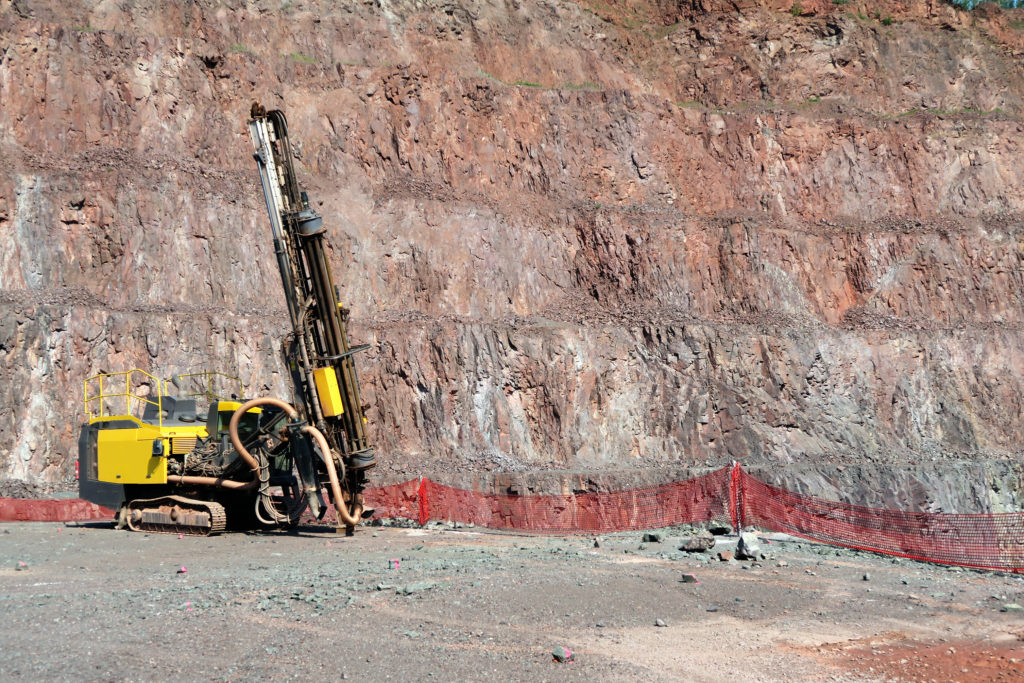
Mining companies are starting to rethink drilling and blasting. Instead of treating them as isolated tasks at the front end of mining, operations are increasingly connecting them to the broader mining cycle, from loading and hauling to crushing, milling and ore recovery. The goal is no longer just to move rock, but to break rock more effectively to improve every stage that follows.
Across the industry, mines are using more real-time drilling data, automated equipment and blast modelling tools to improve fragmentation, reduce energy use and make the entire mining process run more efficiently. Simply put, mines are trying to break rock more consistently, so the material flows more smoothly through the rest of the operation. That shift comes as operations face growing pressure to improve productivity, lower operating costs, optimize energy consumption and improve safety.
For decades, drilling and blasting were treated as separate operational stages. Drill crews focused on accuracy and productivity, blasting teams focused on rock movement and fragmentation while plant operators concentrated on crusher and mill performance. Now, mining companies are increasingly realizing those systems are directly connected.
“Since Covid, there has been an overall move to have the ability to make better blast design decisions based on downstream performance,” said Norm Patterson, technical solutions manager at Orica Canada.
At the centre of the shift is fragmentation, which refers to the size of rock after a blast. If the rock is too coarse, oversized material can slow loading, create crusher bottlenecks and increase energy use. If the material is fine, mines can face recovery and handling issues. Poor fragmentation can affect nearly every stage of mining.
“The downstream costs can be very significant across the board, affecting mine productivity and power consumption in the crushing and milling processes,” Patterson said.
Kapil Kumar, surface automation product manager at Epiroc said mining operations are increasingly adopting highly automated and autonomous drilling systems to improve consistency, accuracy and safety.
“Mining has evolved significantly from manual processes to automated, data-driven operations,” Kumar added.
Modern automated drilling systems can drill holes more precisely and consistently than manual operations, helping mines place explosives more accurately and improve blasting results. According to Kumar, even small drilling errors can create significant downstream impacts. “Poor hole accuracy can harm fragmentation, explosive performance and require redrilling affecting productivity and plant performance,” Kumar explained.
While labour shortages are contributing to automation adoption in some regions, Kumar says safety remains automation’s primary driver.
Automation allows operators to work remotely while reducing direct exposure to unstable ground, dust, vibration and other hazardous conditions. Remote and autonomous systems are also helping mines scale operations more consistently across multiple drill rigs, shifts and sites while reducing operational variability.
As mines become larger and more data-driven, companies are increasingly viewing automation not simply as a safety tool, but as a way to improve reliability, consistency and long-term productivity across the entire mining cycle.
“When a mine operation shifts from manual to automated drilling, it sees key changes such as improved safety, increased productivity and greater reliance on data for decision-making,” Kumar said.
Operators and superintendents often notice immediate improvements after automated systems are implemented. Drilling becomes more consistent from shift to shift while supervisors gain access to real-time operational data showing rig performance, downtime and drilling progress. “That helps them make quicker and smarter decisions,” Kumar said.
As mines collect more operational data, drilling information is increasingly being used outside the drilling stage itself. It feeds into blast design, helping optimize explosives loading and improving accuracy.
Historically, drilling, blasting, loading and processing systems were often operated independently. Today, companies are working toward more integrated workflows where operational data can move more seamlessly between departments.
“Value creation is increasingly driven by system integration. Connecting different parts of the mining cycle from drilling to hauling creates efficiencies,” Kumar said.
Patterson said one of the biggest changes over the past decade has been the widespread adoption of electronic blasting systems. Those systems allow blasting engineers to more precisely control the timing between explosions which directly affects how rock breaks and moves after a blast.
Despite major technological improvements, Patterson said mines still lose value through poorly optimized blast timing and inconsistent execution. “Even an overpowered blast can underperform with poor timing selection,” he added.
One Orica-led project demonstrated how significant those downstream impacts can become. The project focused on creating smaller rock fragments to improve ore recovery without increasing dilution, or the amount of waste rock mixed with the ore. Before the redesign, the mine’s blast timing had been set up primarily to limit rock movement and reduce dilution. While that helped control ore movement, it also created poor digging conditions, floor issues and excessive oversized rock.
Using Orica’s calibrated fragmentation modelling tool, engineers redesigned the delay timing and adjusted the amount of crushed rock placed at the top of each drill hole to better control the blast.
“The increase in fines (smaller rock fragments) was immediately visible in the blasted rock pile,” Patterson said. “Forward movement of the blast improved up to 300% in some trials without affecting ore dilution, improving overall dig rates,” he explained.
Operators also noticed smoother material flow and less oversized rock moving through downstream systems. “The customer feedback was that the effect on the crusher was significant with the majority of the muck flowing through without additional crushing required,” Patterson said.
According to Patterson, the project ultimately delivered tens of millions of dollars in annual downstream benefits through improved fragmentation, lower energy use and improved ore recovery.
Still, both Patterson and Kumar emphasized that technology alone is not enough.
“It is not an either-or discussion,” Patterson said. “Strong drill and blast outcomes come from the right mix of skilled people and purpose-built technology,” he concluded.
Artificial intelligence (AI) is also beginning to enter the discussion, but mining remains in the early stages of AI adoption. For now, many mining companies are still focused on integrating the systems they already have. While the fully optimized mine may still be years away many of the building blocks already exist today. Mining companies are increasingly realizing that improving crusher and mill performance often starts much earlier in the mining cycle. It begins at the drill hole.
Salima Virani is a freelance mining writer.
Comments