Battery electric and automation technologies shaping the future of underground mining
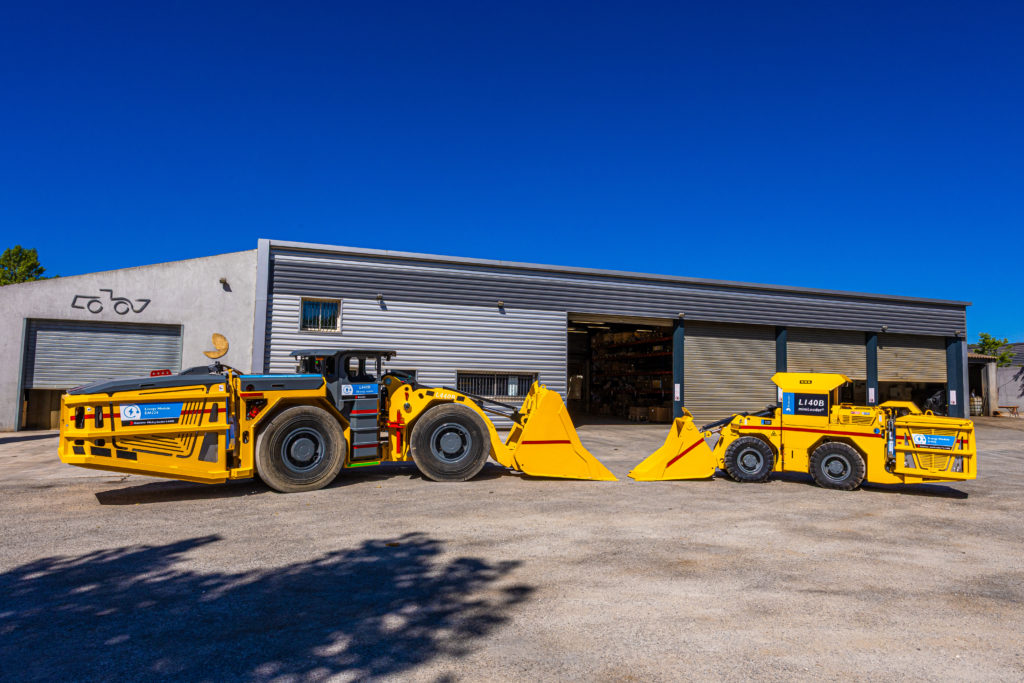
Aramine continues to advance underground mining equipment designed for narrow-vein operations, with a growing focus on battery electric machinery and automation. The Canadian Mining Journal had a conversation with Marc Melkonian (MM), co-president of Aramine and head of the equipment division, to discuss the company’s battery electric strategy, operator adoption, automation partnerships and the future of underground mining equipment.
CMJ: Aramine has been advancing battery-powered underground loaders with quick-swap battery systems. How are these machines changing equipment selection in underground and narrow-vein mining, and what is driving customer adoption?
MM: It is related to the technologies that Aramine engineers have chosen. The technology is to use LFP (lithium iron phosphate) batteries, which are the safest in the market today. It is a paradox because it is the opposite of what other manufacturers are offering. We are offering low-speed charging. The reason is that underground, the less we change people’s habits and the organization of the mine, the more chance we have to succeed.
We use a true hot-swap system. Some people call it hot swap because that they can dismantle the battery. In our case, there is nothing to dismantle. It is an easily removable energy module and can be charged on any electrical plug. Adoption is really related to the fact that there is no need to change anything in the mine organization.
CMJ: Are operators primarily motivated by emissions-reduction targets, ventilation cost savings, productivity gains or a combination of all three?
MM: At first, operators were not concerned by those factors, even though they are very important.
Operators are generally conservative in our industry, and they are often worried about change. However, they very quickly realize the effect of operating a battery electric machine compared with diesel equipment. Diesel still has a long life in our industry, but battery electric machines quickly gain operator satisfaction once people begin working with them.
CMJ: Automation and remote-operation capabilities are becoming more common in underground equipment. How is Aramine approaching automation, and what improvements are you seeing in safety, recovery and operational flexibility?
MM: Automation is essential to the future of underground mining. As Europe looks to reopen mines and strengthen raw-material independence, new operations will increasingly rely on automated equipment rather than large underground workforces.
Automation is not only about the equipment manufacturer, but it also depends on the country and mining operation where the technology is deployed. As a global company, we work with regional partners to meet those specific requirements.
Today, our main automation partners are Hexagon in the Americas, where an Aramine machine is operating at the NORCAT laboratory in Canada; RCT, part of Epiroc, in Australia, where an L350D loader has been successfully converted and additional units are planned; and Sensmore in Germany, where one of our battery electric loaders has been transformed into a fully automated machine. These partnerships are helping us advance automation technology while adapting solutions to the needs of individual mining operations.
CMJ: Do you see automation becoming standard across underground fleets, or will it remain site-specific depending on geology, mine design and mine age?
MM: Automation, particularly underground, is becoming standard. Underground mining is a challenging environment. As an underground mining equipment manufacturer, we take great pride in serving an industry that supplies the raw materials that form the foundation of the global economy.
At the same time, there is still work to be done in terms of safety, working conditions and environmental responsibility. Our role is to build machines that will remain relevant and usable in the future. Without automation, that will not be possible.
Automation is becoming a necessity not an option and is closely linked to improving safety, enhancing working conditions and ensuring that underground mining can continue to meet society’s growing demand for raw materials while addressing environmental and operational challenges.
CMJ: How does Aramine balance innovation in battery electric equipment with life-cycle considerations like maintenance, remanufacturing and total cost of ownership?
MM: Competitiveness is a key factor. As a French company, we benefit from efficient logistics, with access to ports that have enabled us to ship equipment worldwide for more than 50 years. We also leverage strong engineering expertise and competitive manufacturing capabilities across Europe, including chassis production in Central Europe.
Battery sourcing remains dependent on the Chinese market, but costs continue to decline, making battery electric loaders increasingly competitive. Even when battery prices were much higher, we demonstrated significant total cost of ownership advantages over diesel equipment, with ownership costs reduced by approximately three times.
Our battery electric machines were designed from the ground up rather than adapted from diesel models. By eliminating components such as diesel engines, fuel systems and transmissions, they significantly reduce maintenance requirements and costs.
The machines are also highly modular. The energy module, which contains the battery, electronics and chargers, can be upgraded as technology evolves. For example, battery loaders delivered in 2017 were upgraded last year with new software and battery technology, improving energy efficiency and increasing battery capacity within the same machine dimensions.
Watch a full video of the interview at
https://youtu.be/GMsyZutyjS4?si=_wG07AMgUfQMXF3v
Related Posts
Coal bank financing holds near $117 billion despite pledges
September 30, 2026
Coal bank financing holds near $117 billion despite pledges
Metso lands largest LCS deal to date
September 24, 2026
Metso lands largest LCS deal to date
Volvo crosses 3M tonnes of autonomous haulage
September 24, 2026
Volvo crosses 3M tonnes of autonomous haulage
Rio Tinto to expand metals trading beyond own output
September 24, 2026
Rio Tinto to expand metals trading beyond own output
Greenland Mines says US pact could strengthen mineral supply
September 21, 2026
Comments