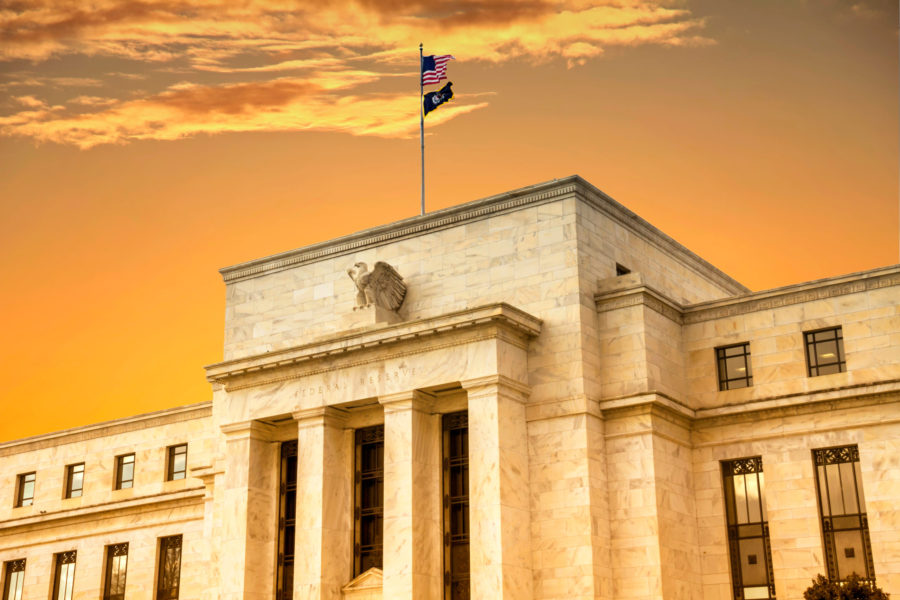
Gold fell on Tuesday, back within $20 of the $4,000 an ounce mark, as traders braced for a Federal Reserve decision that is a genuine coin-toss and a fragile pause in Middle East fighting drained the inflation premium out of the market.

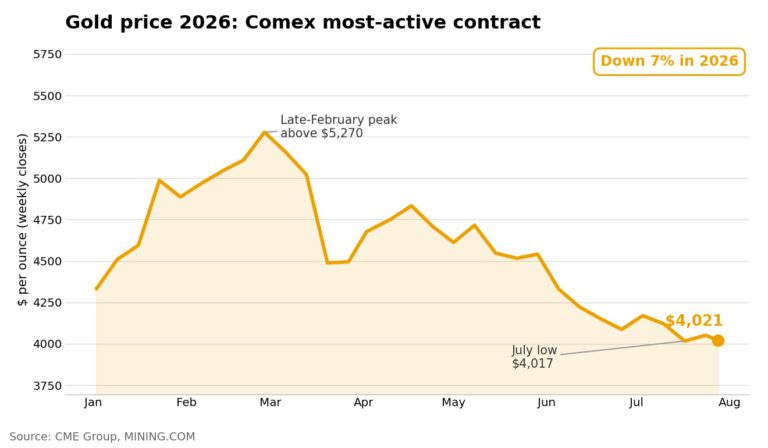
The Comex most-active August contract traded at $4,021.20 an ounce by mid-morning in New York, down 1.4% on the day, after dipping to $4,011.10 earlier in the session. Spot gold slipped 1.5% to $4,015.17 as of 10:21 a.m. in New York.
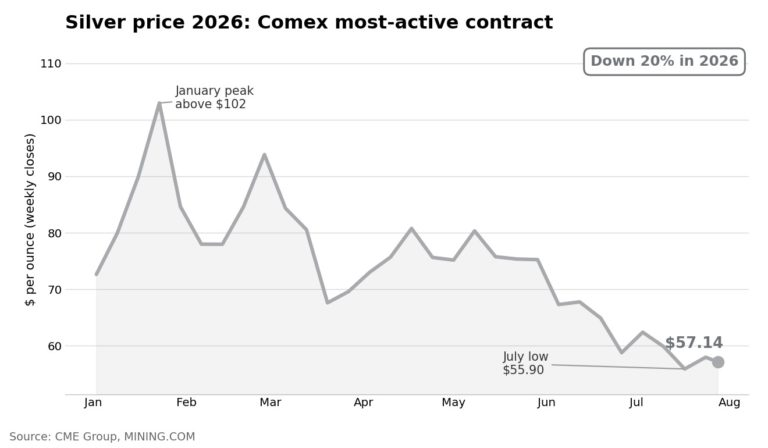
Silver fell harder with September metal on Comex changing hands at $57.14 an ounce, down 2.7%, about $1.60 above its 2026 day low of $55.50, set on July 16, while spot silver dropped 2.8% to $56.72. Platinum and palladium also traded lower, and the Bloomberg Dollar Spot Index was steady.
The Fed announces its decision on Wednesday, and interest-rate swaps put the chance of a quarter-point increase at about one in three, an unusually high degree of uncertainty this close to a meeting by the standards of recent years. Policymakers are caught between June’s tamer-than-expected inflation reading and the more recent rise in oil prices that came with the flare-up in fighting between the US and Iran.
Citadel Securities expects a hike this week, arguing the move would strengthen Fed chair Kevin Warsh’s credibility in his battle with inflation. Higher rates are usually negative for non-yielding bullion, and gold equities have already given up their gains for the year as those odds have climbed.
“Even if the Fed leaves rates unchanged, a hawkish message or a clear signal that further tightening remains under consideration could lend support to real yields and the US dollar, temporarily capping gold’s recovery,” said Christopher Wong, a strategist at Oversea-Chinese Banking Corp, in a Bloomberg note.
The war premium, meanwhile, keeps leaking away. US airstrikes on Iran are paused while the two sides negotiate a permanent peace and the reopening of the Strait of Hormuz for oil and gas exports, pushing West Texas Intermediate below $78 a barrel, down more than 7% over the past week, and taking one of gold’s inflation props with it. Bullion is down by nearly a quarter since the war began five months ago.
It has still held near $4,000 since late June, propped up by dip-buying. Bullion-backed exchange traded funds added holdings for five straight days, the longest streak of gains since May.
Precious metals equities took Tuesday’s move harder than the metals did. In New York, Newmont fell 1.7%, Agnico Eagle 2.6%, Barrick 2.3%, Wheaton Precious Metals 2.3% and Kinross 2.1%, while the silver-levered names led the retreat, with Hecla down 4.7%, Buenaventura and Equinox Gold both 4.0% and Coeur 3.7%. Fresnillo was the exception, up 2.9% in US trading after lifting its gold forecast on a strong first half.
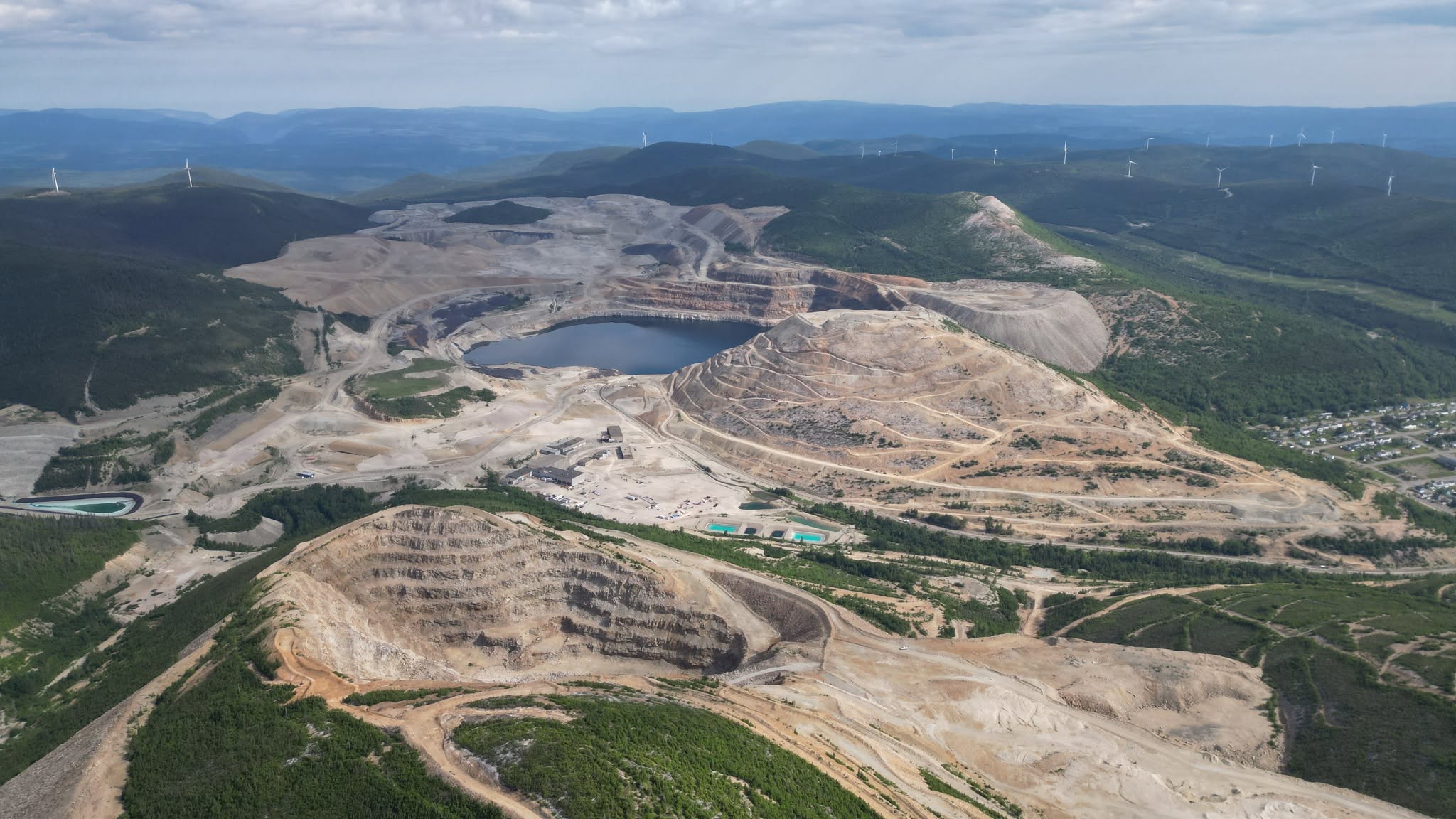
With the month nearly out, the 2026 scoreboard is grim. Agnico Eagle has lost more than 7% in July alone after suspending mining at its Barnat pit in Quebec, and reports second-quarter results on Wednesday. For the year to date Equinox Gold is down 35%, Gold Fields 26%, Alamos Gold 26%, Hecla 25% and Fresnillo 24%, while Barrick has shed 16%, Kinross 17% and Agnico 14%.
Newmont, which is counting on a 5-million-ounce boost from Lihir, is down 8%, and Franco-Nevada, up 1.8%, is the only major precious metals name in the black. The world’s 50 biggest miners shed $228 billion in market value in the second quarter, with the gold names doing most of the damage.
There was better news for the exchanges. CME Group said the debut weekend of round-the-clock trading in its one-ounce gold futures drew stronger-than-expected demand, with nearly 15,000 contracts, about $60 million in notional value, changing hands.
(With files from Bloomberg)
September 10, 2026
September 10, 2026
September 9, 2026
September 9, 2026

September 8, 2026
Comments