The lifesavers keeping modern mining moving
Mining has always been an industry defined by extremes. Extreme loads, extreme environments and extreme financial consequences when something goes wrong. A single haul truck can move hundreds of tonnes of material in one cycle. A hydraulic shovel may operate nearly around the clock. Underground drills, roof bolters, crushers and loaders work in environments filled with dust, vibration, moisture, heat and abrasive contaminants. Every piece of equipment is expected to perform reliably despite conditions that would quickly destroy standard industrial machinery.
Hydraulic systems make that possible
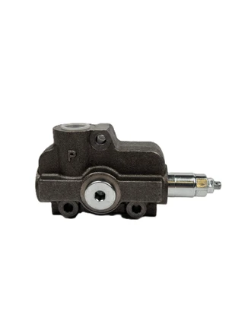
While cylinders, pumps and motors often receive most of the attention, one component ultimately determines whether the entire hydraulic system performs efficiently. That component is the hydraulic valve.
As mining equipment becomes more automated and more specialized, off-the-shelf valve solutions are becoming a compromise rather than an advantage. Customized hydraulic valves have emerged as one of the most effective ways to improve machine reliability and enhance operator safety.
Mining does not operate in average conditions
Hydraulic valves sold through catalogs are designed to serve the widest possible range of applications. They are intentionally versatile. The problem is that most mining equipment is not versatile.
Every machine is built around a specific duty cycle, operating pressure, flow requirement, environmental condition and operator expectation. Even two similar machines may experience dramatically different operating conditions, depending on whether they are working in an underground copper mine, an iron ore operation in Australia or an aggregate quarry in Tennessee.
Mining introduces challenges (continuous shock loading, high vibration, fine dust contamination, etc.) that standard hydraulic components were never designed to solve simultaneously.
Any one of these factors can shorten component life. Combined, they create an environment where small design compromises become major reliability issues.
That is why more OEMs and mining operators are moving toward application-specific hydraulic valve solutions, rather than attempting to adapt general-purpose products to highly specialized equipment.
Downtime costs more than replacement parts
An inexpensive valve that causes just one unplanned equipment shutdown can quickly become the most expensive component on the machine. When production stops, costs accumulate immediately. Replacement components may take days to arrive, while technicians travel significant distances simply to diagnose the problem.
Customized hydraulic valves reduce this risk by being engineered specifically around the operating conditions they will experience. This includes selecting appropriate sealing materials, pressure ratings, flow characteristics, mounting arrangements and contamination resistance based on the application itself.
Better control means better safety
Mining equipment continues to become larger and more powerful. That increased capability also increases risk. Operators rely on hydraulic valves to precisely control machine movement. Whether positioning a drill boom, controlling a loader bucket, operating a roof support or managing a hydraulic hammer, predictable motion is critical.
If you are experiencing any of the following systems, the culprit is likely poor valve performance:
- Jerky movements
- Pressure spikes
- Slow response
- Inconsistent flow
- Load instability
- Excessive heat generation
These issues can affect operator confidence and overall jobsite safety. Customized hydraulic valves allow engineers to optimize spool geometry, pressure compensation, load sensing and flow characteristics specifically for the machine’s intended function. The result is smoother operation, more predictable equipment response and greater control during demanding tasks.
Eliminating the weak links
One of the biggest advantages of customized hydraulic valves is not necessarily the valve itself; it is everything the customization eliminates. Traditional hydraulic systems often require numerous hoses, fittings, adapters, manifolds and auxiliary components to make standard valves fit the application. Every additional connection introduces another opportunity for leakage, pressure loss, contamination and much more.
Custom valve assemblies frequently consolidate multiple functions into integrated manifolds designed specifically for the machine. And for equipment manufacturers, this simplifies production while creating cleaner hydraulic layouts that are easier to troubleshoot throughout the machine’s lifecycle.
Designed around real operating conditions
No mining application is truly “standard.” Some operations require continuous heavy-duty cycling, while others prioritize extremely fast response times, for example. Some operate in arctic temperatures; others function in desert heat exceeding 43ºC. Customization allows hydraulic valve designs to account for these factors. Instead of forcing equipment designers to compromise on existing components, the valve becomes part of the engineered solution itself. This shift fundamentally changes system performance.
Supporting the next generation of mining equipment
Mining is evolving rapidly (electrification, automation, remote operation, etc.). Each new technology places greater demand on hydraulic control systems. Today’s hydraulic valves often communicate directly with electronic controllers, sensors, joysticks and software platforms. They must respond faster, deliver more accurate control and provide consistent performance under increasingly complex operating conditions.
Customized electrohydraulic valve solutions make this integration significantly easier because they are designed alongside the control system, rather than added afterward. Instead of asking, “How can we make this valve work?” Engineers begin by asking, “What does this machine need to accomplish?” That difference drives better machine performance from the earliest stages of development.
Contamination remains the silent killer
If there is one constant across nearly every mining operation, it is contamination. In fact, hydraulic contamination remains one of the leading causes of premature hydraulic component failure because valve clearances are often measured in microns. Even tiny particles can score precision surfaces, restrict spool movement, damage seals or create internal leakage. Customized valve systems help address this challenge through features like improved sealing, better filtration and optimized internal flow paths. Combined with preventive maintenance, these improvements dramatically increase system reliability while extending component life.
Customization is not about complexity
One common misconception is that customized hydraulic valves make systems more difficult to maintain. Realistically, the opposite is often true.
When engineered correctly, customization reduces unnecessary complexity by designing around the machine instead of adapting the machine around standard components. Maintenance technicians benefit from simplified hydraulic routing. OEMs benefit from more consistent machine performance. Operators benefit from greater uptime. Owners benefit from lower total cost of ownership. Everyone wins.
The real competitive advantage
Mining companies aim to move more material with fewer interruptions, while manufacturers seek differentiation beyond horsepower or lifting capacity. Customized hydraulic valves offer opportunity. Though inconspicuous, they influence performance metrics. Hydraulic systems must deliver intelligent, predictable and reliable performance in harsh conditions, not merely power. Average components cannot always meet this expectation. Productivity, automation, safety and cost pressures demand mining-specific solutions. Tailoring control to machine and environment gives OEMs and miners performance, reliability, safety and confidence. Working with a hydraulic engineering partner early can identify improvements and reduce long-term maintenance costs. Greatest gains can come from rethinking the smallest components.

Brian Green is a senior technical support specialist for Bailey International.
Related Posts
The critical minerals race is becoming a race for talent
October 16, 2026
The critical minerals race is becoming a race for talent
The future of mining requires drones: A new way to inspect, survey and map
Beyond the mine: The multidisciplinary approach shaping Eastern Canada’s mining future
Digging deep: how mining companies need to address community safety internally and externally
Sponsored forum video: Resolute targets first gold at Doropo in 2028
October 15, 2026