Digging smarter: How AI is reshaping the future of mining
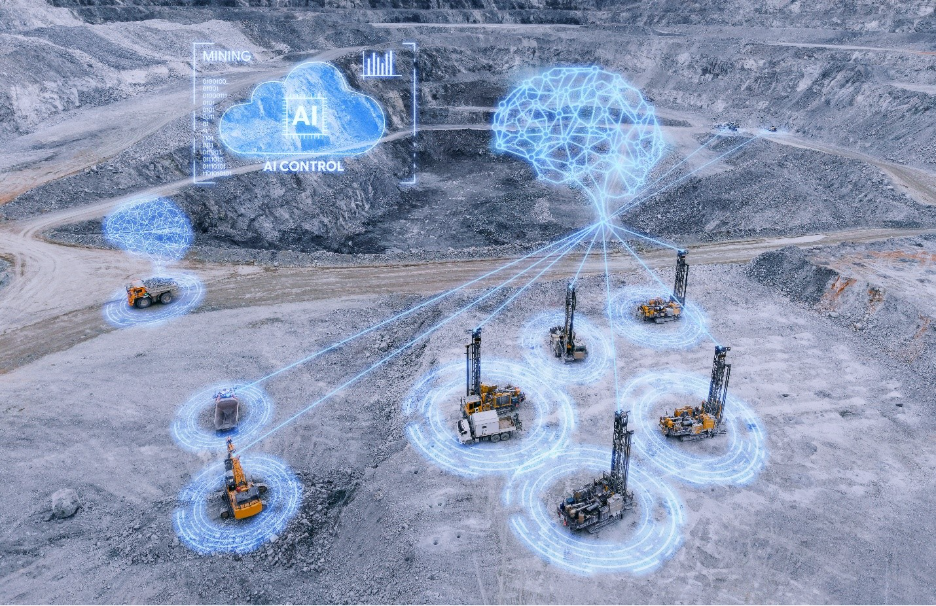
From AI-powered mineral discovery to autonomous exploration platforms, a new generation of technology companies is tackling mining’s most urgent challenges — just as the stakes have never been higher.
The global mining industry is under siege from two directions at once. On one side, the electrification of everything — from electric vehicles to power grids to fighter jets — is triggering a dramatic surge in demand for critical minerals, including lithium, magnesium, copper and rare earth elements (REEs). On the other, deglobalization and accelerating trade wars are fracturing supply chains, with China sitting at the eye of that storm. China currently controls more than 85% of global supply across lithium, copper, magnesium and REEs, giving it an outsized grip on the very inputs that modern economies cannot function without.
The numbers tell a stark story. To sustain defence readiness, industrial growth and the clean energy transition, analysts estimate the world must increase total global metal production by 30 times before 2050. Yet, discovery rates have collapsed by 73% over the past decade. The gap between what the world needs and what the industry is finding is widening fast.
National security, energy security and supply chain security, as industry leaders have come to understand, are now inseparable — and all three hinge on access to critical minerals. That reality is forcing a rethink of how the mining sector operates. And increasingly, the answer involves artificial intelligence (AI).
For all the industry’s scale, mining has historically been data-rich but insight-poor. Decades of exploration have generated millions of pages of geological records, subsurface surveys and borehole data — much of it sitting in paper archives or disconnected digital silos, effectively invisible to decision makers. AI is changing that. Machine learning (ML) systems can now ingest and analyze these vast geological archives at a speed and depth no human team could match, identifying mineral signatures, fluid-flow patterns and resource indicators that would otherwise go undetected.
This shift is enabling a new generation of resource companies to discover critical minerals faster, cheaper and more efficiently than ever before. Massive, underutilized geological archives — millions of digital and paper pages of historical subsurface data — are finally being unlocked through ML. The implications for exploration economics are profound.
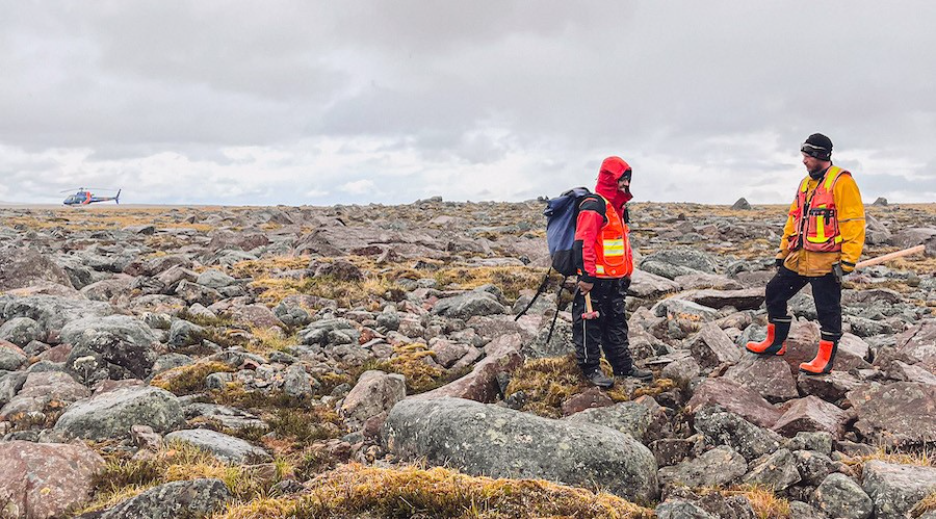
One of the earliest and most prominent examples of AI applied to hard-rock mineral exploration is KoBold Metals. Founded with the explicit mission of using ML to find the materials needed for a clean energy future, KoBold has grown into a multi-billion-dollar success story. The company applies AI to evaluating and developing hard rock mining resources, combing through geological datasets to identify where high-value deposits are most likely to lie hidden.
KoBold’s rise has become something of a reference case for the sector — proof that AI-native approaches to mineral exploration can achieve commercial scale. It has also opened the door for a broader wave of companies building on similar principles, each targeting different resource types or applying AI in distinct ways.
Among the most promising new entrants is Atana Elements, which is positioning itself as an AI-native dissolved mineral — or brines — exploration company. Spun out of Lilac Solutions in Sept. 2025, Atana brings with it an AI exploration software stack, three mineral assets (two in the E.U., one in the U.S.) and the 12-person team that built Lilac’s AI mineral discovery group. Lilac Solutions itself has raised $315 million and is backed by both Bill Gates’ Breakthrough Energy and Lowercarbon Capital.
Atana’s technology platform combines proprietary fluid-flow modeling, AI discovery tools and more than 3.2 million pages of digitized subsurface data. The company’s initial focus is on lithium brines — one of the most capital-efficient pathways to lithium that batteries and energy storage systems require — with future exploration planned for magnesium, helium, hydrogen and geothermal energy resources.
The company’s track record is already compelling. While still operating inside Lilac Solutions, the Atana team used its proprietary AI and modeling stack to acquire, characterize and prove the Salar de Jama lithium asset over several years. They recently sold that asset for $85 million — a three-times return on investment. It is precisely the kind of capital-efficient discovery-and-monetization cycle that Atana now aims to replicate at scale.
Atana has raised a $25 million seed round co-led by Lowercarbon Capital and Hitachi Ventures, with participation from Volta, Earthshot Ventures, Sunna Ventures — a large mining LP — and Woven Earth. With over five million acres secured and a repeatable AI discovery process, the company’s aim is to build a scalable portfolio of high-value mineral projects, capturing value at three distinct stages: land assembly and discovery, asset monetization and long-term royalty retention.
Beyond exploration, AI is being applied throughout the mining value chain. Companies like Fortescue and Rio Tinto have deployed autonomous haul trucks and AI-powered fleet management systems at their iron ore operations in Australia, cutting fuel costs and improving operational safety. Startups such as Plotlogic are using hyperspectral imaging combined with ML to deliver real-time ore grade sensing directly at the mine face — reducing waste and increasing the precision of extraction decisions.
Seequent, a Bentley Systems subsidiary, offers AI-enhanced geological modeling software that helps geoscientists interpret complex subsurface data more quickly. Meanwhile, companies like Mineware and Wenco are applying AI to shovel and truck monitoring, turning operational data into predictive maintenance alerts and productivity improvements. The common thread running through all of these applications is the same: AI converting raw data — geological, operational or environmental — into actionable intelligence that reduces cost, risk and time.
The urgency behind these innovations is not merely commercial — it is geopolitical. Global demand for lithium, magnesium and other critical minerals continues to outpace supply, with leading analysts projecting persistent undersupply through the end of this decade. The macro tailwinds are real and accelerating: every electric vehicle, every battery storage system, every semiconductor fab and every military platform depends on a steady supply of minerals that the West currently sources overwhelmingly from a single geopolitical adversary.
That dependence is no longer sustainable. National governments — most visibly the U.S. — are now treating mineral supply chain security as a matter of strategic priority equivalent to energy independence. The challenge is that building new supply takes time: from discovery to production, a conventional mine can take 10 to 20 years. AI-powered exploration, which can compress the discovery phase dramatically while reducing the capital required, is therefore not just a technological curiosity but a geopolitical imperative.
AI-native companies, built from the ground up to treat geological discovery as a data problem, can outcompete legacy exploration methods at both speed and cost.
AI is rewriting the rules of mineral exploration — and the window for first movers is open right now. Despite a century of geological fieldwork, most of the world’s subsurface data has never been subjected to modern ML analysis. Companies with proprietary datasets, modeling capabilities and operational expertise to extract insight from that data have more than three-year head start on competitors who are only now recognizing the opportunity.
What KoBold Metals demonstrated in hard rock, Atana Elements is now pursuing in brines — a less capital-intensive but equally strategic segment of the critical minerals landscape. Both represent a broader thesis: AI-native companies, built from the ground up to treat geological discovery as a data problem, can outcompete legacy exploration methods at both speed and cost.
The mining industry has long been characterized by boom-and-bust cycles, long lead times and enormous capital risk. AI does not eliminate those dynamics — but it changes the odds. By unlocking historical data, improving subsurface modeling and enabling faster, cheaper validation of exploration targets, AI is giving the mining industry tools it has never had before. For an industry that must somehow deliver 30 times increase in metal production over the next 25 years, those tools are not optional.
Gordon Feller is a freelance writer.
Comments