A new lease on life: Considerations for converting an inefficient haul truck into an efficient water truck
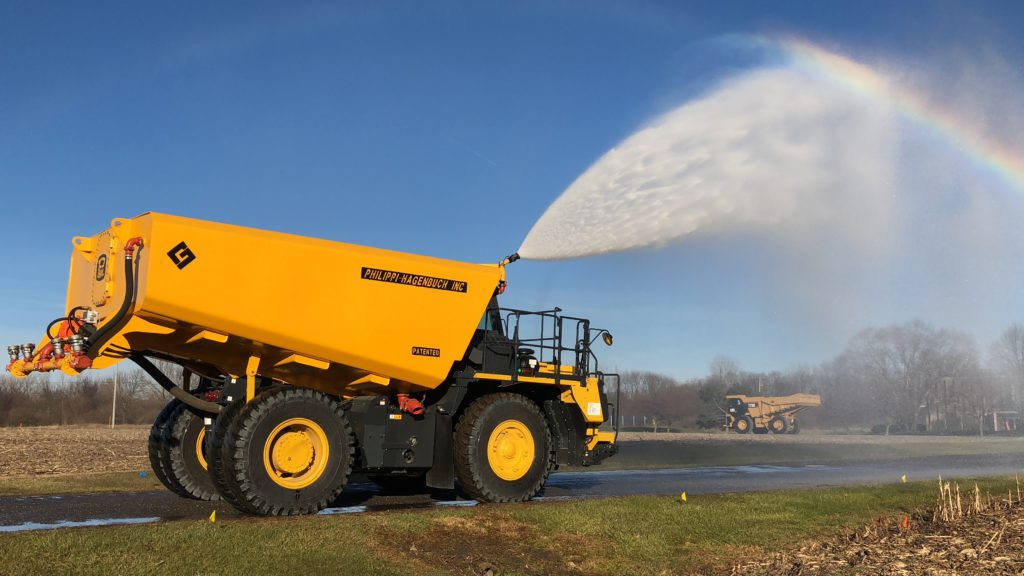
Over time, equipment wears and tends to slow down as its hours increase. It is bound to happen to every machine, and when equipment becomes less efficient, so does an operation. When it comes to off-highway haul trucks, there are alternatives to getting rid of the truck entirely through an auction or trading toward another piece of equipment. Instead, an operation can repurpose the haul truck to extend its useful life and find new efficiency for the machine by converting it from a material hauler in a primary fleet to a water truck. Converting an aging haul truck to a water truck not only lengthens its operating life but also transforms it into a highly productive asset for essential dust control jobs to reduce the expense associated with keeping dust below required thresholds, extending its circle of life and aiding in sustainability goals.
With the right water tank, operations can rest assured they will turn an aging, less-productive material hauler into a highly efficient water truck for years to come. First, it is important to understand why a truck can continue to haul water after it has reached the end of its useful life hauling material.
More life
One of the main reasons that haul trucks can have an extended life as a water truck is the reduced overall burden on the vehicle. Filling a water tank is significantly easier on a truck, causing much less impact than loading a dump body with large rocks and other heavy materials. Production hours play a part, as well. Trucks designated for material hauling accumulate around 8,000 hours per year and, as they approach the 50,000-hour mark, they become less efficient from years of heavy-duty hauling. Water trucks, on the other hand, typically accumulate 2,000 to 3,000 hours per year as the everyday demands on the truck are not as high.
Loading a truck with water instead of hard materials combined with fewer operational hours is a recipe for much-extended truck life. If the machine is still in decent shape when converted to a water truck, it is reasonable to expect the truck to comfortably surpass 50,000 service hours. The third part of the longer-life equation is opting for a water tank that is engineered and constructed for longevity. Water tanks built with the most durable steel available — 450 Brinell — allow for minimal maintenance and the toughness to last for years to come. With durable steel and meticulous engineering, some water tanks can last for more than 25 years. Additional design considerations will maximize the water tank’s efficiency in its new role in dust control.
Importance of design
Dust control is a necessary process that must be managed daily, and the proper water tank solution helps operations be as efficient as possible to minimize the associated cost. From a casual perspective, it might seem like a water tank is a water tank, without much in the way of design differences between them. However, it is crucial to be mindful of tank design when converting a haul truck to a water truck.
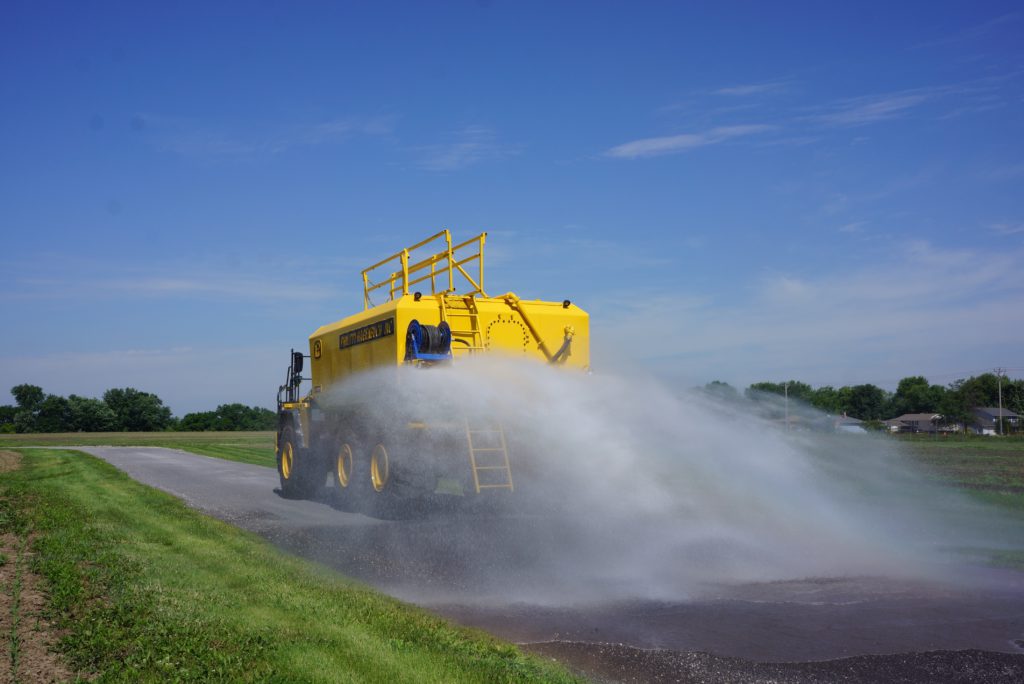
Rounded water tanks are the most common and certainly get the job done, but not without hurdles. The curved sides raise the water’s centre of gravity, making the truck less stable when navigating haul roads. The absence of corners, edges, and obstructions to slow the water’s momentum also contributes to water churning, posing a safety risk for the driver and anyone nearby, since the water can shift the center of gravity and make the truck unstable. To mitigate instability, operators often avoid completely filling the tanks, meaning more frequent refills, and increased downtime and fuel consumption to travel back to the water source. Alternatively, water tanks with a square design minimize churning and have a larger capacity by not rounding off the sides of the tank. They also offer enhanced safety features for more stable operation.
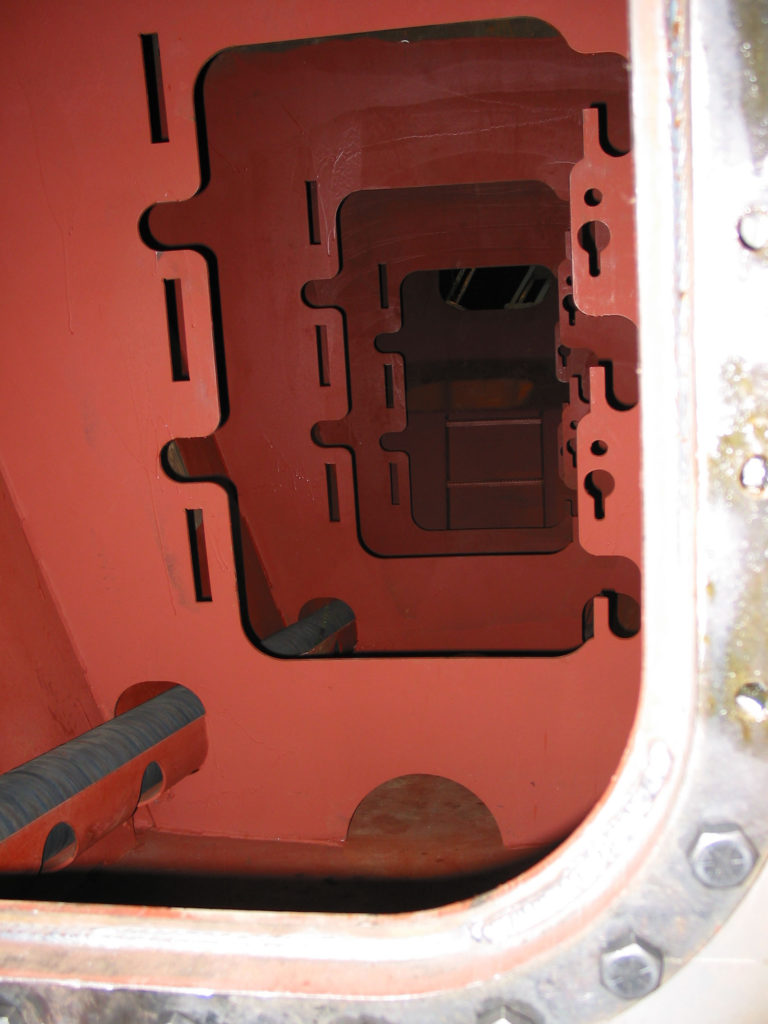
Water tanks’ internal baffling plays a critical role in impacting safety and efficiency. Baffles within the tank help minimize water surging during movement. Nearly all water tanks feature baffles, but many have large holes cut out to allow maintenance personnel access to the tank’s compartments. These openings allow water to surge between compartments which increases the risk of the truck tipping or getting into another type of accident.
To minimize surging and increase stability, some tanks are designed with water control systems that utilize baffling running from floor to ceiling and along the complete length and width of the tank to fully compartmentalize the water. Within the outer components, some manufacturers also install side-surge stabilizers along the walls to prevent water from rolling or churning.
For ease of maintenance, look for a water tank that incorporates both baffle doors and external doors. When the tank is empty and needs service, external doors allow technicians easy access to the inside of the tank and provide fresh air and natural light throughout the tank. Baffle doors allow technicians to easily walk through without the need to crouch during maintenance, and provide access to multiple compartments, minimizing their work in confined spaces. Water tanks with elements to increase safety both while operating and during maintenance are key factors an operation should take into account when considering water truck conversion.
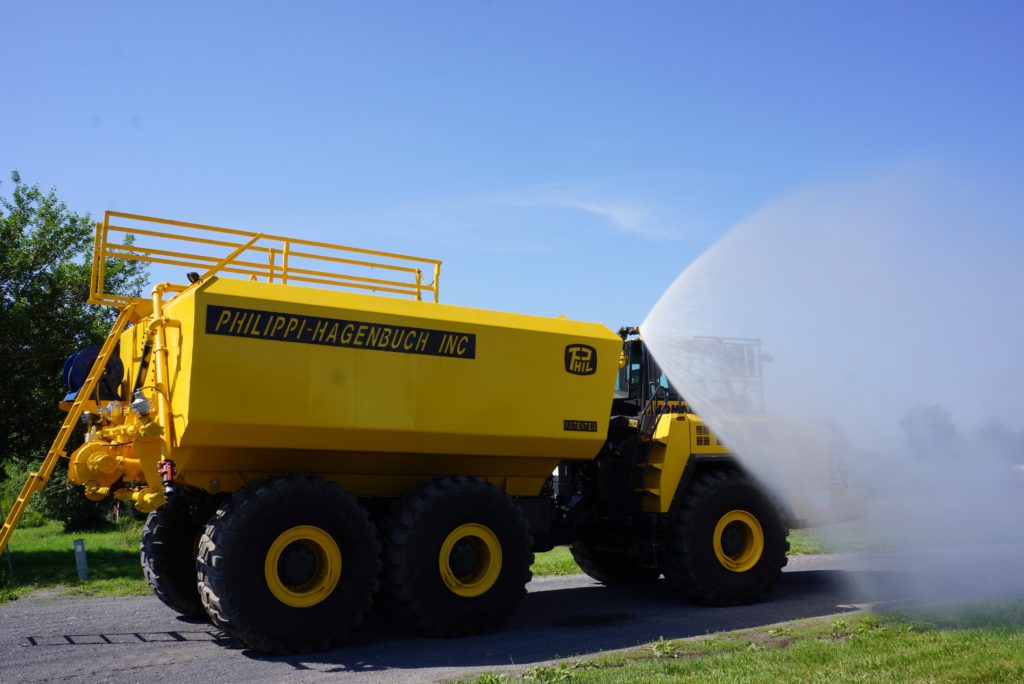
Additional aspects to note are efficiency-enhancing features and ease of use. To optimize productivity, look for a water tank that can spray the entire width of a haul road in one pass. Some offer in-cab analog controls that give operators precise and simplified water control with the ability to utilize any or all spray heads simultaneously. The addition of a remote-controlled water cannon opens the door for other applications, such as spraying stockpiles or washdowns.
The conversion process
The decision has been made to retire an off-highway haul truck into a water truck. So, now what? Some manufacturers custom engineer each solution, which can take some time but guarantees the best-fitting water tank and addresses specific operational needs. Operations need not worry about lengthy installation when the tank is on-site, as the process can take less than two days.
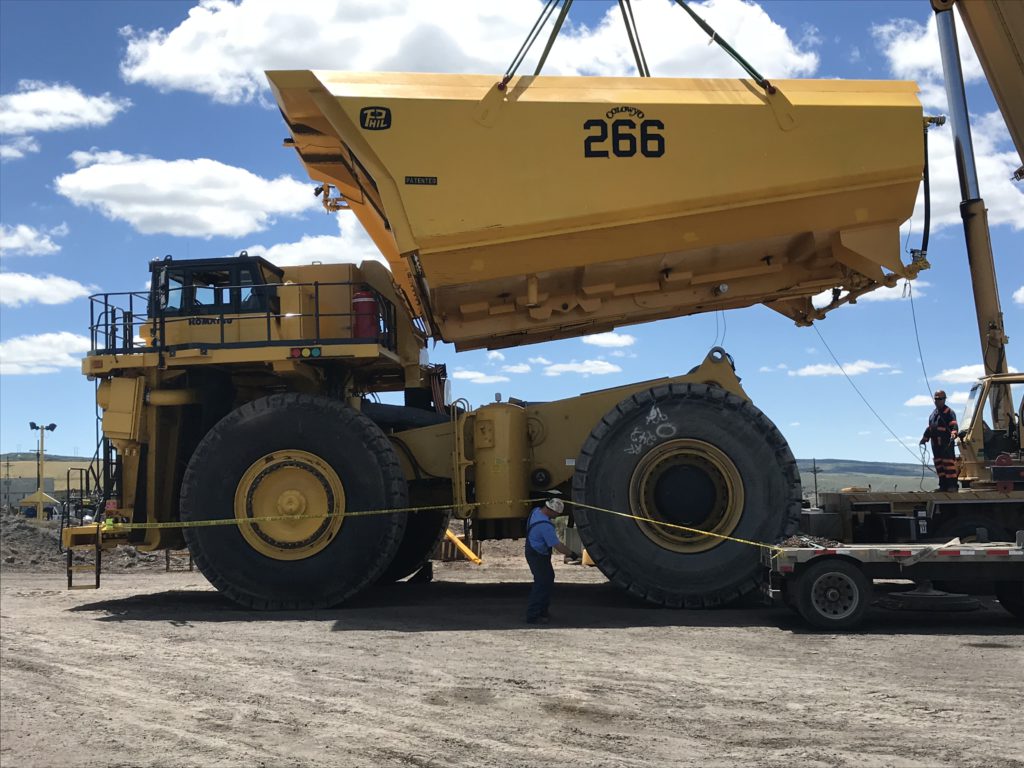
First, the installer removes the old truck body and — in some cases — may have to also remove hoist cylinders. They then place the water tank onto the chassis, shim it, and tighten the water tank. Finally, they replace the control box in the cab and hook up electrical. Now, the operation is ready to efficiently tackle dust control with their “new” water truck.
This installation can be completed by the operation at their location, by the manufacturer, or by hiring a dealer or other third party. If an operation wants to install the water tank themselves but is not sure about some aspects of the process, they should consider partnering with a manufacturer who will assist them and be there for the installation process to lend a hand and provide instruction whenever necessary.
A long-term solution
Though no longer optimal for productively hauling material, converting aging haul trucks to water trucks can give the machines a new lease on life and provide a pathway to a safer and more efficient solution for dust control. So, rather than retiring that used truck, consider alternatives and the opportunity to continue to use an existing asset in a new role in the support equipment fleet. 
Josh Swank is the chief growth officer at Philippi-Hagenbuch.
Comments