A plan to reshape the boron supply chain: An interview with Paul Weibel
As the global push for clean energy accelerates, demand for boron — a critical input in everything from electric vehicles (EVs) and wind turbines to semiconductors and defense technologies — is growing fast. 5E Advanced Materials (Nasdaq: FEAM) (ASX:5EA), a company based in California, is positioning itself to become a reliable U.S. supplier of this overlooked but vital mineral. The Canadian Mining Journal sat down with Paul Weibel (PW), CEO of 5E Advanced Materials, to discuss the company’s history, the strategic role of boron in the energy transition, and how 5E Advanced Materials plans to disrupt a market long dominated by a few global players.

CMJ: You started at 5E Advanced Materials as CFO before moving into the CEO role. How did that transition unfold, and what drew you to the company?
PW: I joined about four years ago as CFO. I am a U.S. CPA and started my career at Bear Stearns in 2007 — my first day was when its asset management funds blew up, and the subprime mortgage crisis began. After that experience, I moved to PwC, passed my CPA, then spent about seven and a half years on the buy side focusing on mining and mining services. The opportunity at 5E Advanced Materials came when the company, then listed on the ASX as American Pacific Borates, was preparing for a U.S. listing. The project is based in California, and the goal was to access deeper U.S. capital markets and bring the project to production. What really attracted me was the market structure. The boron market today looks like the lithium market 15 years ago — dominated by a few players, with strong demand growth and supply constraints. Two producers control most of global supply, and one of those, Rio Tinto, has even put its boron business under strategic review. That tells you how tight and valuable this market is becoming. I moved my family from Pennsylvania to California because it was an exciting chance to take a project public, develop a U.S. critical minerals operation, and be part of an industry entering a growth phase. I became CEO about 15 months ago after leading the IPO process and building the company’s U.S. financial systems. That experience gave me a deep understanding of the business — from operations to our mass and energy balances — and a real passion for what we are building.
CMJ: Can you give us a brief history of the Fort Cady mine and how it evolved into today’s operation?
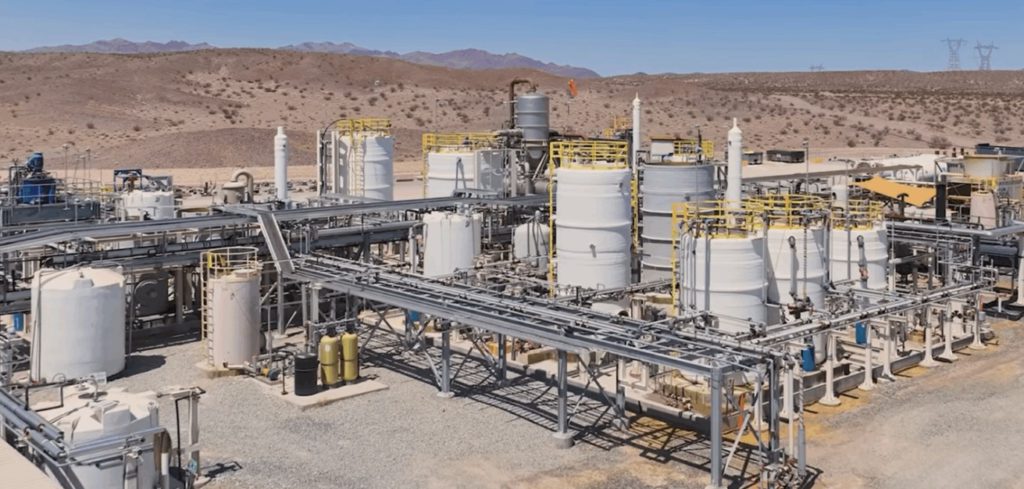
PW: The deposit is a large colemanite deposit — the “Mercedes-Benz” of borate minerals because it is easy to leach. Back in the 1960s, Duvall and Pennzoil were drilling for oil and gas near Bakersfield, California, and instead hit a rich boron layer about 457 metres below ground. That discovery led to significant exploration and pilot plant work in the 1980s. By the 1990s, the project had secured major permits — a record of decision from the Bureau of Land Management and state-level conditional use and reclamation plans. But the economics were not there at the time; the boron market was oversupplied, and the project went dormant. Around 2016, a group of Australian investors rediscovered the site, recognized where the boron market was heading, and acquired it. They listed it on the ASX, began redevelopment, and updated the permitting. We secured our final underground injection control permit from the U.S. EPA in 2020, with full clearance by late 2023. Today, we have a demonstration plant operating, multiple customer segments qualified, and nearly two years of mining and processing data. It has been about de-risking the project — and we are now positioned to scale to commercial production.
CMJ: Boron is now recognized as a critical mineral by the E.U., and U.K. What makes it so important in the clean energy transition?
PW: In the U.S., boron appears on several government lists. It is on the Department of War’s critical minerals list because of its essential role in defense — in armour, semiconductors, coatings, and munitions. The DOE also gives it a high criticality score — 21 with a score of 22 needed to secure critical designation — just shy of the threshold for inclusion, and we are optimistic it will make the next round. Boron is pervasive across clean technologies. It is critical in permanent magnets for EVs and wind turbines, in lighter high-strength steels for EVs, and in all forms of glass — from LCD screens to solar panels. It is also used in nuclear power systems and in insulation materials like fibreglass and cellulose, where it provides fire resistance. There are no real substitutes. So, while it may not have the visibility of lithium or copper, it is just as indispensable in building a decarbonized economy. We are working closely with federal agencies to ensure it is properly recognized as such.
CMJ: The global boron market is an oligopoly dominated by two producers. How can 5E Advanced Materials disrupt that structure?
PW: Our approach is to compete on cost, reliability, and quality. Our preliminary feasibility study (PFS) shows a cash cost of around US$480 per tonne. Add logistics and you are still under US$600 per tonne, which places us competitively on the global cost curve. Demand and supply are reaching parity, and we expect demand to outpace supply from 2025 onward. By producing domestically and efficiently, we can give U.S. and Asian customers a stable alternative source. That is how we will break into this concentrated market.
CMJ: Your feasibility study revealed strong economics. How do you plan to translate that into shareholder value?
PW: The focus is on de-risking and disciplined execution. Mining projects follow what is called the “Lassonde curve” — excitement during discovery, followed by a long, quiet development phase before production. We are now nearing the end of that development cycle. Phase 1 of our project has a net present value of about US$725 million and a 19% internal rate of return. That is based on conservative assumptions and does not yet factor in optional expansions or downstream derivative products. We have roughly 22 million shares outstanding, so even a simple model puts the stock’s intrinsic value well above current market levels. The key now is to move through front-end engineering design, secure bankable contracts, and align our market cap more closely with our project’s underlying value. In U.S. capital markets, credibility matters. You must do what you say you will do. That has been our approach — deliver milestones, keep promises, and let performance build confidence.
CMJ: Which sectors and regions are you prioritizing as demand for boron expands?
PW: We have qualified 14 customers across about six industries, which gives us good diversification. We are supplying boric acid to a domestic group working on boron carbide — critical for defense and armour — and currently 85% of that market depends on China. We have also qualified for textile fibreglass, LCD glass, fertilizers, chemicals, and insulation. The LCD glass segment is particularly demanding, with stringent purity requirements, so qualifying there demonstrates our product quality. Geographically, our focus is the western U.S. and Asia. Türkiye’s producers serve Europe, the Middle East, and Africa efficiently, but our location gives us a competitive edge on the U.S. West Coast and across the Pacific. That mix gives us a balanced portfolio and regional advantage.
CMJ: How does the company plan to maintain sustainability and community responsibility as operations scale?
PW: Our mining method is solution mining — or in-situ extraction — which has a very low surface footprint. We drill nine-inch boreholes and inject solution underground, recovering boron-bearing fluids to process above ground. Once an area is mined out, we rinse the wells with fresh water, test them, plug, and abandon them below the surface, and allow the desert vegetation to regrow. There is no open pit, no tailings pile — it is as close to minimal impact as mining can get. Most of our workforce comes from nearby communities like Victorville and Barstow, which face high unemployment. So, beyond environmental stewardship, we are creating well-paying jobs and contributing to the local economy. We see this as a project that brings both environmental responsibility and real regional opportunity.
CMJ: What are the key milestones ahead as you move from development to profitability?
PW: The project’s total capital requirement is about US$435 million. We already have a US$285 million letter of interest from the U.S. Export-Import Bank for debt financing, and we recently raised about US$8.3 million in a public offering to strengthen liquidity. We are also applying for a smaller EXIM loan — around US$9 to US$10 million — under its Engineering Multiplier Program. That will fund our front-end engineering and design work, which is roughly an US$8 to US$9 million process. That step is critical because it keeps momentum going toward a final investment decision without interruptions. We expect that smaller loans could be underwritten by the end of this year, which would be a major catalyst. At the same time, we are submitting a public comment to get boron included on the U.S. Geological Survey’s critical minerals list — and we are the only pure-play boron stock on the market. We are advancing offtake agreements as well. I have calls scheduled with one of the world’s largest specialty glass producers about scaling up supply trials. Within about nine months, we aim to complete the final feasibility study, secure full debt commitments, and reach FID. That is when we can truly say we are ready to disrupt the boron market.
CMJ: The global business environment is risky right now — tariffs, geopolitical tensions, and regulatory uncertainty. How do these factors affect your path forward?
PW: We are fortunate to have all major permits — federal and state — already in place. That is a huge de-risking factor. On the political side, I will stay neutral, but broadly speaking, a U.S. administration that prioritizes regulatory efficiency benefits mining. Streamlined permitting is essential for domestic critical mineral projects like ours. Locally, we are based in San Bernardino County, one of California’s mining friendly counties, and the support here has been outstanding. They see us as job creators and have worked closely with us to move forward responsibly. Of course, compliance is non-negotiable. We take our license to operate very seriously. We underwent our first EPA inspection this summer and performed very well, which reflects how seriously we manage our environmental obligations. So, while global volatility always brings risk, we view our permits, our location, and our community relationships as real strengths — not vulnerabilities.
Related Posts
JV Q&A: Dundee Sustainable eases processing risk
March 13, 2026
JV Q&A: Dundee Sustainable eases processing risk
Black light tech reveals mineral potential in Montana
March 12, 2026
Black light tech reveals mineral potential in Montana

Barrick selects Draslovka for chemical supply at largest U.S. gold mine
TNM PDAC Podcast Day 2: US Dept of Energy’s Robertson, UK Deputy High Commissioner Prodger and more…
Comments