Deep sea mining takes the international stage
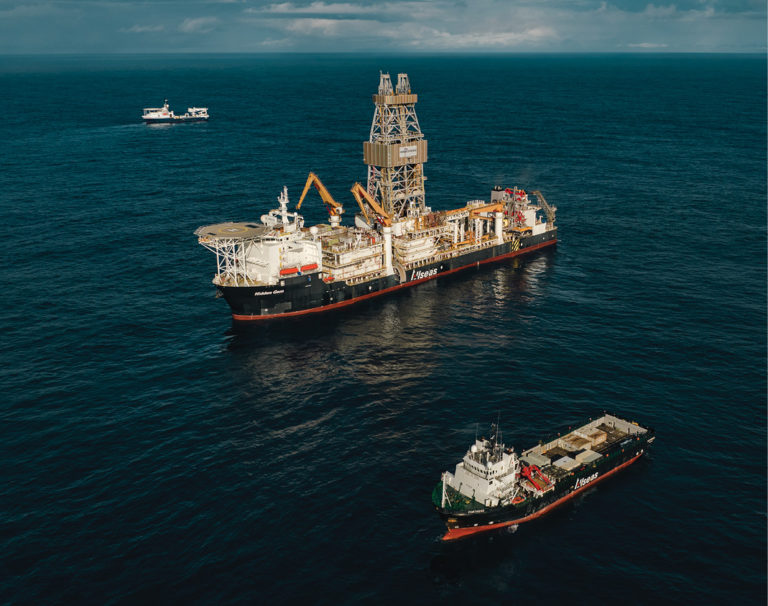
Deep sea mining was once again thrust into the spotlight in late April 2025 when President Trump signed an executive order aimed at jump-starting the industry and boosting U.S. access to critical minerals. As deep sea mining continues to be a contentious topic globally, the move has been hotly debated and raises important questions about the laws governing deep sea mining beyond national borders. It also highlights fast developing issues that deep sea miners, investors, and other stakeholders need to consider.
Efforts to mine the seabed on a commercial-scale are far from new — but what is new is the rapidly growing commercial interest driven by advancements in technology and the increased demand for critical minerals.
The international position
The International Seabed Authority (ISA) is an autonomous international organization established under the U.N. Convention on the Law of the Sea (UNCLOS) and the 1994 Agreement relating to the Implementation of Part XI of the UNCLOS (1994 Agreement). The 1994 Agreement has 169 member states plus the E.U. Canada ratified UNCLOS in 2003. While the U.S. has not ratified UNCLOS, it has supported the ISA as an observer.
Under UNCLOS, all rights to resources in the deep sea protected areas in international waters are vested in humankind as a whole, as they are the common heritage of humankind. To date, the ISA has only issued exploration contracts to assess the potential of deep sea mineral resources. However, commercial exploitation has yet to be approved by the ISA, as the development of comprehensive regulations governing deep sea mining is still under negotiation.
On January 1, 2025, the new Secretary General of the ISA, Leticia Reis de Carvalho, took office. In recent statements, Carvalho has reiterated the position that the ISA is the only regulatory body with a legal mandate to govern mineral activities in the seabed beyond national jurisdictions. Carvalho has also stated that the ISA’s role is to enable responsible progress in deep sea mining, while protecting the environment.
Canada’s position on deep sea mining
Canada does not currently have a domestic legal framework that would permit seabed mining. In February 2023, the federal government confirmed it would not authorize seabed mining in areas under its jurisdiction until such time as a rigorous and comprehensive regulatory structure can be put in place to effectively protect the marine environment through a science-backed approach focused on precautionary measures, preservation, and effective compliance and inspection mechanics. In areas beyond national jurisdiction, Canada continues to uphold UNCLOS.
Recent developments
On April 24, 2025, President Trump issued an Executive Order titled, “Unleashing America’s Offshore Critical Minerals and Resources.” The Executive Order instructs federal officials from multiple agencies to expedite current policies and procedures to support the development of deep sea mining in the oceans adjacent to the U.S., as well as research, including mapping resource areas and identifying commercial opportunities.
Following President Trump’s Executive Order, The Metals Company (TMC), a Vancouver-based company, applied for U.S. licenses to extract minerals from the Clarion-Clipperton zone, a massive region in the Pacific that stretches from Hawaii to Mexico.
In early June 2025, at the Third United Nations Ocean Conference held in France, French President Emmanuel Macron and other world leaders renewed their calls for global rules governing deep sea mining and a moratorium on deep sea mining until such rules are established.
In July 2025, the ISA is holding its 30th session, which will include continued discussions on the development of a global mining code to regulate deep sea mining.
Additionally, in the last several years, shareholder activism has been increasingly focused on the impacts of deep sea mining. In 2021, Google, BMW, AB Volvo Group, and Samsung SDI became the first global companies to sign up to a call for a moratorium on deep sea mining. In February 2025, shareholder activism resulted in First Solar, a U.S. solar manufacturer, committing to excluding minerals mined from deep sea production and supply chains because of environmental concerns. General Motors and Tesla also faced shareholder proposals in 2024 and 2025 to commit to a moratorium on sourcing minerals from deep sea mining.
What is next
The development and adoption of a global mining code by the ISA, the Trump administration’s next steps, as well as responses by companies, investors, and other stakeholders will be important milestones to watch for in the coming years and will shape what is to come in deep sea mining. D_YOUR_BUSINESS-web-resources/image/1.png)
Abbas Ali Khan (Toronto/Vancouver) and Bosa Kosoric (Vancouver) are both partners at Bennett Jones. Abbas practises in the areas of securities and corporate commercial law, including corporate finance, M&A transactions, and structured financial products, with a focus on mining and critical minerals. Bosa practises in the areas of securities and corporate commercial law. She advises clients on capital market transactions, M&A, securities regulation, and corporate governance across a wide range of industries, with a focus on mining.
Related Posts

Northwestern Ontario seeks second highway that could unlock mining riches
PDAC JV Video: GoldInxs readies Fishpot in BC for drilling, market debut
PDAC JV Video: Alkane plans merger cash flow for more M&A
March 19, 2026
PDAC JV Video: Alkane plans merger cash flow for more M&A

TNM Podcast: ‘The bottleneck is people’ — Franco-Nevada CEO Paul Brink on mining education
JV article: Amex advances Perron towards feasibility study
March 19, 2026
Comments