More mines join federal fast-tracking program: Part 2
In a news release promoting its report, “Recruit, Train, Retain: Fostering Low-Carbon Industries Through Regional Workforce Planning,” the Pembina Institute said, “Canada has some of the world’s largest reserves of nickel, lithium, cobalt, and graphite, making it one of the only Western nations with abundant critical minerals.”
The CIM Foundation, a strong supporter of the Canadian mining industry, said, “Critical minerals are the building blocks for the future of our green and digital economy. As a trusted supplier of responsibly sourced mining products, Canada is working to leverage its resource wealth, environmental stewardship, industrial know-how, and trade relations to meet the rising global demand for critical minerals and value-added products.”
Launched in August 2025, the Government of Canada’s Major Projects Office (MPO) will advance nation-building projects, considered to be of national importance, that are referred to the MPO, which will connect the national economy and diversify the country’s industries and trade opportunities. Some of these projects are critical minerals mines.
By streamlining approvals and committing to a two-year timeline for major project decisions, Canada is creating a more efficient and predictable environment to give investors and project proponents the certainty they need. This will help major projects get built faster, accelerating sustainable growth, strengthening national unity, and putting Canada on a stronger path to long-term economic prosperity.
The second tranche of projects referred to the MPO that were announced in November 2025, purportedly represent over $56 billion to the Canadian economy and would support 68,000 jobs.
Of the seven major projects that were announced, following are three critical mineral mines that will help Canada become a powerhouse in the extraction and upgrading of critical minerals.
1) Ontario: Canada Nickel’s Crawford Project in Timmins
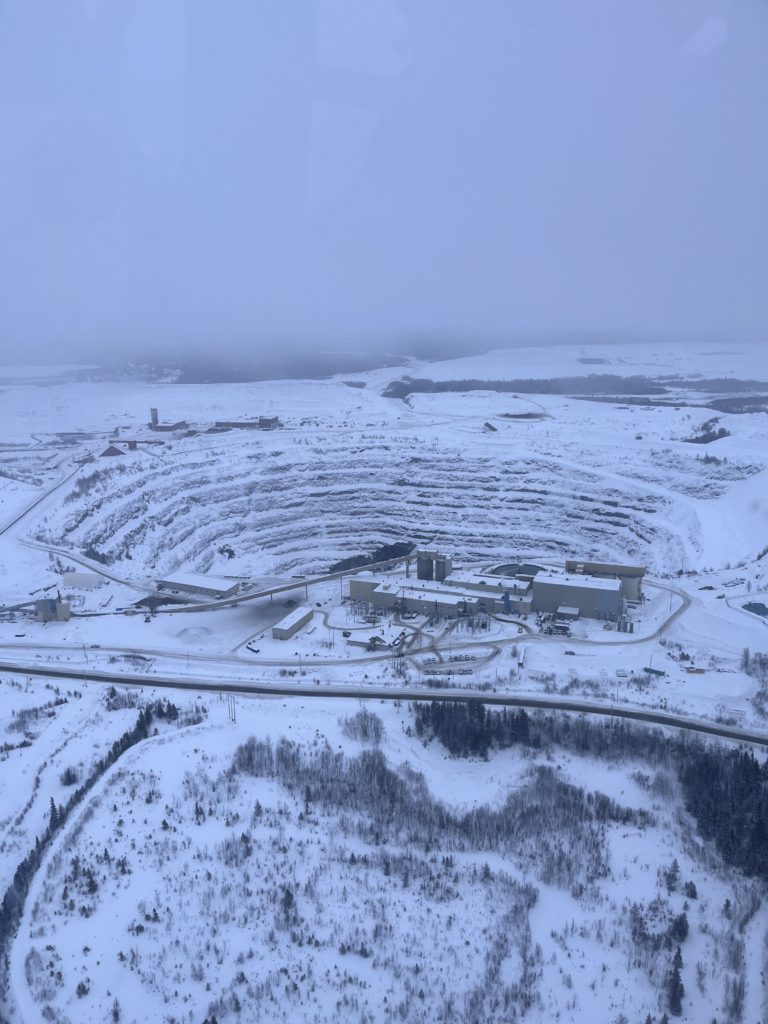
Canada Nickel’s Crawford Project is a new mine and the world’s second largest nickel reserve, which will supply high-quality, low-carbon nickel, which is essential for batteries and green steel.
The MPO said, “This project will serve as an anchor for Canada’s global leadership in clean industrial materials. Located in the world’s second-largest nickel reserve, the Crawford Project will produce high-quality, low-carbon nickel essential for batteries and green steel. With projected emissions 90% below the global average and the potential for a net-negative carbon footprint, it represents a model for the future of responsible mining. The project will attract $5 billion in investment and create thousands of new careers, securing Canada’s place at the forefront of the clean economy.”
Mark Selby, CEO of Canada Nickel, said, “We are encouraged and deeply appreciative of this recognition of the strategic importance of the Crawford Project. We appreciate the Government of Canada’s leadership in advancing projects of national significance with the coordination and urgency they deserve.”
The Crawford Project is in northern Ontario, 42-km north of Timmins, in the Timmins Nickel District, in the heart of Ontario’s Critical Minerals Corridor. The Crawford mine contains approximately 6.0 million tonnes of contained nickel in measured and indicated categories, hosted within approximately 2.56 billion tonnes of mineralized material, with an average grade of 0.24 % nickel (Ni). Additionally, the inferred mineral resources are approximately 3.7 million tonnes of contained nickel, with an average grade of 0.22 % Ni. The life of the mine is 40 years.
The Crawford Project was designed to achieve net-zero emissions. Canada Nickel developed innovative carbon capture technology through its proprietary In-Process Tailings Carbonation (IPT Carbonation) process. The IPT Carbonation process will allow 1.5 million tonnes of carbon to be stored annually, which is more than its total projected emissions, allowing the mine’s nickel to be net-zero.
Once operational, the Crawford Project is expected to also become one of Canada’s largest carbon storage facilities, which will contribute to environmental and economic goals.
Canada Nickel received $4.38 million from the Government of Canada’s Critical Minerals Infrastructure Fund which supported pre-implementation studies for the mine’s electrical infrastructure. The company’s feasibility study (FS) was published in November 2023. Its environmental impact statement was submitted, and permits were received in 2025. The results of the economic impact study for the Crawford Mine — released on October 15, 2025 — estimates the mine will generate a total economic contribution of over $70.2 billion to Canada’s GDP; generate over $7.7 billion in federal tax revenues and $8.3 billion in provincial tax revenues; and it will provide $16 billion in labour income from approximately 1,000 direct jobs and over 3,000 indirect and induced jobs.
Canada Nickel expects to break ground and begin construction on its Crawford Project by the end of 2026 with first production expected in 2028.
2) Quebec: Nouveau Monde Graphite’s: Matawinie Mine in Saint-Michel-des-Saints
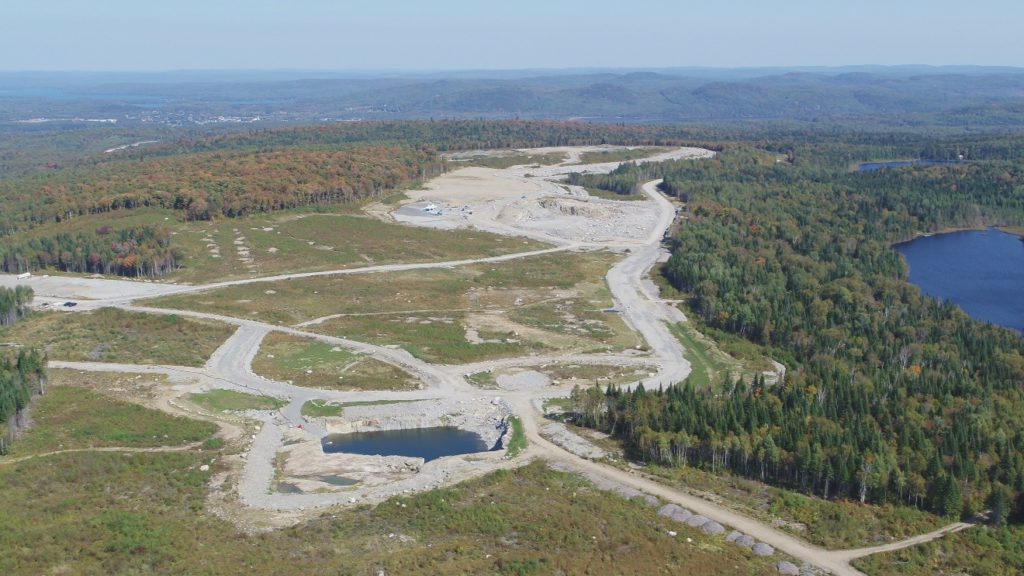
Matawinie Mine is an open-pit mine that will be integrated with a planned battery material plant to produce spherical graphite for batteries and other advanced manufacturing applications.
The MPO said, “This open-pit graphite mine will provide important inputs for defence applications and battery supply chains. It will integrate with the planned Bécancour Battery Material Plant. The project will strengthen Canadian supply resilience and help accelerate the clean transition. It will create over one thousand new careers and draw $1.8 billion in investment.”
Eric Desaulniers, president and CEO of Nouveau Monde Graphite (NMG), said, “After a rigorous process of project development, we are excited to receive this recognition, which will support us in taking the final step toward financing commercial facilities that serve the economies of Canada and allied countries. This designation underscores the importance of building stronger and more sustainable supply chains, supporting our energy and industrial independence, and attracting investment for the responsible production of critical minerals.”
Located near Saint-Michel-des-Saints, 150-km north of Montreal, the Matawinie graphite deposit was discovered in 2015. NMG plans to operate an open-pit mine and a concentrator for an average nominal annual production of 106,000 t/y of natural graphite concentrate. NMG’s Bécancour Battery Material Plant will refine graphite into active anode material, which will then be used in the production of electric vehicle batteries and energy storage systems. The Matawinie Mine will use hydroelectricity. The life of the mine is 25 years.
NMG has already established a partnership with Caterpillar for the development and procurement of a zero-emission fleet and infrastructure for the mine. Other responsible mining practices include the co-disposal of tailings, backfilling, and progressive reclamation. The natural graphite produced will go beyond energy storage into advanced engineered materials to support niche applications, such as electromagnetic interference (EMI) shielding. NMG is currently developing and optimizing its bipolar plate composites while exploring their potential for EMI shielding and electromagnetic protection. The company’s graphite performance validated in fuel-cell bipolar plates for hydrogen technologies and EMI shielding for telecom, automotive, and defence sectors.
The Matawinie Mine and the Bécancour Battery Materials Plant are two integrated projects by NMG that form a complete, domestic value chain for battery-grade graphite. The mine will extract natural graphite, which will be processed into high-purity active anode material for lithium-ion batteries at its Bécancour plant. NMG is on track to become one of North America’s largest fully integrated producers of natural graphite active anode material for batteries.
At the G7 meeting in Kananaskis, Alberta, in June 2025, member countries adopted a Critical Minerals Action Plan aimed at strengthening and diversifying global supply chains for critical minerals, promoting transparent, rule-based markets, attracting new investment, and lessening non-competitive practices. Via its agreement with NMG, the Government of Canada intends to secure graphite for its domestic markets and stockpiling objectives and support allied nations and entities in building resilient and reliable supply chains. The Matawinie Mine will specifically address major gaps in Canada’s graphite value chain, where domestic mining is limited and there is currently no refined graphite production.
NMG has already received its governmental decree and key permits required thus far for its mine. The CGF and Investissement Quebec are strategic shareholders in the Matawinie Mine and contemplate additional investments at FID. The EDC and CIB also plan to support the debt portion of the project financing.
NMG expects to make a final decision on its Matawinie Mine in early 2026, with construction of the mine to start in the first quarter of 2026, and the mine is anticipated to be in production by mid-2028.
3) New Brunswick: Northcliff Resources’ Sisson Mine
Northcliff Resources’ Sisson Mine is a new mine to produce tungsten and molybdenum for both civilian and defence applications.
The MPO said, “The Sisson Mine will produce tungsten — a critical mineral essential for high-strength steel production, defence, and industrial applications. Global tungsten markets are highly concentrated, and this project has the potential to make Canada a secure supplier for domestic and allied industries. It will position Canada as a reliable supplier of critical minerals to domestic and international partners, while creating hundreds of new careers.”
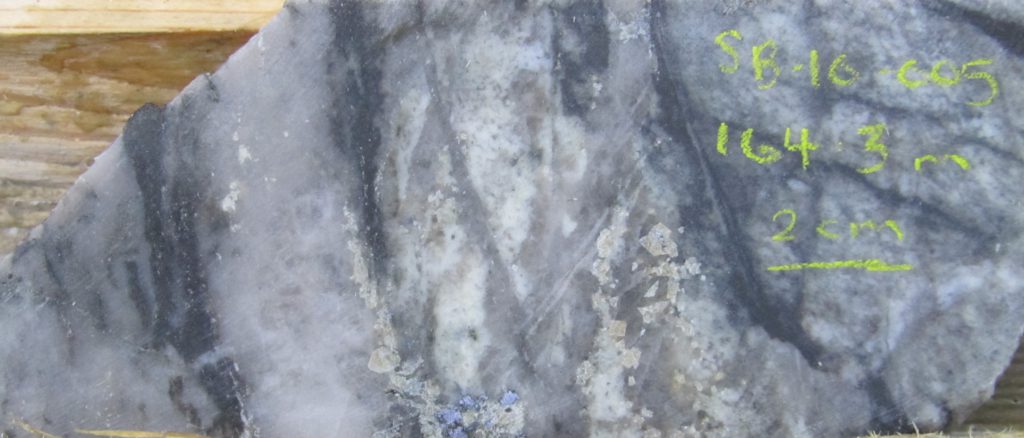
Andrew Ing, president and CEO of Northcliff Resources, said, “We are excited that the Sisson Project is one of the nation-building projects announced today by Prime Minister Carney and referred to the MPO. Northcliff’s goal is to contribute to the efforts to build a resilient supply chain of critical minerals and support their growing use in digital technology, clean energy, and aerospace applications by becoming a reliable, easily accessible, domestic producer of tungsten and molybdenum in New Brunswick.”
The Sisson Project is located on Crown land in central New Brunswick, 100-km northwest of Fredericton by road, and near the communities of Napadogan, Juniper, and Stanley. Situated within the Nashwaak Watershed, the area has supported logging activity for over a century. The Sisson Project area is well-served by local and regional infrastructure including highways, roads, railways, deep sea ports, and power lines.
Northcliff holds an 88.5% controlling interest in, and is the operator of, the Sisson Tungsten-Molybdenum Project. The Sisson Project is located near tidewater on the southeastern coast of New Brunswick. The project hosts a significant deposit of tungsten and molybdenum, both of which have been identified as critical strategic minerals by the Government of Canada.
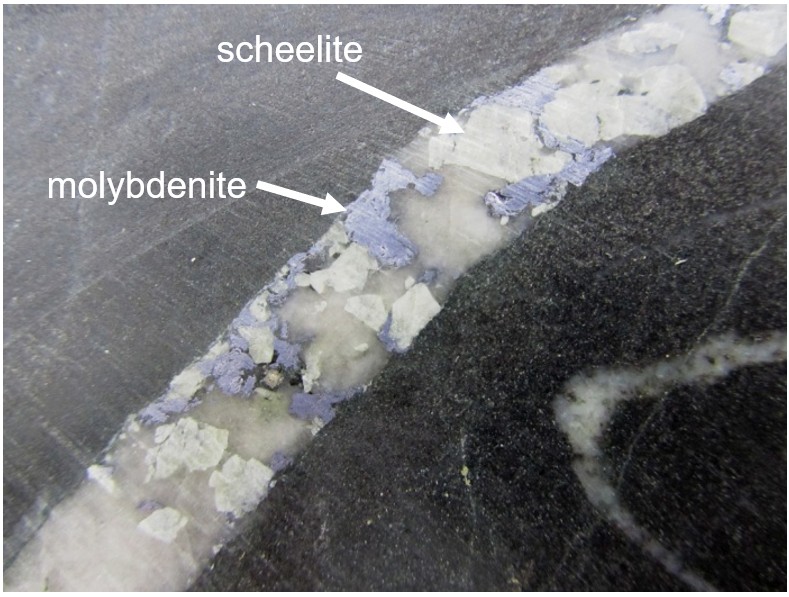
Credit: Northcliff Resources
In August 2025, Northcliff received final approval for funding from Natural Resources Canada (NRCan) to help advance its Sisson Project. NRCan will provide contribution funding for up to $8.214 million in support of the costs for the update of the FS and basic engineering through the Global Partnerships Initiative, complementing work and funding received under a U.S. Critical Minerals Initiative of $20.7 million (approximately US$15 million).
Sisson Deposit mineral resources (approximate)

Measured and indicated: ~387 million tonnes grading ~0.067 % tungsten trioxide (WO3) and ~0.021 % molybdenum (Mo).

Inferred: ~187 million tonnes grading ~0.050 % WO3 and ~0.020 % Mo.
Northcliff’s FS was initially published in 2013, and since then, the project has received key approvals including the New Brunswick environment impact assessment in 2015, the federal environmental impact assessment approval in 2017, and the Department of Environment and Climate Change approved a five-year extension to the construction commencement timeline for an additional five years to 2030.
The company is currently advancing a focused work program designed to provide the necessary economic and technical information to support a construction decision. The work includes updating its FS and the completion of engineering activities and studies needed to satisfy the technical conditions associated with its in-hand environmental approvals as well as support project finance.
Based on conceptual plans and subject to financing, satisfying relevant environmental impact assessment conditions and completing other aspects of its current program to support a
construction decision, Northcliff anticipates it could commence construction on its Sisson Tungsten-Molybdenum Project as early as 2027, with potential for operations in 2029.
Canada can lead in the energy transition, shape the future of critical mineral supply chains, and become a global hub for technology and advanced manufacturing. These projects will create the infrastructure to diversity Canada’s trading relationships, unlock new markets, and position Canada as both a clean-energy and conventional-energy superpower.
Diane L.M. Cook is a freelance mining writer.
Related Posts
SGS celebrates 85 years of Canadian mining excellence amid minerals boom
February 26, 2026
SGS celebrates 85 years of Canadian mining excellence amid minerals boom
New Found Gold’s Hammerdown project shows $199M NPV in positive study
February 26, 2026
New Found Gold’s Hammerdown project shows $199M NPV in positive study
Mount Sicker proposal could set precedent for North American legacy site cleanup
Newfoundland and Labrador leads Atlantic mining investment rankings
February 26, 2026
Newfoundland and Labrador leads Atlantic mining investment rankings
Ontario crowned Canada’s top mining destination, second place worldwide
February 26, 2026
Comments