What have you done today that did not involve a mineral? Part 5
Who owns the minerals? A journey from denial to integration
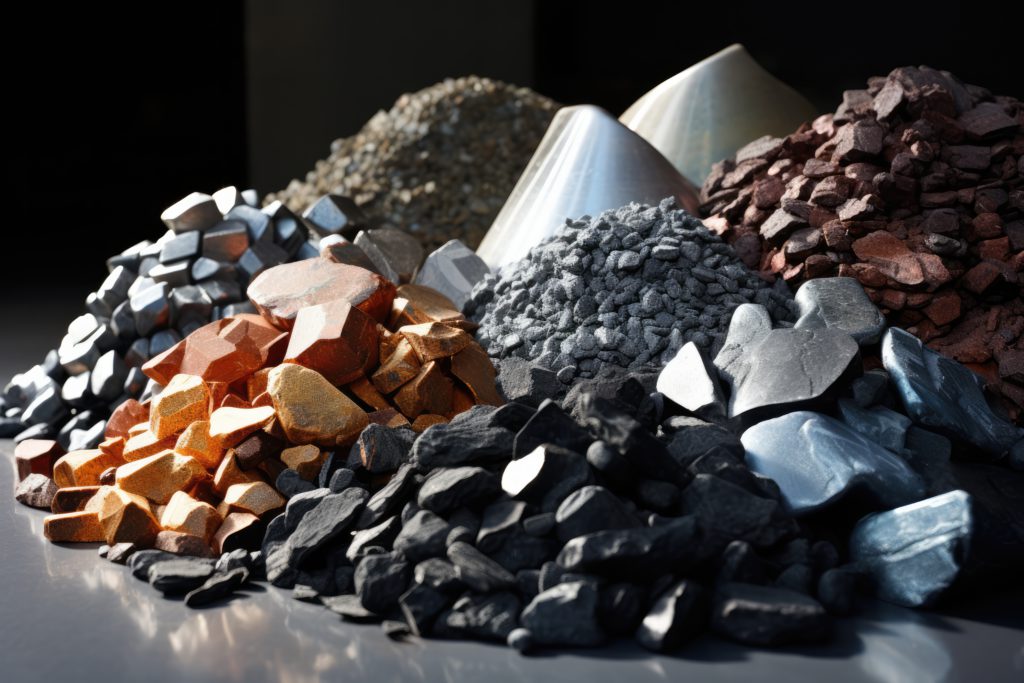
Minerals and hydrocarbons are part of the same natural earth forming processes. They are created over hundreds of millions of years through volcanic activity, erosion, sedimentation, and tectonism. Humanity extracts these resources and transforms them into tools, technologies, and wealth, drawing from all seven continents: Asia, Africa, North America, South America, Antarctica, Europe, and Australia. As human life has evolved, so too has our universal reliance on minerals. But who truly owns these minerals?
From both a scientific and philosophical standpoint, minerals are not created by humans, nor are they confined to any single nation, culture, or economic system. They are part of the Earth’s fabric and are ubiquitous, essential, and shared. As Downing and Beneteau ask, “What have you done today that did not involve a mineral?” (Canadian Mining Journal, Nov. 2024). Yet, the ownership and use of minerals are often framed through political, legal, and economic lenses of who has the rights, who profits, and who controls them. Accordingly, mineral interests may be perceived to be held by private citizens, private landowners, Indigenous nations, corporations, or various levels of government.
The philosophical concept of the “Rights of Nature” (also known and perceived as Earth rights) can lead to legal personhood (Downing and Beneteau, Canadian Mining Journal, Aug. 2025). This concept was further discussed by Hosgood in her article “Should mineral deposits be considered legal persons?” (The Tyee, Aug. 25, 2025). The advocates of the “Rights of Nature” adhere to the inherent right of ecosystems to naturally co-exist with a right to protection, conservation, and restoration without undue human interference. With the potential granting of legal rights to nature, the “Rights of Nature” framework would provide a system for protecting the environment. A “Universal Declaration of the Rights of Mother Earth” was proposed and adopted in 2010 at the “World Peoples’ Conference on Climate Change and the Rights of Mother Earth” in Bolivia. Many countries have reviewed this declaration but may not have enshrined it into law. Notably, within this “Rights of Nature” concept, there is NO reference to minerals.
To explore these perspectives more deeply, we propose applying Milton J. Bennett’s “Developmental Model of Intercultural Sensitivity” (DMIS). This model offers a lens through which we can understand how individuals and societies perceive and respond to cultural difference, and, by extension, how they might evolve in their understanding of mineral ownership and stewardship. The following examines mineral use and ownership through each of Bennett’s six stages:
1) Denial
At this stage, people may not recognize minerals are a shared global resource and part of our collective heritage. Ownership is assumed to be local or national, ignoring the deep interconnectedness of geology, ecosystems, and cultures. Although the words “Earth” and “Land” have been defined, these definitions rarely incorporate minerals explicitly. Minerals are invisible in the discourse, despite their omnipresence.
2) Defense
At this stage, distinctions such as “Earth” and “Land” are acknowledged, but they are often perceived as threats. The 2025 United Nations Convention to Combat Desertification (UNCCD) defines land as “the terrestrial bio-productive system that comprises soil, vegetation, other biota, and the ecological and hydrological processes.” In economic terms, land may be classified as a natural resource used to create goods and services. In other words, land use refers to the combination of human activities and uses, which may include mineral resource extraction. A resource extraction company can be construed as a shareholder of “Earth,” producing goods for human sustainability.
Political boundaries and legal claims over mineral rights become battlegrounds. Nations and corporations defend their access, often at the expense of Indigenous communities and environmental sustainability. The “Rights of Nature” movement, while advancing legal personhood for ecosystems, still omits minerals perhaps because they are seen as commodities rather than living entities. The tension between entitlement and inherent rights becomes central to the mineral ownership debate.
3) Minimization
In this stage, people may acknowledge that minerals are universally used yet still assume that their own cultural and economic systems are universally applicable. For example, viewing mineral extraction solely as a technical or economic activity overlooks the spiritual and cultural relationships Indigenous peoples have with the Land.
4) Acceptance
Acceptance involves recognizing that different cultures relate to minerals in diverse ways. Indigenous peoples, for instance, have mined for millennia. They did not mine for profit, but for sustenance, art, medicine, and ceremony. Their practices reflect a deep respect for the Earth, viewing themselves as steward rather than owners. One of the biggest challenges facing the resource extraction sector is the disconnect between urban and rural communities. Many people benefit from natural resources but do not fully recognize the role of minerals in the economy and involvement in all aspects of their lives.
5) Adaptation
Adaptation means shifting perspective and behaviours to honour these differences. This could involve integrating Indigenous land knowledge into mining practices, recognizing the cultural value of minerals, and redefining land use to include mineral stewardship.
6) Integration
At this highest stage, people see themselves as part of a global community with shared responsibility. Minerals are no longer viewed solely as resources. They are part of a living Earth that belongs to everyone. Legal frameworks could evolve to include minerals within the concept of “Legal Personhood of Nature,” and reconciliation could extend to mineral extraction, balancing use with respect and restoration.
While philosophical and cultural shifts are essential, we must also acknowledge that resource extraction cannot stop. Humanity’s reliance on minerals is deeply integrated into our daily lives, from food and medicine to infrastructure and digital technology. Minerals are not optional; they are foundational. However, this necessity must be approached with respect for the entire Earth system. Mining involves not only extraction but also transformation and waste. Every decision about where and how to extract mineral resources carries significant ecological consequences.
For example, when high-grade mineral deposits such as the Windy Craggy deposit in B.C. are legally restricted, mining may shift to lower-grade deposits that require more energy, more land disturbance, and produce significantly more waste. This raises a critical question: Are we truly respecting the Earth if our laws lead to greater environmental harm in the name of protection?
True stewardship means making informed decisions that consider ecological impact, cultural values, long-term sustainability, and economic viability. It is not simply about limiting access; it is about choosing wisely, minimizing harm, and honouring the Earth’s legacy.
Minerals and rocks are part of Earth’s enduring legacy. By moving from denial and defense toward integration, we can reimagine mineral use as a form of shared stewardship, grounded in intercultural respect and ecological wisdom. As human life has evolved over time through the universal reliance on minerals and rocks, it follows that these resources belong to all people, as echoed in the question: “what have you done today that did not involve a mineral?” Earth is for everyone to use and enjoy, and this shared connection could be honoured through the establishment of a “World Mineral Day.” 
Connections within the industry can expand our knowledge. Bruce Downing, a geoscientist consultant based in Langley, B.C., combines research, education, geochemistry and industry expertise. Donna Beneteau, an associate professor in geological engineering at the University of Saskatchewan, combines academic insight with industry experience in mining.
Related Posts
PDAC JV Video: FireFox drills toward first Mustajärvi resource
PDAC JV Video: Bold bets on low-cost Ontario drill trio
March 13, 2026
PDAC JV Video: Bold bets on low-cost Ontario drill trio
JV article: Deloitte targets mid-tier miners managing complexity
JV Q&A: Dundee Sustainable eases processing risk
March 13, 2026
JV Q&A: Dundee Sustainable eases processing risk
PDAC JV Video: Amex targets March bulk sample at Perron
March 12, 2026
Comments