Beyond the map: How AI-driven automation is refining mine site intelligence
The shifting terrain of modern mining
The modern mine site is an ecosystem of high stakes and high complexity. As pits grow and operations scale, the volume of spatial data generated daily has surpassed what traditional survey methods used to be able to capture. This is largely because technology has improved to the point where capturing and processing high-precision data is significantly easier and more accessible than it was even five years ago, with drones becoming more capable, flying for longer, and shifting to fully autonomous operations. There is a growing shift across the industry with 3D maps becoming the source of truth of a mine’s status and acting as the digital platform where the field and the office can stay on the same page. This transition is being accelerated by a leap in AI-driven automation designed to offload repetitive and manual work that often bogs down technical teams. By automating key workflows, mine sites run more efficiently and free up experts to focus on the performance and safety of the mine.
A strategic leap forward
In early 2026, Propeller announced a milestone in their journey with the acquisition of Spacesium, a specialist in advanced geospatial algorithms. This move was a direct response to years of collaboration with their mining customers. They heard a consistent message from the field: their users wanted more mining-specific tools built directly into the Propeller ecosystem. Not only from the surveyors but also from the other teams using the platform.
By integrating Spacesium’s GIS expertise, Propeller has stated that they are accelerating their ability to turn 3D data into immediate operational insights. The feedback made it obvious that joining forces would allow to solve the industry’s most complex challenges much faster.
Accelerating the workflow
For years, Propeller has powered critical mining workflows, from photogrammetry processing and volume reconciliation to validating site conditions against design. The platform is evolving from a place where a user performs measurements to a tool that actively validates the site against design specifications. Aiming to take the heavy lifting out of the data so the answers are ready the moment a map is processed.
Safety and efficiency: The evolution of haul road compliance
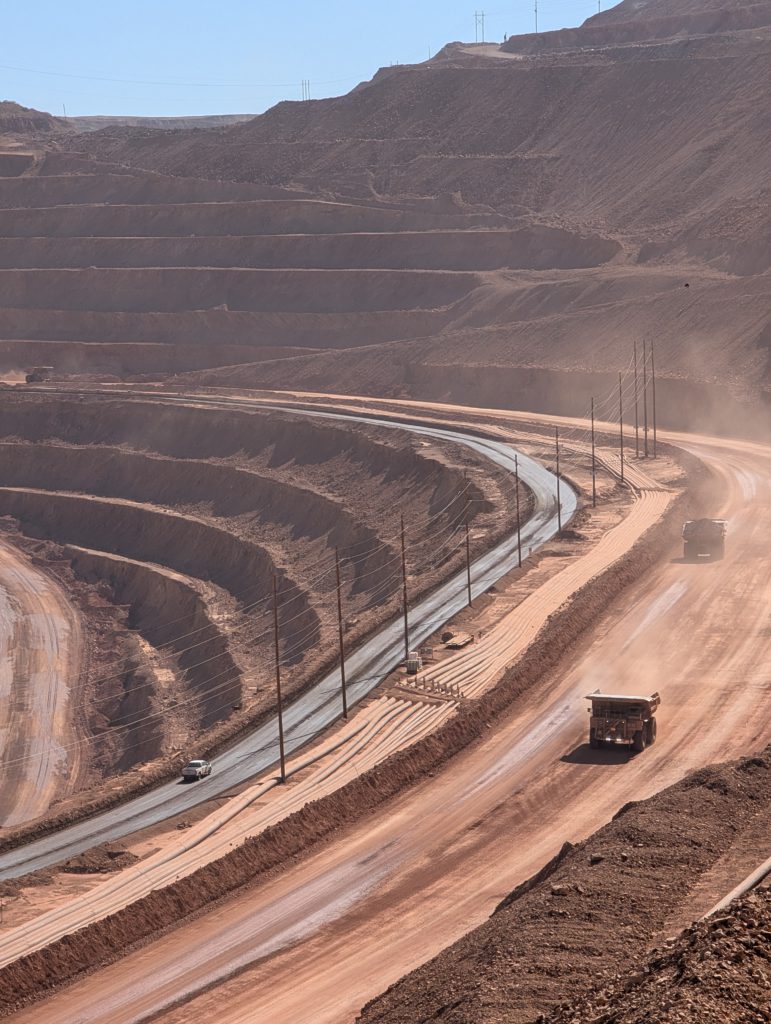
One of the most immediate applications of this AI-powered evolution is in haul road management. Haul roads are the arteries of the site. When they fall out of specification, the ripple effects are felt in safety, fuel consumption, and cycle times.
While many sites already use software to monitor their roads, the current tools are often slow and manual to use. Alternatively, traditional inspections often involve tedious point-to-point measurements that take hours to turn into a usable report. The new AI-driven Haul Road Analysis tool changes this by automating that detection.
The tool automatically identifies road centerlines and provides instant feedback on the following critical safety and efficiency parameters:
- Berm height: This feature automatically checks that safety barriers meet regulatory height requirements to prevent over-the-edge incidents.
- Road width: This ensures roads maintain the necessary width for the safe passage of trucks. This is critical for preventing bottlenecks and avoiding near-miss incidents.
- Road grades: This identifies steep sections that can cause vehicle runaway or generate unnecessary engine strain and excessive fuel burn.
- Cross-fall and superelevation: This ensures proper drainage and stability for heavy equipment, particularly in high-speed turns.
Empowering the entire site
The tool is an example of how automating a necessary task can provide value across every level of a mining operation as follows:
- Survey teams: By replacing manual centerline detection and compliance checks with automated analysis, surveyors are freed from the data grind. They can move from being data processors to data advisors. Focusing on high-level engineering tasks, site calibration, and complex design work that require their expertise.
- Operational teams: By providing a self-service way to check road health, you can eliminate the traditional back-and-forth between departments. This gives foremen and superintendents the immediate answers they need to keep the site optimized for the best possible cycle times and machine efficiency.
- Safety managers: By using AI to automatically flag hazards like low berms or narrowing roads, safety managers can address risks before they lead to an incident, ensuring every route is optimized for both safety and throughput.
One map to connect it all
The goal of AI-driven automation is to ensure that the data on the map remains the single source of truth. When everyone from the field crew to the office is looking at the same high-precision data, decisions are made with confidence rather than guesswork.
This “One Map” philosophy ensures that progress is documented, margins are optimized, and safety is never compromised. In an industry where a small increase in efficiency can significantly impact the bottom line, having these insights delivered automatically is becoming a competitive necessity in running a modern mine.
The road ahead
The future of mining is not only about collecting more data, but it is also about making that data work for the people on the ground. Automating the complex workflows of today will clear the way for a safer and more productive tomorrow.
David Topham is the strategic projects director at Propeller Aero.
More information is available at www.PropellerAero.com
Comments