Canada’s critical-minerals fragility lies more with what happens after ore leaves the ground than the ore in the ground, witnesses told a parliamentary panel this week.
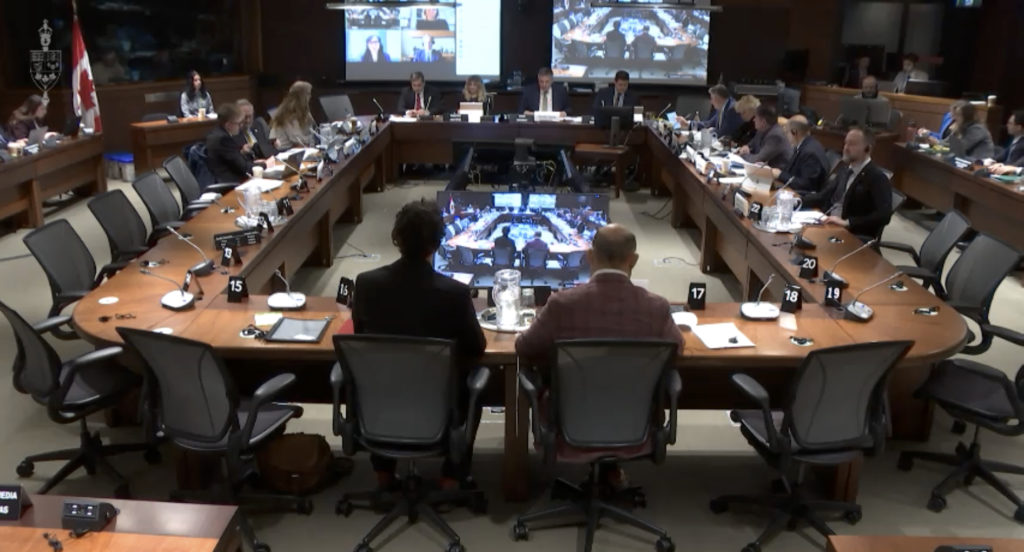
In the House defence committee on Monday, MPs discussed how mining relates to refining and control of the value chain and how that matters for Canadian sovereignty.
“The real strategic vulnerability today is not our geology, it is our processing capacity and supply chain dependence,” Nadia Mykytczuk of Laurentian University’s Goodman School of Mines told MPs.
The issue is a more consequential point for miners than another general call to produce more metal. Despite Canada’s vast resource base, it still exports too much feed for upgrading elsewhere and buys back higher-value inputs later. In a looser global market, that is an industrial weakness. In a more hostile one, it starts to look like a defence problem, the committee heard.
The pressure is no longer theoretical. Canada’s processing shortfall is already showing up in real assets and feedstock. Glencore (LSE: GLEN) on Feb. 3 said it was suspending nearly C$1 billion ($736.4 million) in planned spending at the Horne smelter in Rouyn-Noranda, Que., including C$300 million tied to emissions reductions, and would also scale back investment at its CCR refinery in Montreal-Est.
Two weeks earlier, Vale‘s (NYSE: VALE) base metals subsidiary told the same committee it mined 80,000 tonnes of nickel in Canada last year but still had to import 16,000 tonnes to keep its Sudbury refineries running efficiently. Taken together, those examples underline the same point heard again Monday: Canada’s weakness is not only what it mines, but whether it can keep enough processing capacity and feed at home to matter.
Rocky ownership
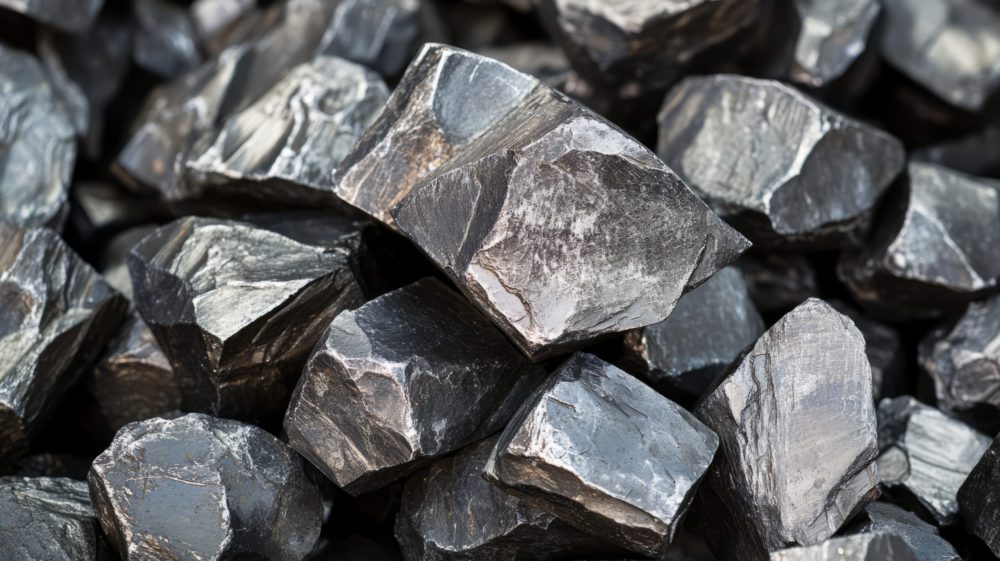
The hearing made clear Monday that Ottawa’s debate is moving beyond extraction and into control. Owning the rock is only the start; leverage comes from turning it into something useful, keeping more of the processing chain in friendly hands and retaining the technical capacity around it.
“Owning the minerals does not, in and of itself, give you leverage,” former Blackberry CEO and founder of the Centre for International Governance Innovation Jim Balsillie told the committee.
If Canada continues to export raw or semi-processed material while others control processing technologies, standards and downstream products, it will remain trapped in a low-leverage model, Balsillie argued. Left unchanged, he warned, that starts to resemble a resource economy that creates volume without capturing much of the strategic upside.
Critical focus
Not every witness cast the net that wide. Heather Exner-Pirot of the Macdonald-Laurier Institute pushed for a narrower and more practical defence focus, arguing Ottawa should stop talking about critical minerals as though they all present the same problem.
The priority should be niche materials where China has built dominant positions and where the market alone is unlikely to solve the bottleneck.
“I don’t think that’s nickel and lithium. I think that’s gallium, germanium, graphite and rare earths,” she said.
That distinction matters. Nickel and lithium remain commercially important and politically attractive, but they are not the whole defence story. The harder problem is the smaller set of materials and processing steps that sit deeper in the chain and are harder to replace once disrupted.
Northern sovereignty
The meeting also pushed the mining case for the North. Arctic sovereignty, as framed by Agnico Eagle Mines (TSX, NYSE: AEM) chair Sean Boyd, is not just a military question but touches on infrastructure and community issues.
Mines bring camps, airstrips, logistics, power and long-term operating presence into regions where Ottawa has historically struggled to build quickly or cheaply on its own. Boyd’s argument was that the state does not need to start from scratch everywhere if miners are already on the ground.
“Sovereignty is fundamentally about people and the communities and the strength of the communities,” he said.
That point lands differently in mining than it does in politics. In Ottawa, Arctic sovereignty often gets reduced to maps and patrols. In the field, it looks more like roads, sealifts, runways, skilled workers and the ability to keep operations moving in remote districts.
Brownfields opportunities
Another angle the mining sector understands intimately is speed, Mykytczuk said. Canada’s stock of mine waste and tailings could offer a nearer-term source of nickel, copper, cobalt and rare earths than entirely new greenfield mines, she argued, particularly if paired with better processing and recovery technologies.
The technical challenges remain but it reframes old liabilities as potential strategic feed.
The panel differed on where that logic leads. Rodrigue Turgeon of MiningWatch Canada warned that national-security language can become a political shortcut for faster permitting and weaker scrutiny, especially if Ottawa starts calling more projects strategic without clearly defining the public interest.
The push for control, in other words, will run into the old Canadian questions of Indigenous rights, environmental risk and who ultimately benefits.


Comments