The British Columbia Court of Appeal issued a split decision on December 5, 2025, in Gitxaała v British Columbia (Chief Gold Commissioner), addressing the legal effect of British Columbia’s Declaration on the Rights of Indigenous Peoples Act and the role of courts in advancing its objectives. The ruling examines how the Act engages with the United Nations Declaration on the Rights of Indigenous Peoples and the extent of judicial oversight.
This legal commentary discusses the decision, the BC government's reaction and the implications for economic development in BC, which includes mineral exploration and mining activities.
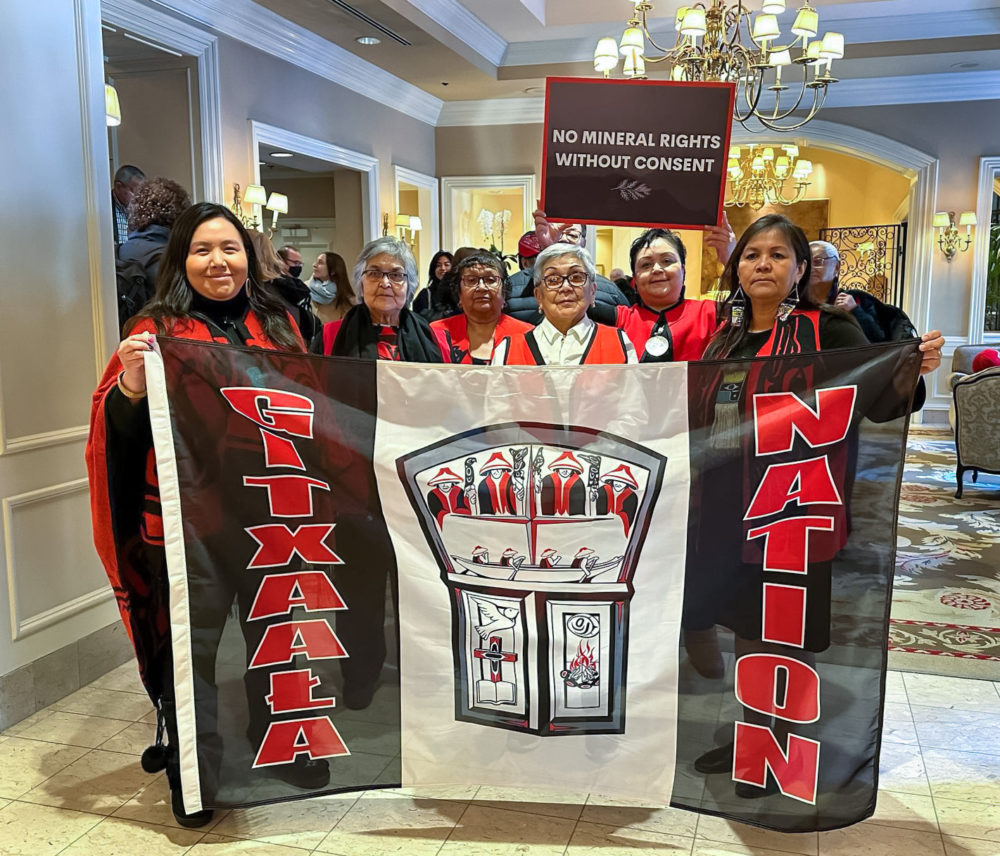
The case arose in 2023 when the Gitxaała Nation and the Ehattesaht First Nation challenged the provincial mineral tenure system for allowing mineral claims without consulting affected Indigenous groups. They sought declarations that the regime breached the Crown’s duty to consult under section 35 of the Constitution Act, 1982, conflicted with the province’s commitments under the Declaration Act, and asked the court to quash specific claims and issue injunctive relief.
In the lower court, Justice Alan Ross found that the Mineral Tenure Act, particularly its online system for automatically registering mineral claims without consultation, breached the duty to consult. He suspended his declaration for 18 months to allow the province to establish a consultation process for future claims and dismissed the remaining claims, including inconsistency with UNDRIP. The province introduced a new consultation framework for the Mineral Tenure Act in March 2025.
On appeal, the Court of Appeal considered whether the Declaration Act implements UNDRIP into provincial law and whether courts may declare legislation inconsistent with UNDRIP. In a 2-1 decision, the court held that UNDRIP applies to British Columbia’s positive law and that courts can adjudicate the consistency of provincial legislation with UNDRIP.
Writing for the majority, Justice Gail Dickson concluded that the Declaration Act applies “UNDRIP in its entirety into BC positive law.” She determined that the Act immediately imposes a positive obligation on the provincial government to ensure that all laws conform with UNDRIP and rejected the view that the legislature intended to confine the Act to prospective law reform. She reasoned that the absence of limiting provisions signals an intent to apply UNDRIP broadly across provincial laws.
The majority accepted the appellants’ argument that the lower court erred by finding courts could not assess consistency with UNDRIP. Justice Dickson held that the Act creates a statutory obligation to align provincial laws with UNDRIP and that its language does not preclude judicial intervention. She concluded that the mineral claims regime is inconsistent with article 32(2) of UNDRIP.
In dissent, Justice Paul Riley found that the Declaration Act does not authorize courts to adjudicate inconsistencies between provincial legislation and UNDRIP. He characterized the Act as a law reform process for which the legislature retains ultimate responsibility and stated that acts of legislative reconciliation fall exclusively within the executive and legislative branches. He concluded that the consistency of the mineral claims regime with UNDRIP is not justiciable because it concerns the law reform process.
Reaction was immediate. Premier David Eby said the decision puts courts “in the driver’s seat” rather than the legislature. Opposition parties called for repeal of the Declaration Act, but the premier rejected that approach and pledged to keep the Act in force with amendments.
The decision introduces uncertainty by inviting challenges to other provincial statutes on the basis of inconsistency with UNDRIP. Amendments to the Declaration Act could redefine the courts’ role in assessing consistency and could limit or remove judicial authority to make such determinations. The scope and timing of any amendments remain unclear.
The ruling arrives as governments pursue economic development initiatives. British Columbia has launched a six billion dollar transmission line on the north coast to support mining and LNG development and port expansions.
The federal government, through the Building Canada Act, has designated six projects in the province for streamlined regulatory reviews, including LNG Canada Phase 2 and the Red Chris Mine expansion project.
In this context, the provincial government has signaled a need to amend the Declaration Act to maintain momentum for major infrastructure approvals while retaining control over legislative processes aligned with broader economic goals.
The content of this article from Dentons Canada LLP is intended to provide a general guide to the subject matter. Specialist advice should be sought about your specific circumstances. Specific Questions relating to this article should be addressed directly to the author.
More information can be obtained at www.Dentons.com/en/global-presence/canada




Comments