Topics
Tags
- Commercial Production
- Communication
- Communication Systems
- data management
- Digital edition
- Digital Mining
- Digital technology
- digitalization
- drilling
- Equipment & Suppliers
- Exploration
- infrastructure
- Mine Development
- mining in the digital age
- Operating Mine
- Production
- Productivity
- Remote-control
- Resources/Reserves
- risk
- Risk Management
- Software & Applications
- technology and innovation
Companies
The mining industry has spent years talking about digital transformation. Headlines regularly point to the future of mining, the next generation of technology, and the promise of fully digital operations. Conferences, reports, and industry commentary continue to frame digitalization as something still on the horizon.
Underground, however, tells a different story. Digital transformation is not a future promise. It is a daily reality.
Traffic management now depends on real-time location data. Remote operators rely on live video and sensor feeds. Autonomous loaders and drills navigate using continuously updated positional information. Ventilation systems respond to air quality readings from fixed and mobile monitors. Production tracking, equipment diagnostics, and safety protocols all rely on data moving reliably between the working face and surface systems.
Supervisors no longer manage these operations with radios and clipboards. They work from screens that display equipment status, environmental conditions, and crew locations updated in real time.
The entire operation now depends on a digital foundation that is rarely noticed, yet always present. When it fails, operations stop. A communications outage can halt autonomous haulage as effectively as a mechanical breakdown. Loss of air quality data can suspend work in active headings just as surely as a ventilation fan outage. The operational impact of a digital failure is no different from that of a physical one.
In many operations, however, digital systems are still treated as supporting infrastructure. They are managed separately from production equipment, maintained on IT schedules, and addressed reactively when problems arise. Yet these systems influence production, safety, and cost as directly as any loader, drill, or truck. Because they carry the same operational risk, they require the same operational discipline.
Invisible failures
Physical mining equipment is built to perform in harsh underground conditions, and deterioration is expected, monitored, and visible. When performance changes, it is noticed immediately.
A loader with a flat tire sits motionless in the drift. A faulty pump leaves puddles spreading across the ground. A drill that will not power on is silent when the heading should be sonorous with percussion and vibration.
Underground crews do not need dashboards or diagnostics to recognize these failures. The equipment tells them. Digital systems do not.
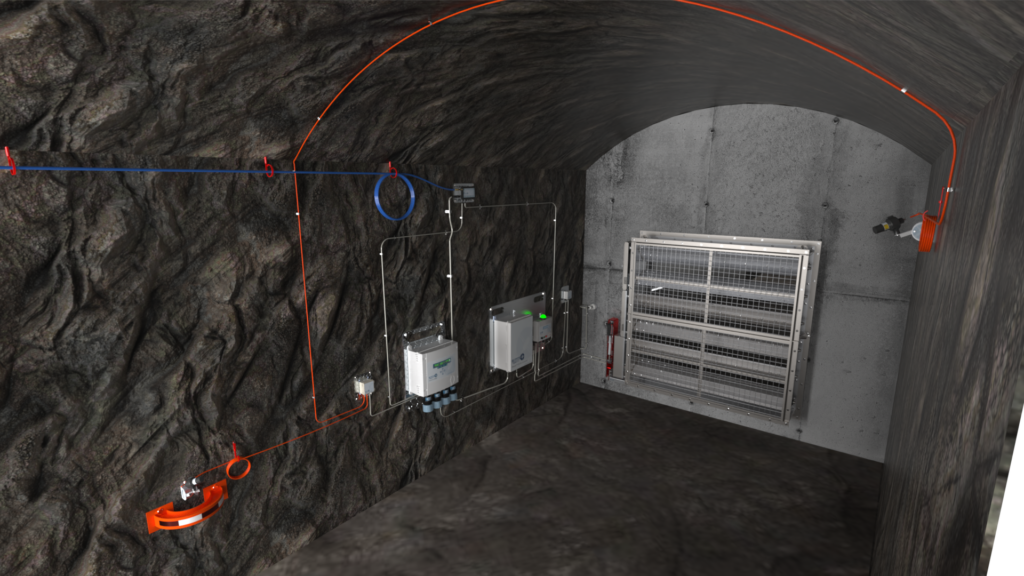
Consider a fixed air quality monitoring station installed in an active heading. It is connected, powered on and reporting. The enclosure shows no physical damage or changes in appearance. There is no indication of a problem.
But that station is subjected to the same environment as the loaders and drills working alongside it. Over time, drilling dust settles into enclosure seams and around sensor inlets. Water spray during mucking carries slurry across mounting points. Blasting sends shock through conduit. Vibration from passing haulage trucks gradually loosens connections. The components inside the station begin to degrade. A gas sensor, for example, drifts out of calibration.
When this happens, decisions are made using data that is no longer accurate. Production crews are held back from headings that are safe to enter or, worse, advanced into conditions the drifted sensor can no longer reliably detect.
The IT crowd
The challenge is not that these failures occur, but that they are difficult to see, diagnose, and resolve using the management models mines have traditionally relied on.
When digital systems show problems underground, the response is typically shaped by IT practices developed for office and surface environments. Individual components are checked. Connections are verified independently. Maintenance is scheduled during planned downtime. Systems are frequently supplied by multiple vendors, each with separate support teams and troubleshooting processes. In controlled environments, this approach works. Underground, it often does not. A sensor recalibrated on surface may drift again within days. A network connection repaired in isolation may fail repeatedly because the underlying issue, whether power instability or environmental exposure, was never addressed. Each intervention may be technically correct, yet the problem persists.
Standard IT management treats them as separate technical issues. But underground, they are usually symptoms of a broader misalignment. Digital infrastructure is still too often viewed as IT equipment that happens to be in a mine, when it should be understood as mining equipment that happens to be digital.
Integration motivation
Managing digital infrastructure as mining equipment means applying the same operational discipline used for physical assets: integrated accountability, condition awareness, and maintenance driven by operating reality rather than assumptions.
A mine does not source a loader chassis from one vendor, hydraulics from another, and the engine from a third, then expect separate service teams to coordinate when performance suffers. The machine is evaluated and maintained as a unified system. When output drops, diagnosis considers how components interact, not just which part failed.
Digital infrastructure underground requires the same approach. Communication networks, sensors, power systems, and analytics software function together as a single operational layer. When an air quality monitoring station begins reporting erratic data, the root cause may lie in sensor calibration, network performance, power stability, or environmental exposure affecting multiple elements at once. Identifying the issue requires visibility across the entire digital ecosystem, not isolated troubleshooting.
This is the basis of integrated ecosystem management, treating digital infrastructure as a web of interdependent components where sensors, networks, power systems, and software influence one another continuously rather than operating in isolation. Performance data from devices, networks, and supporting infrastructure is evaluated together, allowing degradation to be detected before it becomes failure. Maintenance shifts from reactive intervention to predictive, condition-based action informed by how systems are operating underground.
The outcome is practical rather than theoretical. Fewer unplanned interruptions, more reliable environmental data, and reduced operational risk follow. Digital infrastructure begins to perform as it should, as production-critical equipment held to the same performance expectations as any other asset in the mine.
The whole package
Managing digital infrastructure as an integrated operational system has implications beyond the mine site itself. It also reshapes how technology providers design, deliver, and support systems intended for underground use.
Supporting digital infrastructure underground increasingly requires a system-level, ecosystem view. Environmental exposure, power stability, network performance, and device condition interact continuously, and any one of these factors can influence system behaviour. Determining whether an issue originates with a sensor, a network connection, power quality, or changing underground conditions requires visibility across the entire infrastructure layer, rather than inspection of individual components in isolation.
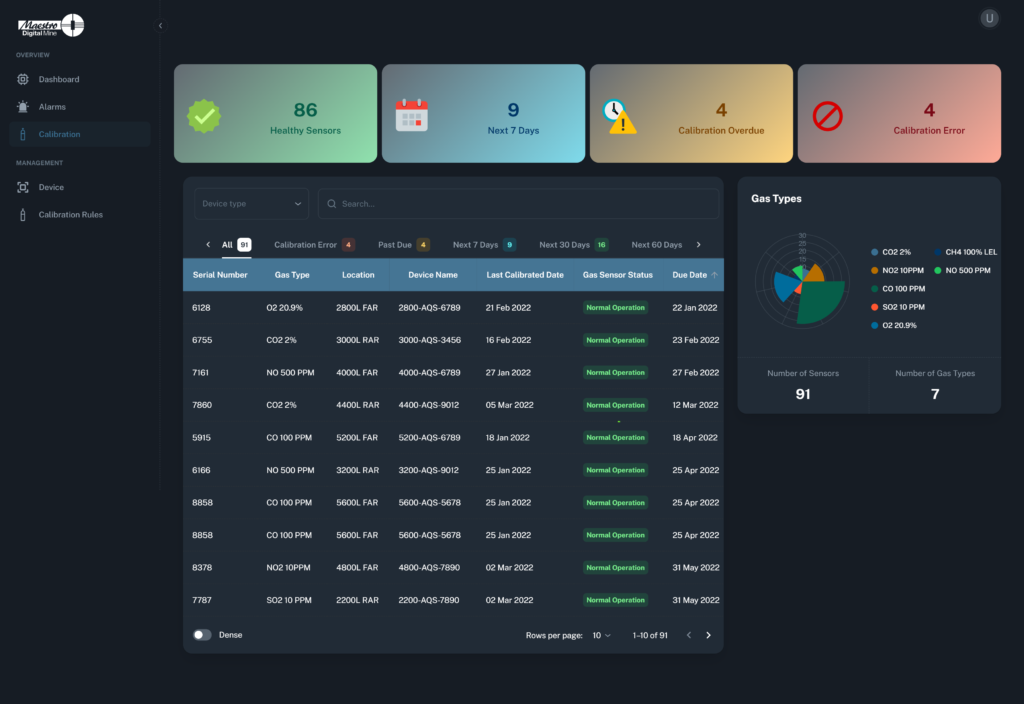
This places new demands on how digital systems are designed and supported. Infrastructure must be hardened for underground environments, but it must also be capable of reporting on its own condition over time. Network performance, device health, power quality, and exposure to environmental stress need to be observable as trends, not information discovered only after failure occurs.
Software platforms play a central role in enabling this visibility. Platforms such as Duetto Analytics, developed by Maestro Digital Mine, illustrate this integrated approach by consolidating device health, calibration status, and system performance into a single operational view. Instead of managing sensors, networks, and supporting infrastructure through separate tools, performance data is evaluated collectively to identify early signs of degradation and support maintenance before failures affect operations.
For mines that depend on digital infrastructure for safety and production, the ability to understand how these systems behave, as a whole, is becoming as important as the infrastructure itself.
Beyond the horizon
Digital transformation is no longer a promise on the horizon. Underground, it is operational reality. Digital infrastructure is not supplementary; it is foundational to how modern mines function.
Traffic management, remote operation, environmental monitoring, autonomous equipment, and real-time decision making all depend on a digital foundation that must perform as reliably as the physical equipment it supports. When that foundation falters, operations are interrupted, and risk increases.
The industry has already recognized this shift in practice. Mines operate differently today than they did a decade ago, and that change is irreversible. What has not fully caught up is how digital infrastructure is perceived, managed, and maintained.
Managing it with the same operational discipline applied to loaders and drills — rather than as IT equipment maintained on IT schedules — is what separates stable, predictable operations from reactive troubleshooting.
The mines that approach digital infrastructure this way, and work with providers capable of supporting it as an integrated operational system, will have a foundation as reliable as their mobile fleets. The ones that continue managing digital systems reactively, as separate components under fragmented responsibility, will continue experiencing the operational disruptions that result.
The digital foundation is already in place. How mines choose to manage it will determine whether it remains a reliable enabler of production or an increasingly significant source of operational risk. 
Comments