New performance data from Eriez shows scrap recyclers can achieve precise copper control without compromising throughput. Full-scale Shred1 Ballistic Separator installations consistently produce copper levels below 0.15 percent while processing more than 127 tonnes (140 tons) per hour.
“Scrap processors are under growing pressure to meet tighter melt chemistry requirements without slowing production,” Mike Shattuck, business development manager for recycling at Eriez, said. “These results show that copper control is no longer theoretical. The Shred1 delivers repeatable, measured performance at industrial scale and integrates seamlessly into existing shred lines.”
Copper contamination has forced recyclers to choose between costly melt chemistry corrections and rejecting marginal feedstock, but a recently published report indicates the Shred1 removes that constraint by providing a purely mechanical solution that sustains high productivity and tight chemical control.
According to the data, the system delivers verified performance across four critical measures: scalable throughput well above 90 tonnes (100 tons) per hour with many U.S. installations exceeding 140 tons per hour per Shred1; consistent production of premium #1 shred containing 0.13 to 0.16 percent copper; improved melt yields rising from a typical 88 percent to as high as 94 percent; and operational improvements that often deliver return on investment within months.
At a major U.S. scrap processing facility, the Shred1 repeatedly produced premium shred with copper levels as low as 0.13 percent, allowing the operator to blend higher-copper input material while still meeting melt specifications and ensuring all output ships as premium-grade product. A European recycling facility achieved comparable results during a 76-heat melt trial, where low-copper shred from the Shred1 averaged 0.145 percent copper and melt chemistry closely matched theoretical predictions, reducing reliance on dilution scrap and enabling more precise furnace optimization.
The report also documents measurable improvements in overall melt performance. Material that previously delivered approximately 88 percent yield increased to 94 percent after the facility installed the Shred1 and polishing magnet technology, improving furnace efficiency and accelerating economic returns.
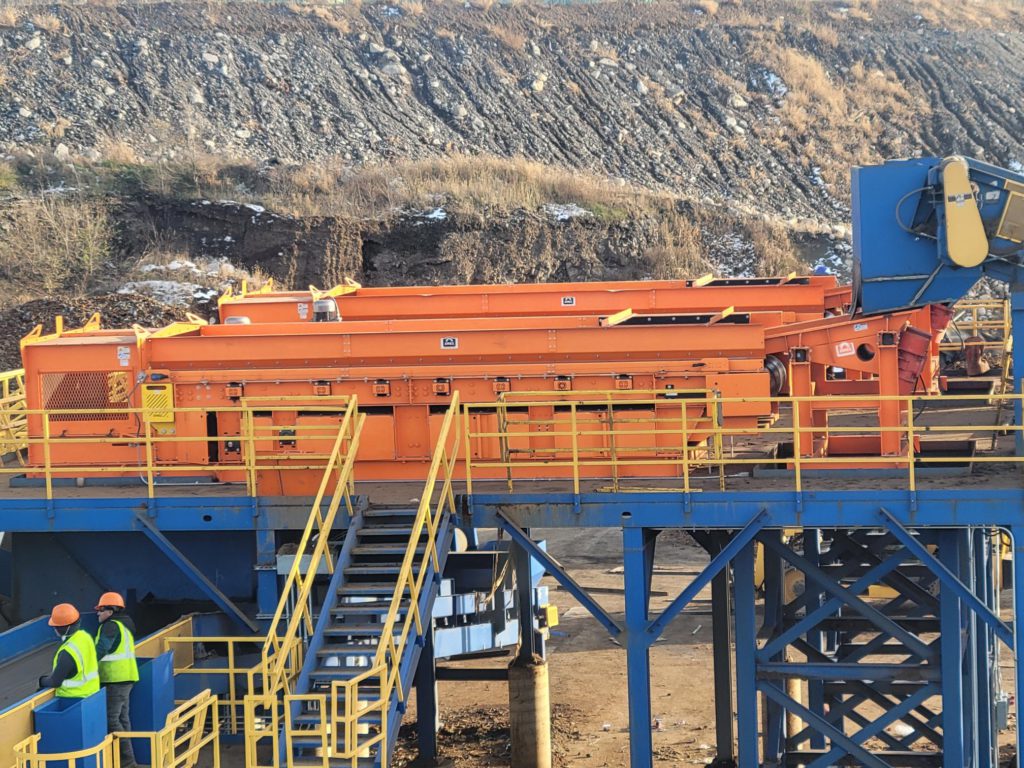
Installed downstream of primary scrap drum magnets, the Shred1 separates material using magnetic forces and high-speed ballistic trajectories. Unlike air, optical, or X-ray systems, the mechanical process sorts by mass and density to deliver stable separation with minimal operator intervention and no loss of throughput.
During operation, liberated shred travels at high speed toward the head pulley; low-copper material, more strongly influenced by the magnetic field, follows the pulley arc and discharges behind a splitter while higher-copper material continues forward for additional polishing.
The full technical report, “Shred1 Ballistic Separator Elevates Low-Copper Recovery and Melt Quality,” is available at www.Eriez.com/shred1casestudy. To learn more about the Shred1 Ballistic Separator, visit www.Eriez.com/shred1.





Comments