Gold miners are facing mounting pressure to improve recoveries and reduce processing risk, yet many still rely on methods that can take days to extract metal and leave contaminants in tailings streams.
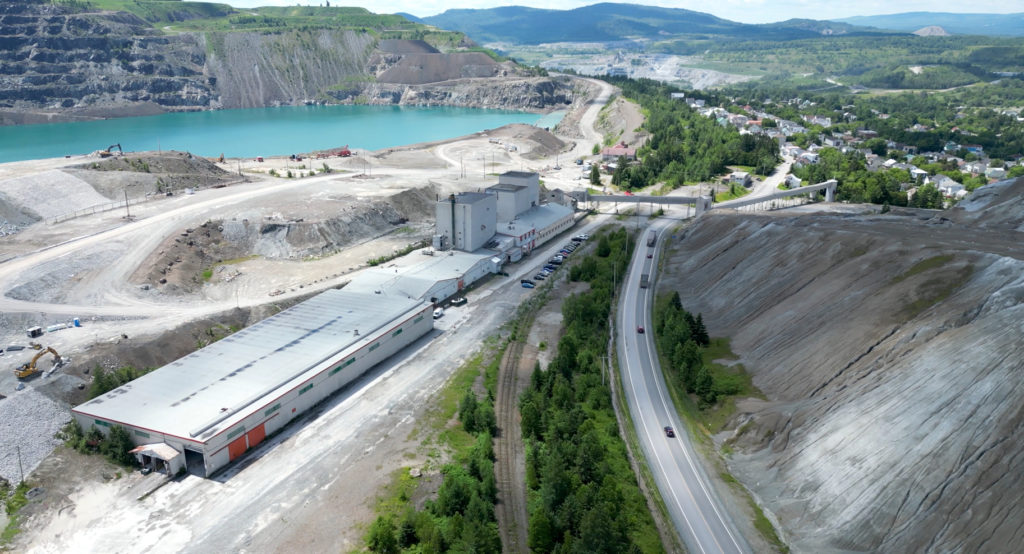
Dundee Sustainable Technologies (CSE: DST) is offering an alternative. The Thetford Mines, Que.-based company has developed a cyanide-free hydrometallurgical process: the CLEVR process for gold extraction and the pyrometallurgical GlassLock process for arsenic removal and stabilization.
The CLEVR technology shortens leach times to under an hour and reduces contaminant discharge to tailings. “I'm always amazed that in our industry we have the patience to wait 36 or 48 hours for the gold leaching reaction to occur,” said Jean-Philippe Mai, CEO of DST.
Operational complexity has overtaken environmental, social and governance concerns as the mining sector's top risk heading into 2026, according to an EY survey of 500 senior executives, a shift that puts pressure squarely on processing efficiency. A Barclays analysis of 250 mines found that nature-related risks could cut earnings by 25 per cent over five years, underscoring the financial consequence of getting processing decisions wrong.
In February, Glencore Canada suspended all investments at its Horne smelter in Rouyn-Noranda after failing to reach a regulatory agreement with Quebec over arsenic emissions, a concrete illustration of what unresolved contaminant management can cost an operation.
Mai said the pressures facing the industry have created an opening for processing alternatives that can deliver faster recoveries and cleaner contaminant management alongside existing methods.
Novel approach
Rather than cyanide, CLEVR uses a sodium hypochlorite and hypobromite solution to dissolve gold, recovering it in approximately two hours compared with 36 to 48 hours for conventional leaching, and far shorter than heap leaching operations that can run for months. The process operates in a closed loop, recycling all reagents within the circuit and eliminating the need for tailings ponds and reducing environmental liability. Gold extraction yields can exceed 95%, and solid residues are inert, stable and non-acid generating.
Because the process works faster, a smaller plant is needed to handle the same tonnage, which Mai said translates directly into lower construction and capital costs. “Being efficient, utilizing a short contact time to achieve excellent gold recoveries – that’s very important to us,” Mai said. “Smaller processing means reduced footprint, reduced costs.”
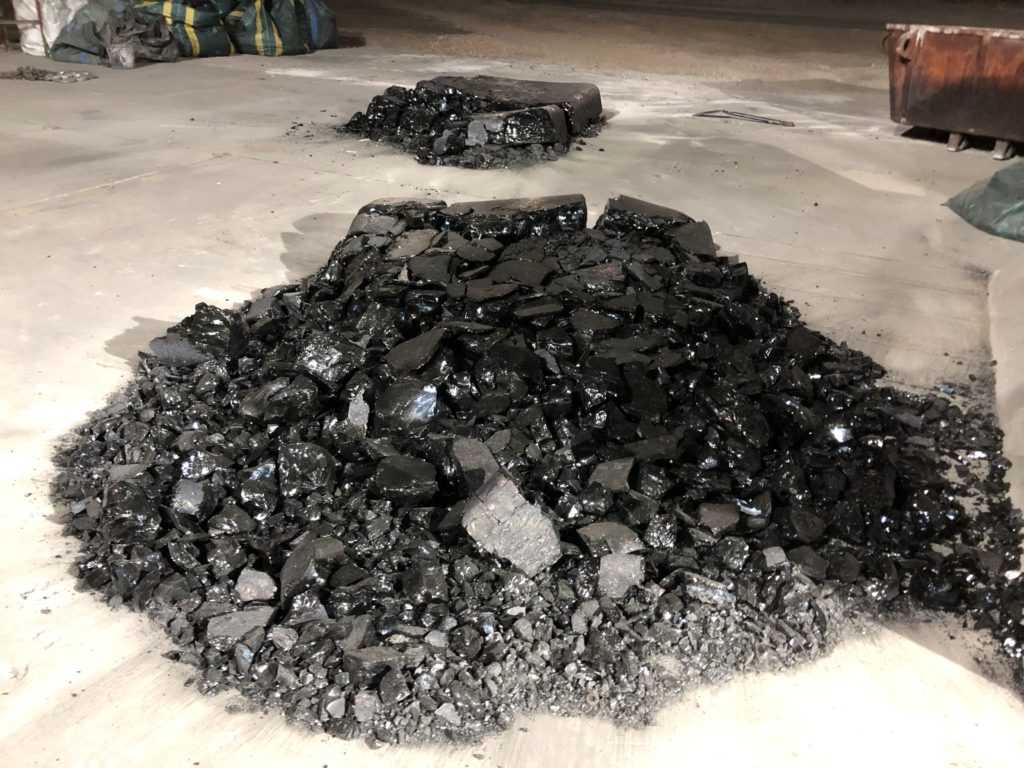
Stabilized arsenical glass using DST's GlassLock Process Credit: Dundee Sustainable Technologies
GlassLock addresses a separate but related challenge. The process can remove arsenic from ore, sulphide concentrates or solutions and stabilizes it by incorporating it into a glass matrix using commonly available reagents, producing a dense, stable glass solid that can contain up to 20% arsenic and won’t break down or leach into surrounding soil and water over time. The technology meets US Environmental Protection Agency toxicity leaching standards.
In testing on Revival Gold's (TSXV: RVG) Beartrack-Arnett project in Idaho, GlassLock boosted concentrate gold grade by 31% and cut arsenic content by 99% with minimal gold loss, results Mai said demonstrate the process’s ability to unlock value from deposits that conventional processing struggles to handle cleanly. “No two projects are the same,” Mai said. “It’s always important to have these discussions with project owners and developers to see how and where we can add value to their operation and to their flowsheet.”
Built for scale
Both processes are designed to handle a wide range of material types. CLEVR has been tested on oxide ores and sulphide concentrates from projects in Eastern Europe and South America, while GlassLock can treat arsenic in solid concentrates, pregnant leach solutions and legacy waste streams, giving operators flexibility to apply the technology at different stages of a project's life.
Scale is equally flexible, Mai said. DST has designed CLEVR circuits capable of processing more than 10,000 tonnes per day for large open pit operations, while the modular nature of the system means it can be scaled down for smaller projects without losing efficiency. “There’s really no limit to the scale as to how the process can apply,” Mai said.
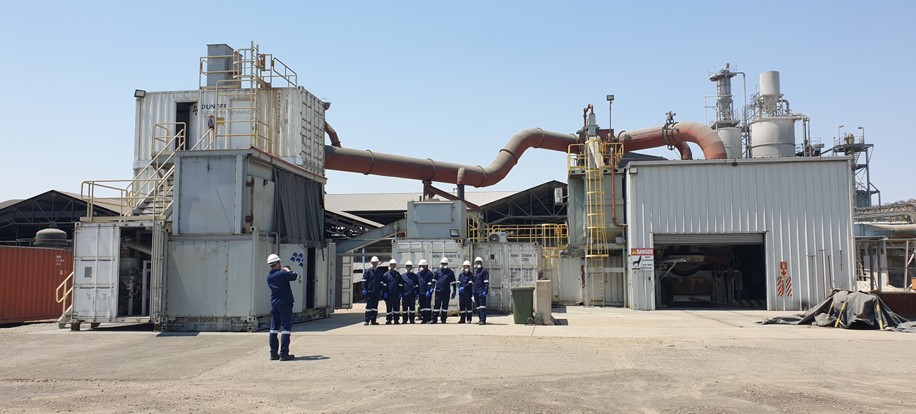
The company operate an industrial demonstration plant in Thetford Mines that gives clients and partners a chance to see the technology on commercial-scale equipment before committing to implementation.
“When people come here, they see the scale,” Mai said. “This is not something that is operated with equipment that is not utilized in the industry at a commercial scale.”
Site-specific variables, including power costs, labour availability and reagent delivery, ultimately determine where the economics work best. DST works with project developers to model those parameters before recommending a flowsheet, and Mai notes that those variables may shift considerably depending on whether a project is in central Africa, South America or North America.
Mining companies have a responsibility to integrate efficiently with the communities surrounding their operations, Mai said, and smaller processing facilities make that easier.
Gaining ground
DST has spent more than a decade moving its processes from laboratory concept to industrial demonstration, accumulating operational data across a range of ore types and geographies. That body of work, Mai said, is what separates DST from earlier-stage technology developers and gives the company the technical credibility to compete for a place in project flowsheets.
“Bringing new metallurgical processes to the industry is a very difficult task,” Mai said. “Mining is a capital-intensive business with long lead times.”
A growing base of repeat customers, some on their second, third or fourth development mandates with DST, points to deepening commercial relationships across the company’s client base. Where developers once came to DST after encountering permitting or metallurgical hurdles, Mai said early-stage engagement has increased significantly, with more projects seeking process data before committing to a flowsheet.
DST is advancing implementation with a tier-one gold producer, with several other projects moving into engineering stages. Mai said the pipeline reflects growing industry recognition that early processing decisions can determine whether a project gets permitted, financed and built. “We’ve done the heavy lifting,” Mai said. “We’ve gone through a lot of the troubleshooting and have accumulated a lot of operational data on how our processes apply to different types of ore.”
Doing the homework
For Mai, the bigger challenge is not proving that the technology works. It is getting project developers to look beyond the processing routes that have defined gold metallurgy for decades. Cyanide leaching accounts for roughly 80 per cent of global gold production, a dominance built on decades of reliable performance but one that leaves little room for the faster kinetics and contaminant management that regulators and communities increasingly demand.
Boutique firms like DST sit outside the default circuit of commercial laboratories and established engineering consultants, which means developers need to actively seek them out.
“People spend a lot of time and money exploring, promoting and developing, and when it comes to processing, sometimes it's a bit of a given,” Mai said. "You send it a commercial lab, you do a bottle roll test, and you do cyanide because that’s the only test offered at any commercial lab.”
Mai said that the dynamic is slowly changing as more project results become public and engineers increasingly become familiar with DST's processes, but the onus remains on developers to look beyond the standard toolkit.
“If your engineering firm doesn’t know about us, they might not recommend it,” Mai said. “It’s important for project owners to do their due diligence – be curious and look at what is available.”
The company encourages developers to submit ore samples for testing at its Thetford Mines demonstration plant, where DST can generate the process data needed to evaluate whether CLEVR or GlassLock fits a given project's flowsheet.
“It’s important to note that we are miners. We come from the mining sector, and we side with miners,” Mai said. “We’re not trying to confront traditional routes, we’re just trying to be a tool, an option — to be supportive of a change towards efficiency.”
The preceding Joint Venture Article is PROMOTED CONTENT sponsored by Dundee Sustainable Technologies and produced in co-operation with The Northern Miner. Visit: dundeetechnologies.com for more information.



Comments