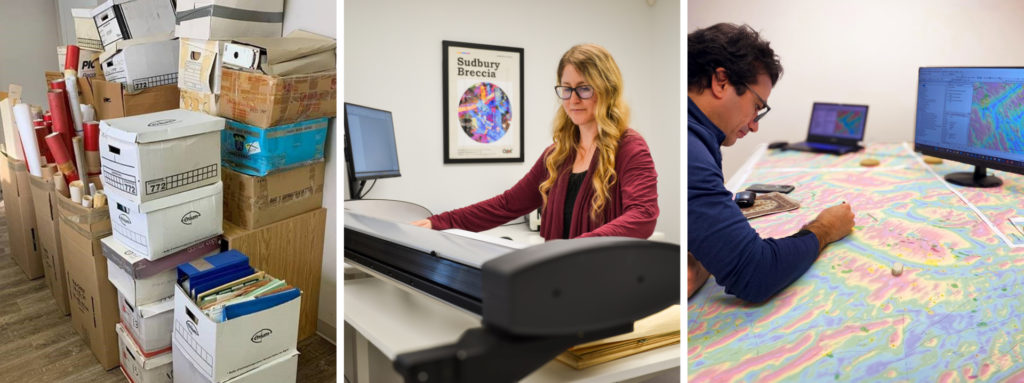
The exploration and mining industry is known for having warehouses and office storerooms packed with old geological data in paper boxes and map tubes, or digital files buried in hard drives, floppy disks and servers.
These datasets are typically passed from one group to the next during mergers and acquisitions or when mine finders retire. More often than not, they are rarely used, yet full of potential.
“There is immense value in our industry’s past mapping, drilling and mining datasets when they are in usable and accessible formats, yet very few teams have the time, expertise or systematic process to tackle the work of digitizing and extracting all the historical data,” says Ashley Kirwan, Co-founder, President and CEO of Orix Geoscience, a Canadian geological consulting firm.
Since incorporating 14 years ago, Orix has partnered with both Canadian and global exploration and mining companies at all levels to do just that, using their geological expertise and refined processes to execute projects of this kind. The company’s geology and geomatics teams comb through historical data to help companies understand what relevant technical data they already have and how to use it to increase the geological understanding of their project, execute strategic exploration programs and even reopen old mines.
Two years ago, Orix partnered with Willeson Metals to scan, catalogue and interpret historical datasets the privately owned mineral exploration company held on a portfolio of past-producing and early-stage projects along the Lynn Lake greenstone belt in Manitoba. Specifically, Willeson wanted Orix to help them identify prospective areas for focused exploration by generating a new surface geological interpretation of their Hatchet project, which included the past-producing Fox copper-zinc mine and 30 km of the underexplored greenstone belt.
Going digital
A significant amount of Willeson’s available data was in paper and inaccessible formats, Kirwan says, so Orix designed a program to compile, digitize, integrate and interpret. Orix scanned and catalogued 2,198 paper drill logs and 1,545 large format maps at their Sudbury scanning facility. They then extracted geological and structural observations and assay results from select scanned logs and maps into usable formats and geodatabases.
Orix then layered Willeson’s new high-resolution magnetic survey with the newly digitized historical outcrops, faults, contacts and drill log observations from the paper datasets. Finally, advanced structural and lithological interpretation was conducted at 1:5,000 scale across the project area to define deformation history and assess exploration potential for both volcanogenic massive sulphide (VMS) and gold mineralization.
The result was an increased geological understanding of the structurally complex region, interpreted controls on mineralization, and the identification of new targets for future exploration programs and partnership discussions.
“Leveraging historical datasets before drilling provides a key foundation for exploration teams to develop a strong geological theory, backed by technical excellence, that can then get tested through initiatives like future geophysical surveys, and mapping and drill programs,” says Kirwan.
“Explorers know all too well the need to use exploration dollars wisely and give investors confidence. A good starting point for building that confidence and strategy is developing and communicating a strong technical hypothesis to test, informed by new insights from compiled historical datasets.”
Orix partnered with Willeson Metals to scan, catalogue, interpret, and generate multi-commodity exploration targets from their historical datasets. Credit: Orix Geoscience
Original material
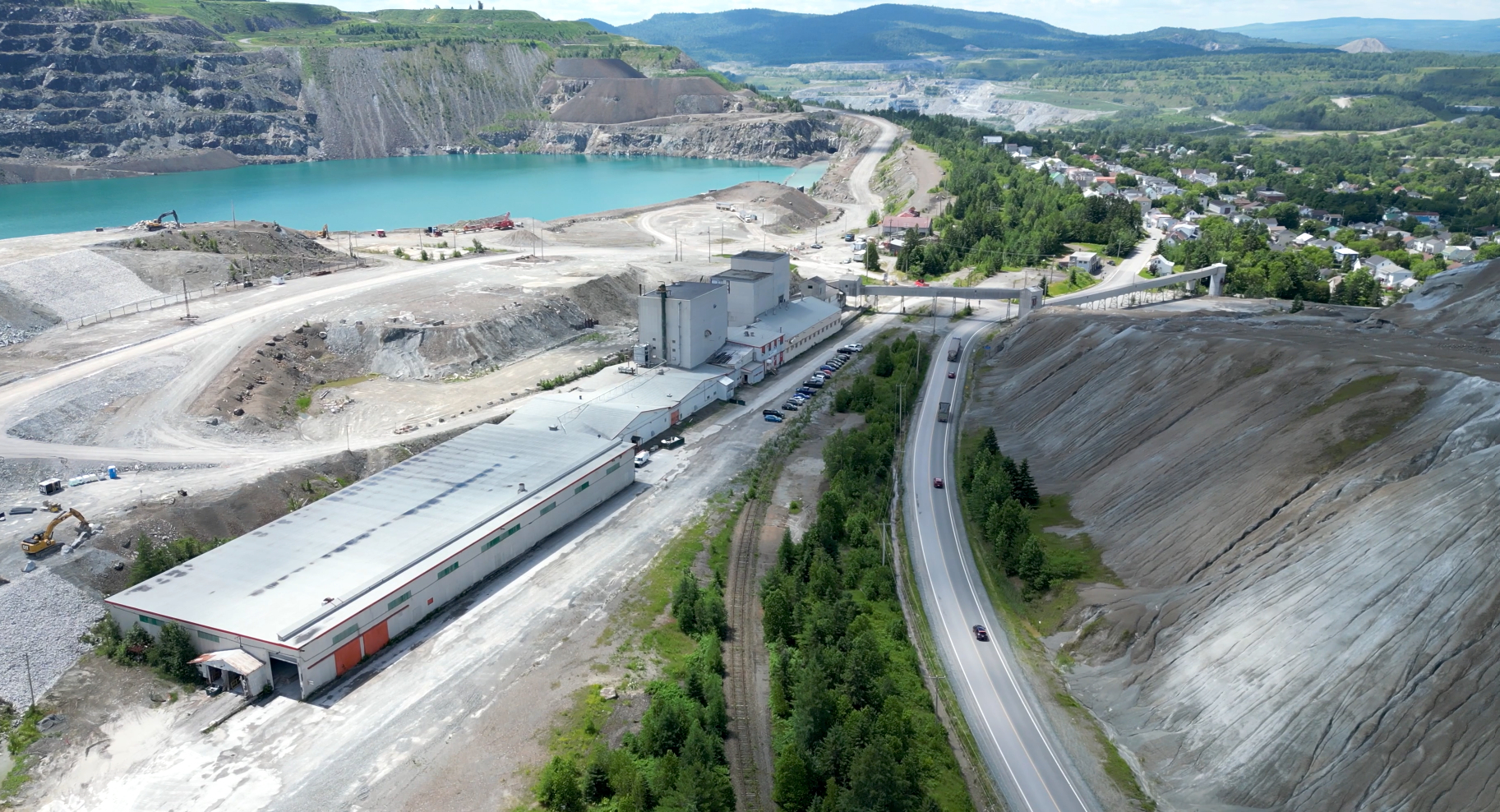
Orix also integrates historical datasets to support advanced projects and mining companies. They partnered with Magna Mining (TSXV: NICU) to generate updated geological and resource models for some of its primary assets, including the past-producing Levack and Crean Hill mines and the producing McCreedy West mine.
The Crean Hill mine produced copper and nickel over three operating periods between 1900 and 2002, but while it generated a rich body of data, much of it remained unintegrated and locked in paper datasets.
Orix’s technical team systematically scanned and catalogued historical paper maps from Crean Hill and then integrated the data with hundreds of other scanned but underutilized sections and plans. Geological and engineering information from historical mine level plans and sections were then integrated into the dataset.
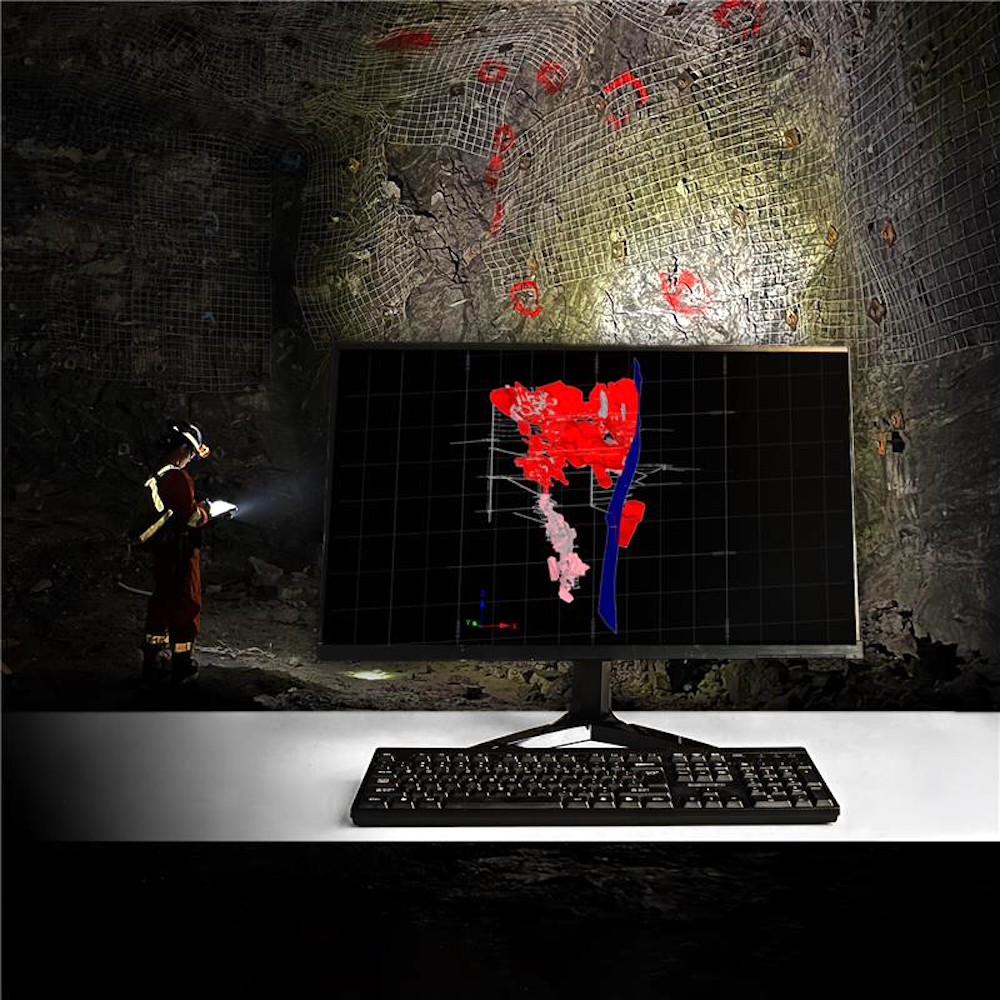
Ultimately, a complete set of underground levels, stopes and hundreds of production and service raises were created in 3D space, filling in technical gaps. In addition, underground level mapping and cross-section interpretations were digitized and used to generate new geological and mineralization models, which were accurate to original source material.
“Integrating historical datasets with modern techniques supported Magna’s 20,000-tonne bulk sample in 2024 and a prefeasibility study currently in progress,” Kirwan says.
Digging the past
Orix also modelled infrastructure across the three mines, including over 23 million cubic metres of underground development and mining, and generated a new mineral resource estimate for the McCreedy West mine by incorporating historical data and modern techniques. This supported life-of-mine planning and Magna’s initial Mineral Reserve at McCreedy.
At the Levack mine, Orix updated the geological model and resource estimate, increasing Levack’s indicated and inferred resource by more than 3.5 million tonnes with an increased in-situ value of $1.8 billion (US$1.3 billion) at today’s metal prices. Magna is using the resource estimate for a preliminary economic assessment on Levack this year.
“Our world needs new discoveries and more producing mines to meet the future demand for commodities, and the past is the key to the future,” Kirwan says. “Digging into historical mining datasets takes skill and strategy, but the payoff can be worth it.”
The preceding Joint Venture article is PROMOTED CONTENT sponsored by Orix Geoscience and produced in co-operation with The Northern Miner. Visit: www.orixgeo.com for more information.

Comments