Less ventilation puts electrical haulage systems ahead on cost, sustainability
When ventilation requirements in underground mines are properly modelled and costed, the case for replacing diesel truck haulage with low-emission, electrically powered […]
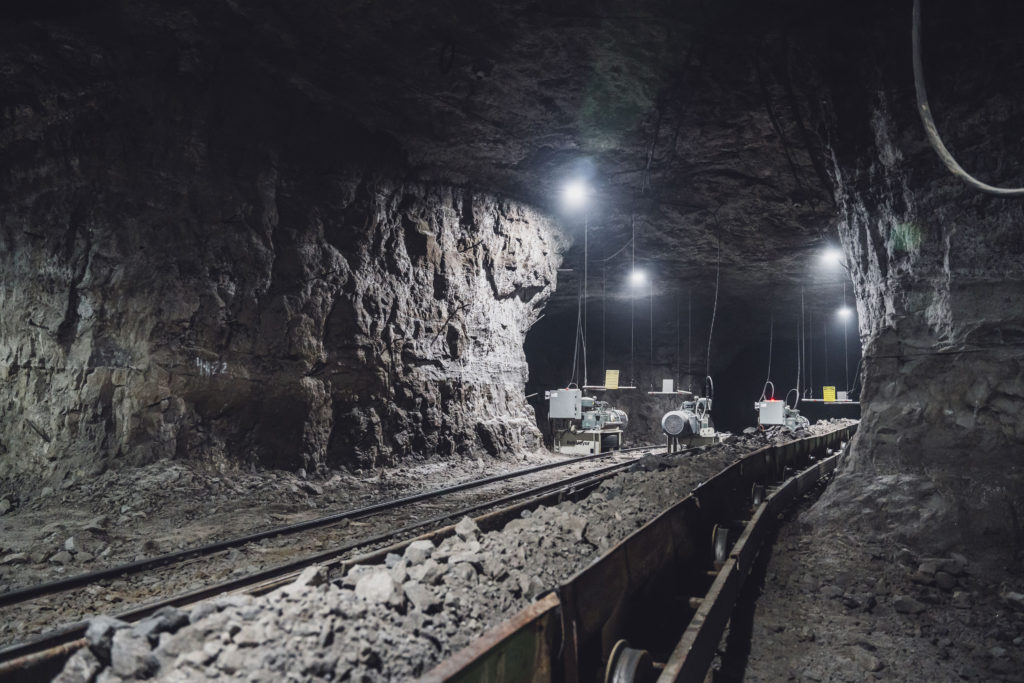
With no operators underground, no diesel and minimal maintenance, mines benefit from faster cycle times, lower labour costs, and reduced energy consumption. PHOTO: Railveyor Technologies.
When ventilation requirements in underground mines are properly modelled and costed, the case for replacing diesel truck haulage with low-emission, electrically powered systems becomes compelling.
This argument has been made by Australia-based mining consultancy Mining Plus, in a materials handling trade-off study to compare the capital and operating costs for a truck and loader combination, a rail-based electric Railveyor, conveyors and shafts.
“While initially the truck and loader option may seem cheaper and more adaptable, incorporating primary ventilation costs often demonstrates that Railveyor, and occasionally conveyors, can be more cost-effective due to reduced operating costs and primary infrastructure associated with primary fans,” according to the Mining Plus report. “Secondary ventilation savings and carbon modelling results, further reinforce these cost advantages.”
The study highlighted that using any electrified method will significantly reduce the fan operating costs, and shows that the absence of diesel trucks in mine headings allows much smaller fans to be used – reducing capital and running costs. The airflow requirements used in the study were based on the mine health and safety regulations which stipulate a minimum ventilation volume rate for each diesel unit in operation in the underground environment being considered.
Underground rises
One of the key variables in the equation was the need for underground rises – excavations that provide a channel for air to flow into and out of the mining areas. Ventilation modelling was carried out in the study to determine the number and dimension of rises necessary for the different material handling options, and the cost of equipping them with the necessary fans. It was found that the trucking scenarios required two rises from the sixth year of the project onwards, to exhaust the additional diesel fumes created by trucks. By comparison, the Railveyor and conveyor option required only one rise to achieve the necessary volume of air flow.
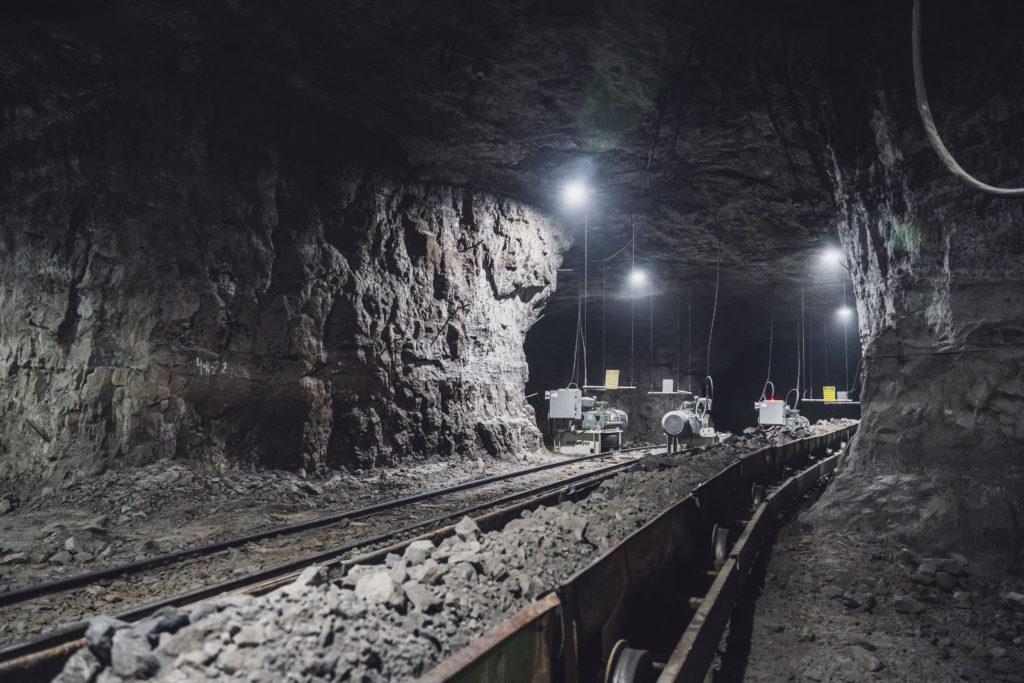
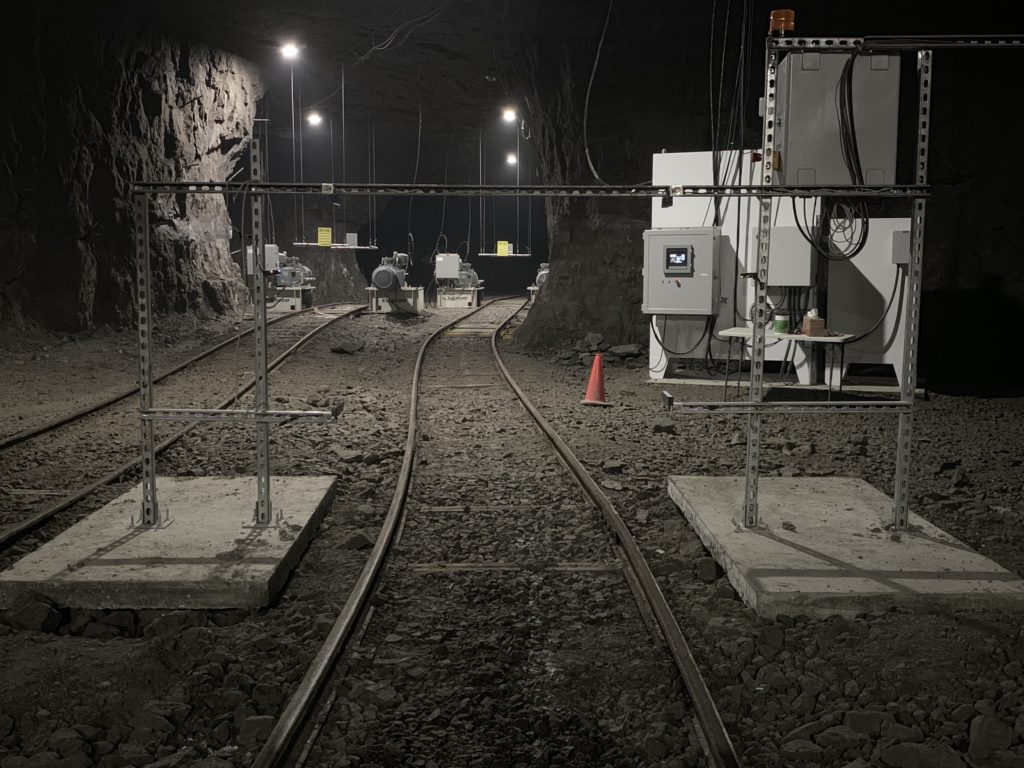
Railveyor installation at an underground operation. PHOTO: Railveyor Technologies.
“The results show that over the 24-year mine life, with an eight per cent discounted cash flow (DCF) rate, Railveyor is significantly cheaper due to not requiring a second rise to the surface and the reduced ongoing ventilation costs,” the report stated.
It went on to conclude that over the life-of-mine, “the Railveyor option is approximately $81 471 250 cheaper than trucking with orepasses. While the conveyor option is feasible, Railveyor emerges as the more attractive alternative, offering overall costs similar to the ‘orepass with twin decline’ option”
The report noted that high-level materials handling trade-off studies often fail to capture the full spectrum of costs associated with each method.
Cost effectiveness
“When ventilation requirements are included into the costs, the Railveyor generally has a lower discounted cash flow cost due to the reduced ventilation requirements,” it stated. “In some studies, Railveyor was also the cheapest option prior to adding primary ventilation costs; however, they were not discussed as part of this paper.”
Railveyor CEO Tas Mohamed highlighted that mines are seeking to optimize their operations across all systems, looking for improvements not only in cost effectiveness, safety and efficiency, but also to meet environmental, social and governance (ESG) requirements.
“This study shows that one area which can yield significant results in mines’ improvement efforts is a review of the material handling model utilised for the transportation of ore from underground to processing plants,” said Mohamed. “With many large mining operators eyeing the Paris Agreement goal of achieving net zero operations by 2050, phasing out diesel trucks for material handling has become an operational imperative.”
Environmentally conscious
The move to the electrification of material handling systems reduces the need for capital intensive ventilation systems and fans, she continued. Where less ventilation is required, both the cost of energy and its carbon footprint can be reduced. While the cost of diesel varies depending on the market, mines can better control their costs when using electricity, she pointed out.
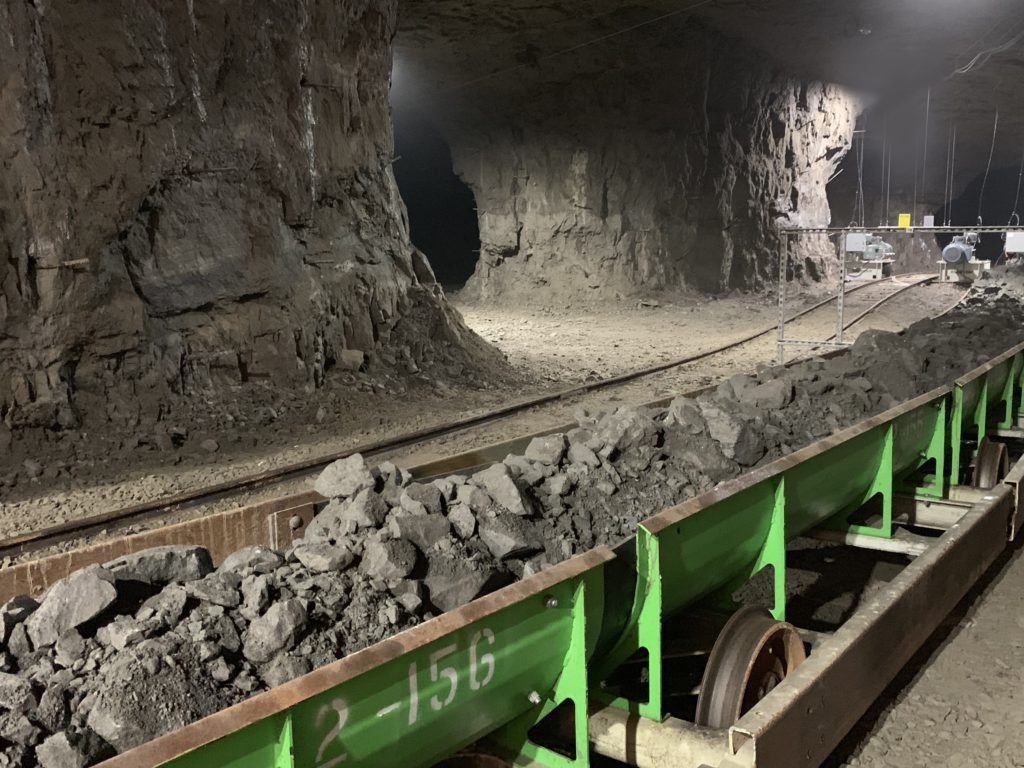
Hauling rock efficienctly with electric power. PHOTO: Railveyor Technologies.
“Driving haulage with electricity also allows for better cost management as many large mining operators are able to negotiate fixed, long term supply agreements with power utilities,” she said. “In addition, it offers mines the opportunity to explore alternative, renewable energy sources, including solar and wind powered electricity.”
Ventilation also becomes an issue when a mine seeks to increase production levels, which can result in a commensurate need to increase ventilation requirements, she noted. If ventilation systems are already running at maximum capacity, this could present a bottleneck for production.
“Railveyor requires minimum ventilation and can easily accommodate an acceleration of production,” said Mohamed.
Railveyor is the one of the world’s most innovative mining bulk material handling systems. Fully-electric and truly autonomous, its narrow-gauge light rail system is propelled by low-horsepower stationary power plants adjacent to the rail route. Railveyor’s goal as an enterprise is to maximize efficiency of mines’ haulage operations, doing this in a safe, sustainable, and scalable way using the most durable and efficient mechanical system driven by a leading software solution.
Very interesting analysis. In many ventilation studies we do for underground mines, we see the same pattern: once you properly model diesel-related airflow requirements and the cost of primary fans, rises and power, the “cheap” truck fleet is not actually cheap over the life of mine.
Electrified haulage plus a smart ventilation strategy (VOD/Ventilation-on-Demand, better raise layout, high-efficiency main fans) can remove a huge amount of heat and diesel-particulate load from the system. That not only reduces opex and carbon footprint, but also gives more flexibility for future production increases without hitting a ventilation bottleneck.
As someone working in mine ventilation and main-fan design, I’m glad to see ventilation being treated as a core part of the business case for haulage choices, not just a “compliance cost” in the background.
Comments
Mining Fan
Very interesting analysis. In many ventilation studies we do for underground mines, we see the same pattern: once you properly model diesel-related airflow requirements and the cost of primary fans, rises and power, the “cheap” truck fleet is not actually cheap over the life of mine.
Electrified haulage plus a smart ventilation strategy (VOD/Ventilation-on-Demand, better raise layout, high-efficiency main fans) can remove a huge amount of heat and diesel-particulate load from the system. That not only reduces opex and carbon footprint, but also gives more flexibility for future production increases without hitting a ventilation bottleneck.
As someone working in mine ventilation and main-fan design, I’m glad to see ventilation being treated as a core part of the business case for haulage choices, not just a “compliance cost” in the background.