Thousands of legacy mine sites across Canada and the United States pre-date modern environmental regulation, and many contain sulphide-bearing waste rock left exposed at surface — material that now represents both an environmental liability and a potential source of critical minerals.
Canadian mineral exploration firm Sasquatch Resources is advancing a remediation-focused proposal at one such site, Mount Sicker on Vancouver Island, that could serve as a proof-of-concept for linking legacy mine cleanup with mineral recovery.
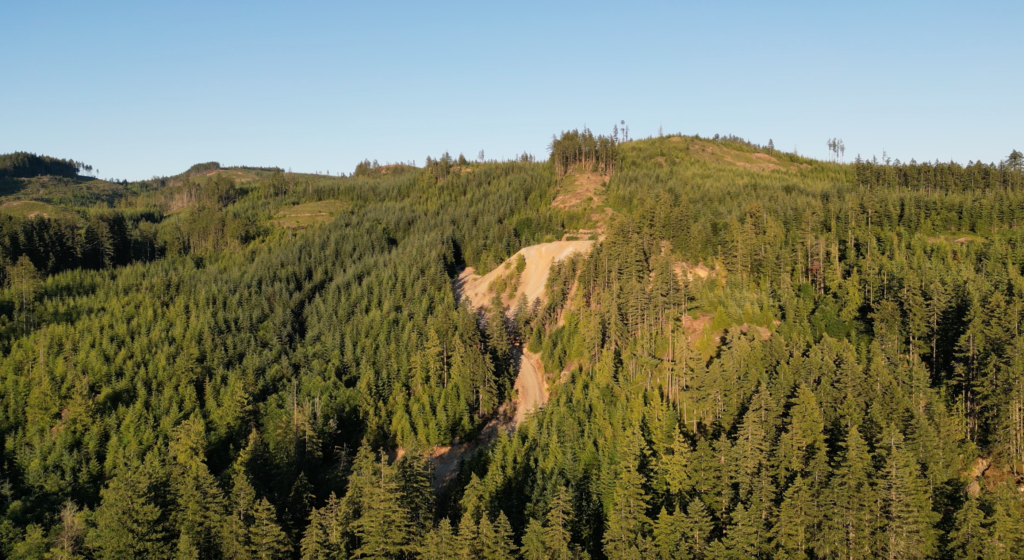
Mount Sicker, a former copper-gold district near Duncan, British Columbia accumulated more than 300,000 tonnes of sulphide-bearing waste rock during mining from roughly 1895 to 1915. Independent testing shows the raw waste rock scored 0.2 on the neutralization scale, indicating strong acid-generation potential. Recent sampling also confirms residual copper, gold, silver and zinc remain in the surface piles.
Sasquatch has proposed a remediation-first program to remove the sulphide-bearing waste, separate acid-generating material from more stable rock, and restore disturbed areas — including securing or closing open shafts and addressing other long-standing physical hazards. The company plans to use crushing and mechanical sorting only, with no chemical additives, no new waste streams, and on-site water recycling.
Controlled independent ore-sorting trials on representative samples indicate the process could remove more than 95% of sulphide-related contaminants (including arsenic, mercury, lead and sulphur), raise post-sorting neutralization scores to between 5.3 and 6.3, and improve pH from 6.3 to about 7.2, suggesting a substantial reduction in acid-generation risk.
Under the plan, mobile ore sorting would separate metal-rich material from lower-grade rock. Sasquatch would transport concentrate to existing licensed facilities, using revenue to help offset waste removal and rehabilitation costs while avoiding new mining infrastructure. The proposal also aims to remove physical hazards, stabilize the land, enable natural regrowth, and create local employment tied to environmental restoration.
University researchers in British Columbia are conducting on-site water sampling and metals analysis to support the environmental assessment. Okane Consultants advises on environmental oversight and reclamation planning, and Synergy Enterprises supports lifecycle and carbon analysis. Sasquatch is consulting with locally impacted First Nations and pursuing broader Indigenous engagement. The company has submitted permitting materials and is working with regulators; local community members and elected officials have expressed interest and support for addressing the historic waste at Mount Sicker.
If technical results hold and regulators approve the plan, Mount Sicker could become one of the first modern Canadian examples of coupling large-scale legacy-site remediation with mineral recovery — a model that could apply to thousands of legacy sites across North America while helping supply critical minerals without expanding new mining footprints.
More information is available at www.SasquatchResources.com

Comments