Blue Lagoon reopens Dome Mountain gold mine
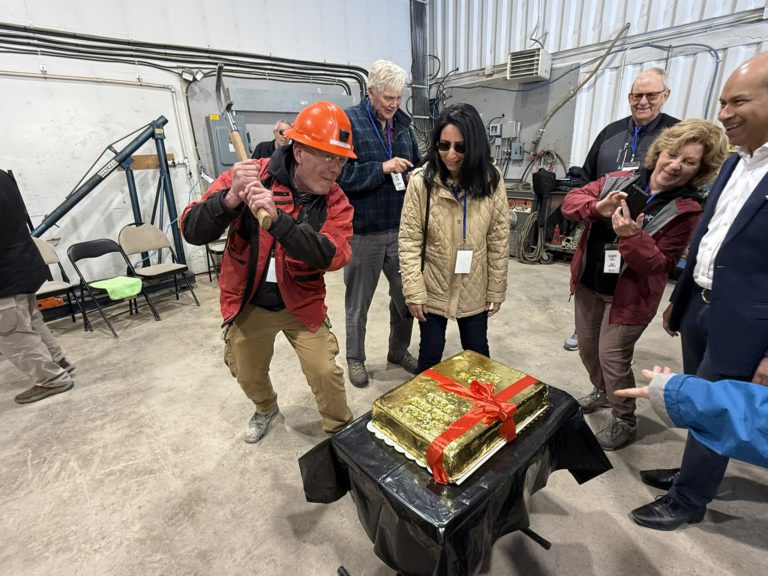
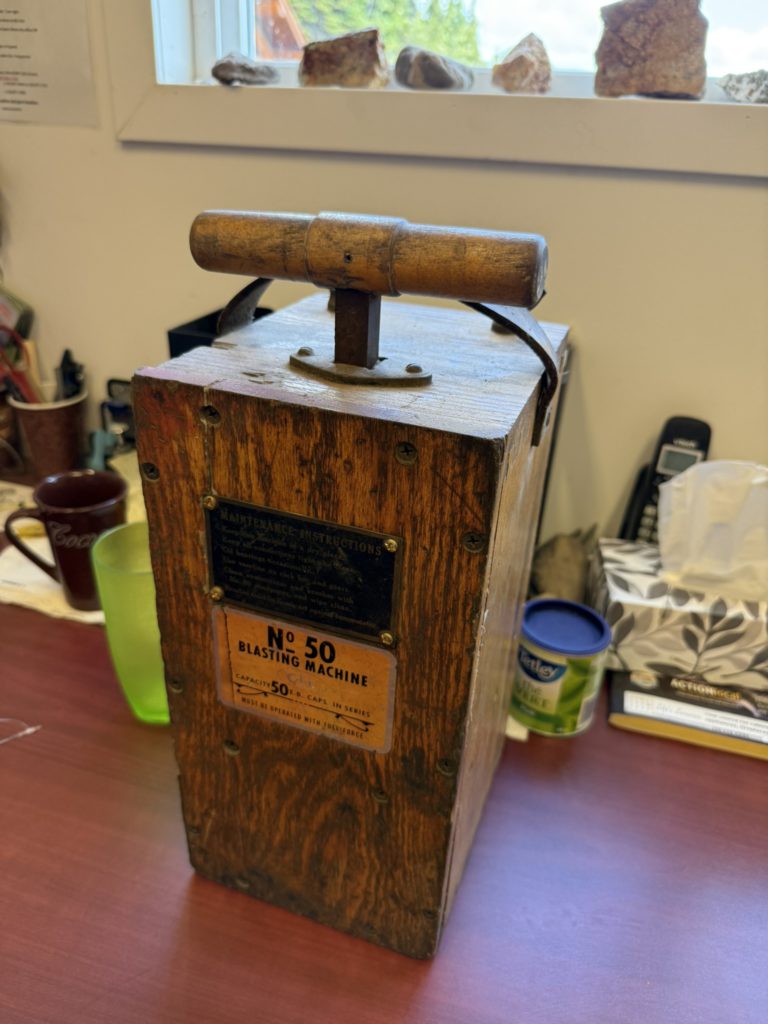
Last July, Blue Lagoon Resources reopened the Dome Mountain mine in British Columbia, more than 30 years after the last major exploration activity at the gold-silver property. Located just 50 minutes from Smithers in northwestern B.C., the project restart marks a significant shift for the company from exploration to production.
In February 2025, Blue Lagoon received its mining and effluent/discharge permits from the B.C. government, making it one of only nine companies to receive such approvals in the province since 2015.
Following the opening ceremony, shares of Blue Lagoon Resources rose 3.13% to $0.66 apiece, giving the company a market capitalization of $92.91 million (~US$67.87 million). Once the water treatment plant is fully operational, Blue Lagoon expects to produce approximately 150 t/d, totalling 55,000 t/y, with an expected recovery of around 15,000 oz. of gold in the first year.
First blasting is expected this August, with initial gold production anticipated in September. The company aims to reach full capacity before the end of the year. Mining will begin at the Boulder Vein above the 1290 metre level using a mechanized cut-and-fill method.
“Over the past few years, we have strategically invested more than $30 million into Dome Mountain, ensuring that when we reached this milestone, we would be ready to move forward with minimal additional capital requirements,” President and CEO Rana Vig said in a February 12 shareholder letter.
“Now, with just approximately $3 million in additional CapEx, we will be in a position to begin mining operations — a remarkably low cost compared to industry norms,” Vig noted.
Ore will be brought to the surface and stored before being trucked to Nicola Mining’s toll-milling facility in Merritt under an active agreement. Waste rock will remain underground. The project benefits from year-round road access and a newly commissioned water treatment plant.
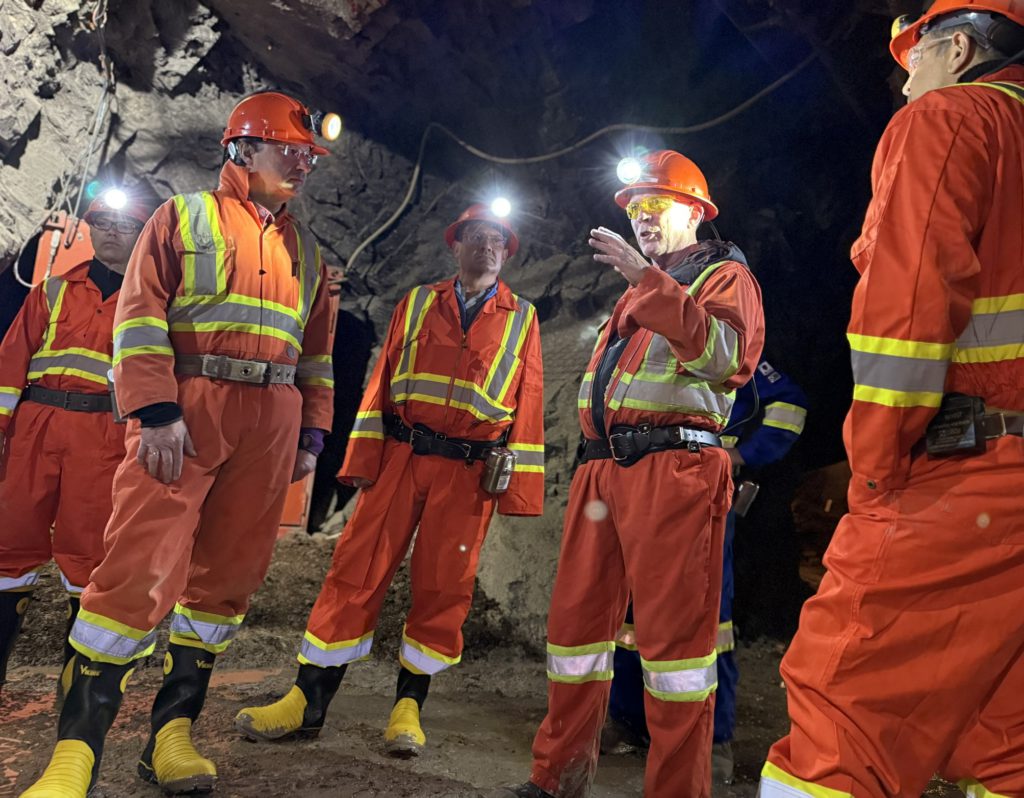
Blue Lagoon remains debt-free, with the upcoming ramp-up funded in part through a recently closed financing of nearly $5 million. The company also has $3.6 million in the money warrants and access to an unsecured credit line from its toll mill partner, Nicola Mining.
Community engagement and upside
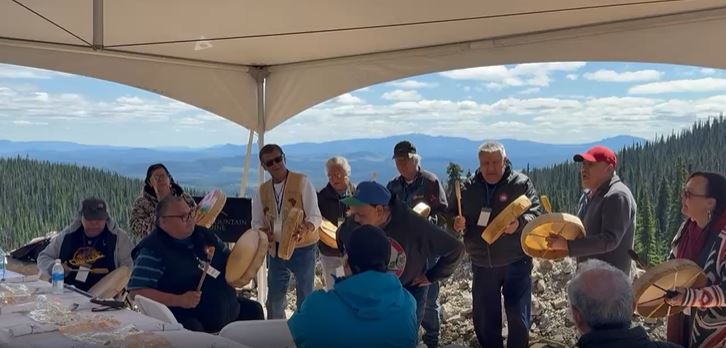
Local support has been central to Dome Mountain’s revival. Four of the ten current site workers are members of the Lake Babine First Nation, on whose traditional territory the project is located. As part of its agreement with the Indigenous community, the company will provide scholarships to train Indigenous youth for underground mining roles.
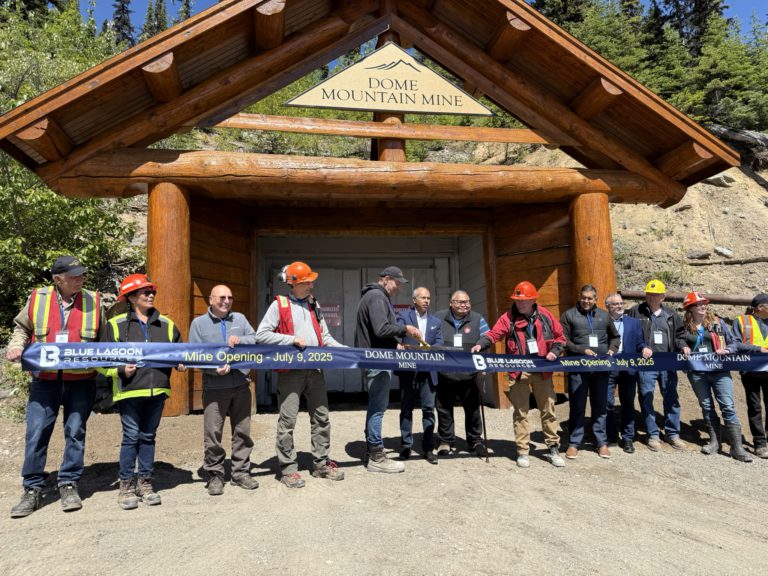
“It is a great opportunity to learn underground for the First Nations… There is a great opportunity to teach our young people what underground is so we can all work together as one,” said Brenda Patrick, a Lake Babine Nation employee at the site.
Pathway to expansion
The current mine plan spans five years, focused solely on the permitted Boulder Vein area. Blue Lagoon plans to pursue additional permits to mine deeper zones below the 1290 metre level and expand into the nearby Argillite Vein. This next phase could significantly increase production if exploration results prove favorable. The mine’s existing infrastructure and regulatory progress position it well for phased growth.
According to chief geologist Bill Cronk, the property has substantial “blue sky” potential, with 15 high-grade quartz carbonate veins identified and 90% of the 210-km2 site still unexplored.
Legacy project revived
Gold mineralization on the property dates to the late 1800s, and considerable surface and underground work had already been completed by 1923–1924. Renewed exploration in the 1980s led to the discovery of the Boulder Vein system in 1985 by Noranda. Underground mining occurred briefly in the early 1990s under a joint venture between Timmins Nickel and Habsburg Resources. When operations ceased in May 1993, the mine had produced approximately 43,900 tonnes of ore at an average grade of 0.35 oz. gold per tonne.
The most recent project owner, Gavin Mines, held the property for 12 years, completing much of the infrastructure and underground development. In total, more than $80 million has been spent on the project by previous owners, including Gavin Mines, Timmins Nickel, and Noranda. Blue Lagoon acquired the project in 2020 and has since focused on drilling and developing the Boulder Vein system. 
Bruno Venditti is a writer with MINING.COM.
Related Posts

Sponsored: Troilus adds scale, certainty to Quebec mine
September 18, 2026
Sponsored: Troilus adds scale, certainty to Quebec mine
XXIX advances Pluto property option
September 17, 2026
XXIX advances Pluto property option
West Africa key to gold growth, Fortuna CEO says
September 17, 2026
West Africa key to gold growth, Fortuna CEO says
The trillion-dollar gold question:
September 16, 2026
The trillion-dollar gold question:
Kootenay Silver reports strong silver grades at Columba
September 16, 2026
Comments