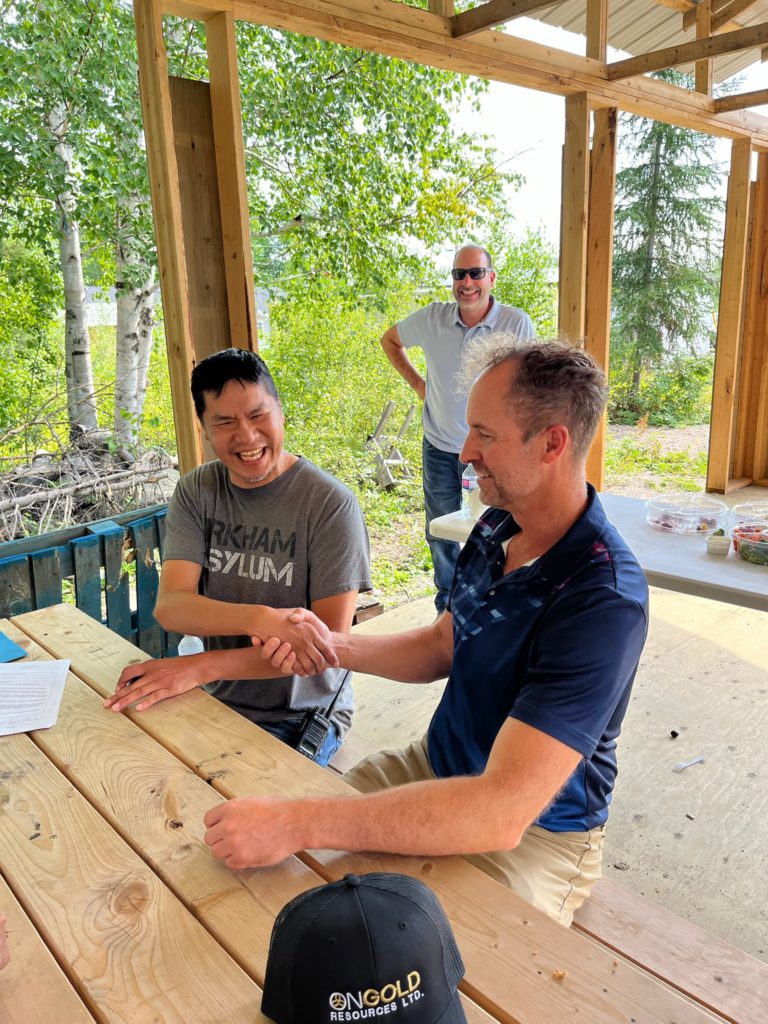
ONGold Resources (TSXV:ONAU; US-OTCQB:ONGRF) announced the signing of a collaboration agreement with Nibinamik First Nation, an Indigenous community within the Ring of Fire region. The Toronto junior miner secured the community’s consent to begin drilling at its Ti-pi-ha-kaa-ning (TPK) project, about 470 km northeast of Thunder Bay, Ontario. TPK spans 480 sq. km (48,000 hectares) and is noted for extensive gold mineralization that could support district-scale mining.
Kyle Stanfield, CEO and director of ONGold, commented: “Through negotiation of the collaboration agreement with Nibinamik First Nation, we have demonstrated again that ONGold understands how to engage with communities in a meaningful way. We are thrilled to be working closely with Nibinamik First Nation as we undertake the diamond drilling exploration program at TPK.”
Exploration remains at an early stage, and the area shows strong upside for gold as well as indications of nickel, copper and platinum‑group metals. The company has launched an eight‑hole diamond drill program totaling 2,400 metres and expects to complete it in the latter half of September. The company said the campaign will build on results from a previous exploration program conducted in 2012.
Nibinamik First Nation made the news when this past May community leadership expressed their opposition to Ontario’s Bill 5, the Protect Ontario by Unleashing our Economy Act, as the Ontario government has notified the public that the Ring of Fire will be one of the first major projects to be subject to Bill 5's provisions.
Nibinamik Ogamakan (Chief) Michael Sugarhead, wrote: “The Ontario government claims Bill 5 would accelerate mining projects by eliminating pre-approval requirements and embracing a ‘registration-first’ approach, but really it would create new uncertainty by leaving undefined how Ontario would discharge its constitutional duty to consult and accommodate impacted First Nations. Ontario cannot legislate its way out of constitutional obligations and this attempt to shortcut the duty to consult and override environmental protections will end up at the Supreme Court and delay any Ring of Fire activity by at least 10 years.”
Ogamakan Sugarhead, added, in expressing a community preference for partnership to precede exploration activity: “Nibinamik First Nation knows change is coming, and we are open to exploring all opportunities that will lead to a better future for our community. First Nations have been offering partnership to Ontario on the Ring of Fire for 20 years, and these requests have been ignored. Development can happen, but only with partnership as the starting point. We will not surrender stewardship of our territory to far-off decision makers with no connection to our lands.”
Nibinamik has also invited Ontario to work together on better development planning in the Ring of Fire region. The First Nation submitted a proposal to assess the feasibility of an east–west multi-use corridor that would include an all-weather road, electrical transmission and other utilities. Nibinamik firmly believes development in the Ring of Fire will succeed only with the support of the people who live there.
Ogamakan Sugarhead concluded: “We are not here to be bulldozed. We are here to be partners.”
More information is posted on www.OnGoldResources.com.


Comments