Tailings management north of parallel 60
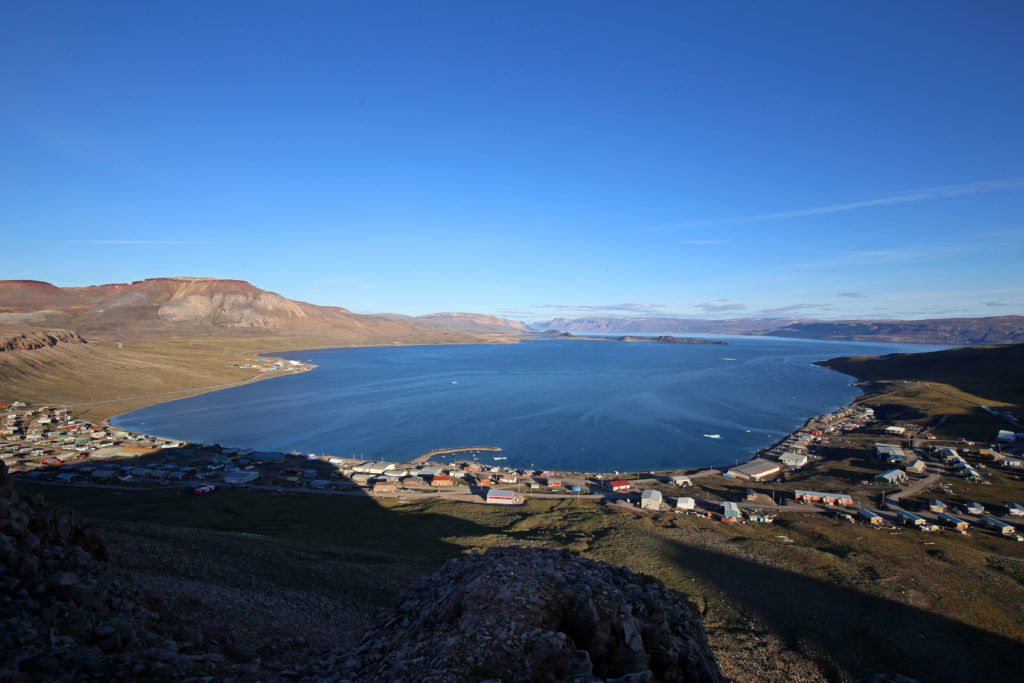
“The true north strong and free.” We Canadians love to live and share these words. We sing them loudly and with pride before important events in auditoriums and arenas across our vast nation.
Yet most of our enthusiastic anthem-singing population has never ventured close to the true Canadian north. Approximately 90% of Canada’s population is clustered near the southern border, with 66% of Canadians living within 100 kilometers of the U.S. border.
To put it in perspective, consider the distances to some of the most representative northern cities. Vancouver, B.C. is farther from Whitehorse, Yukon than it is from San Francisco, Calif. And Iqaluit, Nunavut is closer to Greenland than it is to Quebec City, Que.
Although cities like Yellowknife, N.W.T. developed from early mining towns, mine developments can be found even further north than the territorial capitals and centers of population. In fact, some of the northernmost mines on Baffin Island (e.g., Mary River Mine) even have a reduced opportunity of viewing the northern lights as their location approaches the auroral oval, which is further north than the optimal viewing angle.
Given their unique location on the planet, tailings management north of the latitude 60° parallel — the imaginary line that forms the southern border of Canada’s arctic territories of the Yukon, N.W.T., and Nunavut — comes with a different set of challenges and therefore requires a special mindset, determination, and adaptive approach to managing risk and safely executing projects.
It must be noted that an integrated approach to tailings management north of parallel 60 must include a meaningful participation of First Nations communities. It is important to build upon their vast knowledge of the land and sustainable practices, while recognizing the lessons learned and historical impacts of mining in the territories. This makes the involvement of First Nations communities critical to the future of tailings management in the northern region.
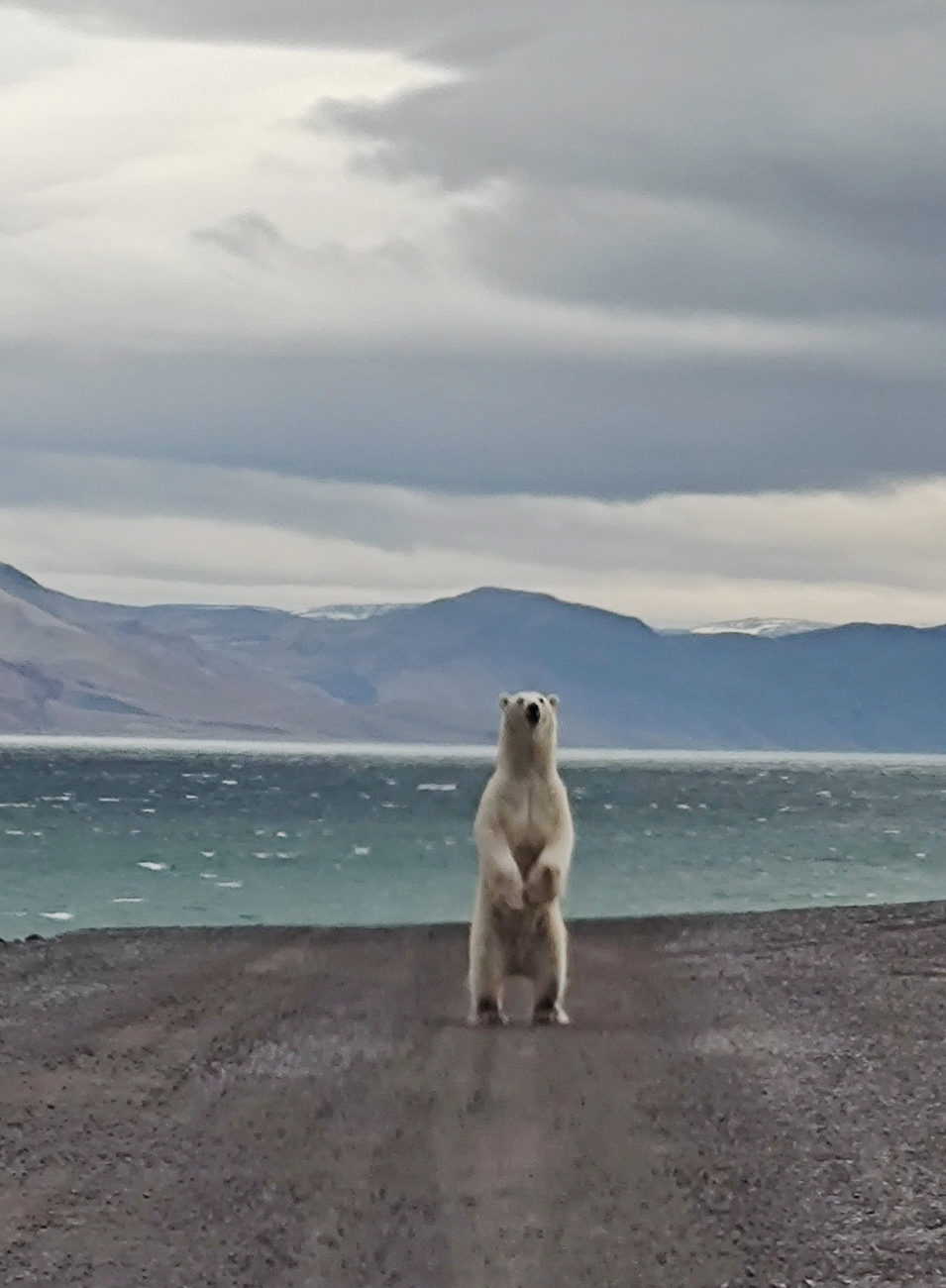
For this article, we will focus on the technical aspects of tailings management north of parallel 60.
Tailings management
Crown-Indigenous Relations and Northern Affairs Canada (CIRNAC) manage mineral claims in the northern territories, including some legacy abandoned sites through the Northern Abandoned Mine Reclamation Program (NAMRP). NAMRP manages these sites through active investigation and remediation, monitoring, and maintenance and ongoing care.
Some of the main concerns related to management of tailings disposal relate to the presence of Potential Acid Generating (PAG), metal leaching, and other hazardous materials in tailings deposits that may impact water sources, soils, and air quality.
Historical tailings disposal methods in the arctic regions have typically used either deposition under water/ice (sub-aqueous), or land-based (sub-aerial). The selection of the depositional method is heavily influenced by the specific conditions of the site and the economic considerations of the project.
Slurry, thickened, and paste tailings are typically placed underwater or ice — within abandoned pits, or natural lakes (where allowed) — or above ground, confined by natural terrain and earth dams. Filtered or dewatered tailings are typically placed above ground in open pits or on natural terrain and benefit from their ability to be self-supported (without the need for terrain or dam confinement).
When possible, tailings are deposited in underground workings, open pits, and other mined out areas to reduce potential surface impacts.
Dams and containment
Construction methods for tailings dams and structures take advantage of the cold arctic climate by maintaining the foundation and dam cores in a frozen state, which is less likely to allow for dam or foundation settlement, displacement, or seepage. Construction over foundations with unfrozen layers within the permafrost (e.g., Taliks) is also possible but presents additional challenges.
For closure and reclamation, covers are used to prevent oxidation in PAG tailings placed over land. Generally, tailings are allowed to freeze before the cover is placed. Covers then act as an insulation layer that maintain tailings as frozen (inert/semi-inert) by providing either a sufficient cover thickness or by using high water content cover materials which freeze and produce an ice-rich permafrost zone. Blasted quarry rock or Esker material (sand and gravel) are often used for cover construction based on their wide availability, with pros and cons for their specific uses.
Although the final selection of tailings deposition and storage methods are driven by project specifics, filtered tailings construction (i.e., dry stacking) is becoming a popular method in arctic regions because of its improved stability and reduced potential impacts (e.g., tailings flow) in case of failure. Advances in tailings filtration and water reclamation technology, which allows for more tailings processed at lower costs, are also making filtered tailings a more attractive method.
Climate change
Predicting climate change is a critical concern in the management of tailings in the arctic regions, where warming trends are estimated to be occurring two to four times faster than the global average. Warming trends are specially concerning because of their direct impacts on frost penetration depth, changes in the active layer, and freeze-thaw cycles in permafrost, including frozen tailings and dams.
While new designs can adapt historical construction technologies to account for the new challenges, existing structures need to be carefully reviewed to assess the potential impact of climate change on design assumptions.
Scheduled reviews of the structures, such as periodical Dam Safety Reviews (DSRs) and Dam Safety Inspections (DSIs), as well as thermal monitoring of tailings, dams, and foundations, present valuable opportunities to assess design assumptions that could potentially be impacted by climate change and to formulate action plans to address emerging issues.
Tailings deposits, especially those with earthen dams, face challenges directly associated with climate change. Thawing of permafrost layers in the foundation can cause increased settlement in dam structures (overall and differential) that could propagate into cracking, fracturing, and other tailings dam instability. Slope failure can also develop owing to rising phreatic surfaces, which may occur during thawing.
Where frozen cores or permafrost foundations are integrated in the design for stability and as seepage barriers, thawing can also generate instability and/or seepage paths for contaminated tailings water to escape to the environment.
Temperature increases, which generate increased meltwater runoff and more frequent or larger precipitation events, may overwhelm the storage and/or discharge capacity of dam impoundments, resulting in overtopping. Conversely, periods of drought have the potential to produce shortages of water for tailings processing and transport (pumping).
Climate change can also affect tailings-support infrastructure, including thawing-induced differential settlements and slope instabilities along tailings pipelines, water management systems, and other conveyances. Access to processing and tailings storage areas dependent on ice roads may also be lost earlier in the season owing to warmer temperatures.
Planning for change
Fortunately, most of the challenges presented by climate change can be mitigated with a reasonable level of effort. This process requires an assessment of measured climate change trends, the range of climate change impacts, and robust planning during the design of tailings facilities and development of closure plans.
To provide some examples, embankment or foundation settlement concerns can be addressed with the design of additional freeboard. Slope stability can be improved by using flatter slopes, constructing impermeable zones, providing drainage, and planning for contingency buttresses when required.
Permafrost/frozen conditions can be improved with the use of thermosyphons or thermal covers. Care can also be taken to avoid thawing permafrost layers by constructing during winter months and limiting construction rates.
Simple solutions, such as orienting tailings facilities to minimize sun exposure, can also be used to reduce potential for permafrost thawing.
Other considerations
Challenges associated with the remoteness of the mines, which require special attention and planning during operations, are more pronounced during project care and maintenance stages.
If closure designs are not properly engineered and constructed, additional effort may be required during maintenance phases. Activities that require additional materials to repair tailings covers, erosion protection, and water management systems may require re-mobilization of construction equipment and related supplies and personnel. This would generate significantly higher costs (including for unit rates) as compared to completing the same task during the operations stage or the active closure phase.
Closure plans should explore the potential to use locally available materials, materials that can be adapted for several uses and to otherwise source, process, and store well-planned quantities of construction materials.
Advances in solar power generation and satellite communication have improved instrumentation monitoring in remote locations, reducing the need for human operation and maintenance. Care should be taken in designing instrumentation to withstand the natural elements of arctic regions, also including wildlife interactions with exposed equipment.
The formulation of Emergency Preparedness and Response Plans (EPRP) should be carefully considered given the potential lack of human resources available on short notice to respond to emergencies.
Geopolitical impacts
Dynamics in the geopolitical environment continue to impact the advancement of climate change predictions. This directly impacts professional collaborations in permafrost regions. The tailings management industry needs valuable brain power, knowledge advancement, acquired experience, and performance monitoring data from scientists who have experience with vast permafrost areas, design, and construction.
The main barriers will continue to be the cancellation of international collaboration projects, the loss of access to global databases, and general limitations in communications. These disruptions will likely be felt first in the available foreign investment capital and the migration of professional talent in the Canadian tailings industry.
A holistic perspective
Tailings management in the Canadian arctic territories should not only be approached from the point of view of the technical challenges. Practitioners should learn and consider the long history of legacy environmental issues, historical practice, climate change, and local and geopolitical climates that may impact successful tailings management and closure.
Therefore, an integrated approach to tailings management north of parallel 60 should effectively recognize — and meaningfully integrate — best engineering practices and project economic realities with the historical lessons learned from past projects. 
Diego Penate is senior geotechnical engineer at Stantec, and Steve Bundrock is manager of geotechnical engineering at Stantec.
Related Posts

TNM reveals latest bonus prize Treasure Hunt clue
September 30, 2026
TNM reveals latest bonus prize Treasure Hunt clue
Gold refining goes electric
September 30, 2026
Gold refining goes electric
Montage pours first gold at Koné ahead of schedule
September 29, 2026
Montage pours first gold at Koné ahead of schedule
Mining Forum: Miners have cash but lack the crews
September 29, 2026
Mining Forum: Miners have cash but lack the crews
Troilus nails down US$850 million for gold-copper mine redevelopment
September 28, 2026
Comments