Growth and opportunity in West Africa
Fortuna Mining’s David Whittle discusses operational priorities, exploration strategy, and the outlook for gold mining in West Africa
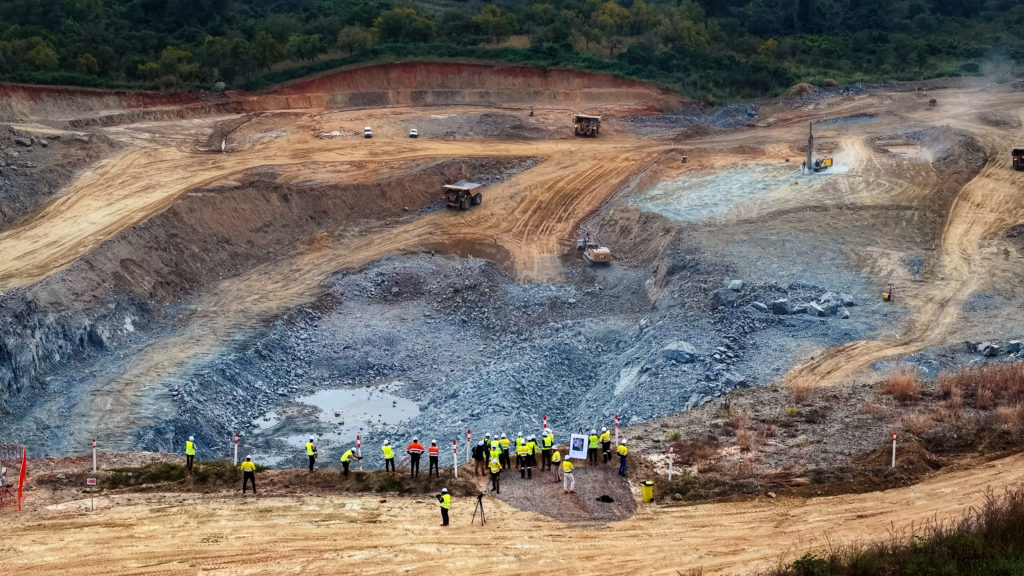
West Africa continues to play a significant role in global gold production, offering both strong geological potential and evolving operational challenges. Fortuna Mining sees West Africa remaining central to its growth strategy. Strong operational performance at Séguéla, continued exploration success across its land package, and the potential development of projects such as Diamba Sud are expected to support the company’s long-term presence in the region. For David Whittle (DW), chief operating officer for West Africa at Fortuna Mining, the combination of geological potential, supportive jurisdictions, and strong local partnerships continues to make West Africa one of the most compelling regions for gold mining investment and development.
In an interview with the Canadian Mining Journal at the Séguéla mine in Côte d’Ivoire, Whittle discussed the company’s priorities for the region in 2026, the performance of the Séguéla operation, and the opportunities ahead. The following conversation also explored Fortuna’s exploration strategy, the realities of operating in different geopolitical environments, and how the company is strengthening community partnerships and workforce development across its West African operations.
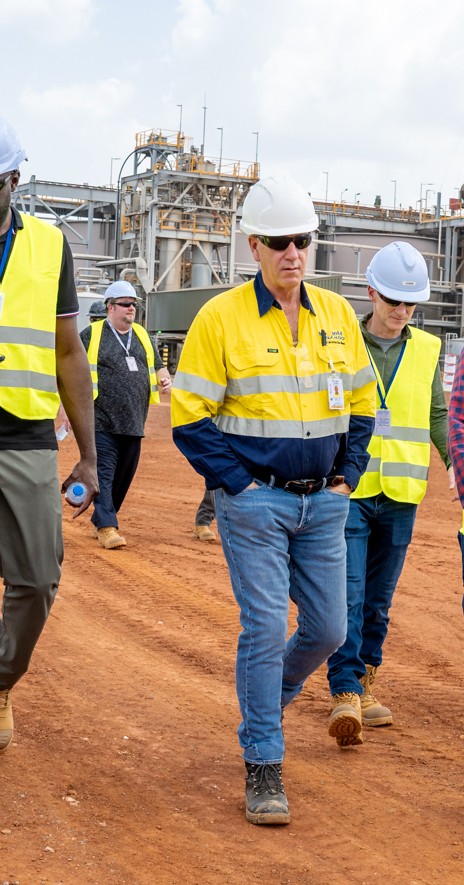
Credit: Fortuna Mining
CMJ: What are Fortuna’s main operational priorities for its West African mines in 2026?
DW: There are a few key elements shaping our priorities in West Africa now. Earlier this year, we exited our operations in Burkina Faso, and we also have the Diamba Sud project in Senegal approaching a construction decision. At the same time, the Séguéla mine in Côte d’Ivoire has now been operating for almost three years.
From an operational standpoint, Séguéla has been a success from the beginning. The project was built on time and on budget, and since entering production, it has consistently met — and exceeded — its production targets. We have a very strong team in West Africa, and they manage the operation extremely well.
Our focus is now on growth. With the exit from Burkina Faso, we removed roughly 100,000 oz. of annual production from our portfolio. Séguéla continues to perform strongly, but we want to build on that success by bringing Diamba Sud forward and by looking beyond our current assets to expand the business further in West Africa.
We have already taken some steps toward that. Earlier this year, we took a strategic holding in Awalé Resources, and we also entered into an agreement with Resolute Mining to explore the Ghanaian side of the Siguiri Basin. Ultimately, the strategy is about leveraging the team we already have in place and identifying opportunities to grow our footprint in the region.
CMJ: What technical improvements have contributed to the strong performance at the Séguéla mine?
DW: Interestingly, the strongest performance at Séguéla has not really come from any single technical innovation. The biggest factor has been the experience and capability of the team that built and operates the mine.
From the start, the focus has been on optimizing the operation as designed rather than introducing overly complicated technical changes. That approach has allowed us to steadily improve performance and maintain consistent production.
Now, however, we are beginning to introduce additional technical improvements. We have effectively taken the project as far as we can within its current configuration, so the next step is to optimize further, particularly from the processing side.
For example, we are introducing technologies such as the Acacia reactor to improve gold recoveries in the mill. We are also implementing mill automation and other process optimization tools. These initiatives should help us continue to enhance performance as the operation matures.
There are also improvements underway on the safety side. One example is the introduction of in-vehicle management systems, which improve visibility and fleet safety across the operation. Over the next year, we expect to start seeing the benefits of these upgrades as they become fully integrated into the site.
CMJ: How does Fortuna approach geopolitical and security risks in West Africa?
DW: When we talk about risk in the region, there are really two different aspects to consider: the geopolitical environment and the on-the-ground security situation. Each country has its own circumstances, so our approach varies depending on where we operate.
For example, we previously operated in Burkina Faso, and we continue to have projects in Côte d’Ivoire and Senegal. The security requirements in those areas are very different. Burkina Faso has well-known security challenges, so the level of security presence there had to be significantly higher. In some cases, we were flying staff in and out to ensure their safety.
Côte d’Ivoire, by contrast, is considerably more stable. The country recently went through elections, and the process was very orderly. Senegal is also stable. That said, we always remain aware of the broader regional context and adapt our operating procedures as necessary.
Our primary focus is protecting our people and our assets — and people come first. During sensitive periods, such as elections, we may reduce the movement of personnel or adjust travel arrangements to minimize risk.
There has also been increasing discussion about resource nationalism across parts of West Africa. However, the situation varies significantly between jurisdictions. The challenges faced in countries such as Burkina Faso, Mali, and Niger are very different from what we see in Côte d’Ivoire or Senegal.
In fact, when you look at project development timelines, the region can be very supportive of mining investment. At Séguéla, for example, the deposit progressed from an inferred resource of about 400,000 oz. to a fully licensed and operating mine in just four years.
At the Diamba Sud project in Senegal, we submitted the environmental impact assessment in October 2025 and expect approval potentially by the end of the first quarter of 2026. Those kinds of timelines demonstrate that many jurisdictions in the region remain very supportive of responsible mining development.
CMJ: What is driving Fortuna’s exploration strategy and near-mine resource growth plans?
DW: At Séguéla, we control a very large land package, with roughly 35 km of strike length. That alone presents significant exploration potential. At the same time, we have increased throughput at the processing plant, which means mining rates have also increased. Naturally, when you mine faster you move through your existing reserves more quickly. That makes continued exploration extremely important.
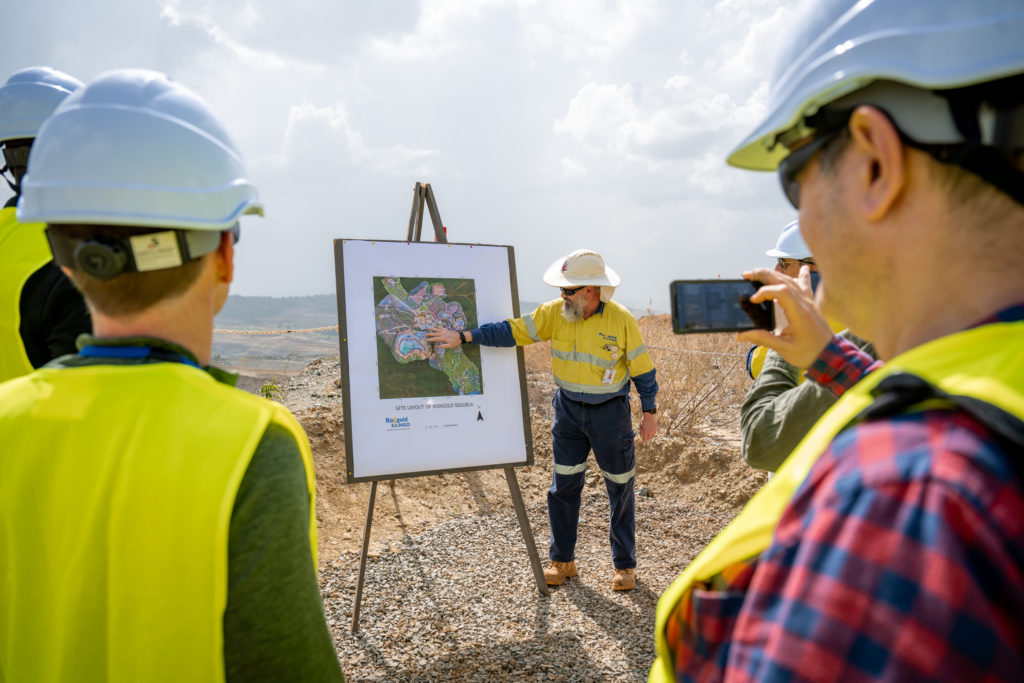
Credit: Fortuna Mining
Over the past two years, we have committed significant budgets to exploration, and those investments have already delivered results. We have seen resource growth at deposits such as Sunbird and Kingfisher, which has helped extend the production outlook for the mine. Our goal is to maintain a mine life of more than 10 years at Séguéla, and exploration will play a key role in achieving that.
The Kingfisher deposit is a good example of how the exploration story continues to evolve. It was the first deposit in the district that did not have a clear surface expression. Discoveries like that encourage us to step back and reconsider the geological model, looking for other opportunities that might not show obvious indicators at surface.
We have also encountered additional mineralization while drilling deeper holes at Sunbird. Some of those holes intersected mineralization around 180 metre down in areas that were previously unknown. Discoveries like that reinforce the idea that we have probably only touched the tip of the iceberg in terms of the district’s overall potential.
CMJ: How is Fortuna strengthening local community partnerships and workforce development around the Séguéla operation?
DW: Community engagement is extremely important to us. The Séguéla mine sits close to several villages — including Barana and Tiéma — so maintaining strong relationships with those communities is essential.
Fortuna entered the West African region through the acquisition of Roxgold, and strong community relationships were already a core part of how those operations were managed. That mindset has continued as we developed Séguéla.
One of the most important ways we support local communities is through employment. Both Fortuna and our subcontractors actively recruit from nearby villages. Many of those employees are new to the mining industry and in some cases have never held a formal job before.
Because of that, we invest significant time and effort in training programs to ensure that employees can perform their roles safely and productively.
Beyond employment opportunities, we also support a range of community initiatives. These include literacy and numeracy programs in local villages, as well as investments in medical and educational facilities.
We also participate in national programs. One initiative we are particularly proud of has supported cataract surgery for more than 1,000 people, helping restore their sight.
Full interview is available at
Related Posts
Hudbay lifts Snow Lake gold output estimate by 60%
September 28, 2026
Hudbay lifts Snow Lake gold output estimate by 60%
Collective hits gold-tungsten beyond Apollo model
September 24, 2026
Collective hits gold-tungsten beyond Apollo model
Vizsla buys property bordering Mt. Milligan mine
September 23, 2026
Vizsla buys property bordering Mt. Milligan mine
NexGold hits 14g at Goldlund in Ontario
September 23, 2026
NexGold hits 14g at Goldlund in Ontario
Ex-Gold Fields CEO targets $1B Africa critical minerals fund
September 23, 2026
Comments