Vema Hydrogen said Monday that it has entered into a non-binding Letter of Intent (LOI) with First Atlantic Nickel & Cobalt (TSXV: FAN | OTCQB: FANCF), to jointly develop engineered mineral hydrogen (EMH) at the Pipestone XL project, a 30-kilometer ultramafic belt in central Newfoundland, Canada.
Newfoundland is a significant region for critical minerals and clean energy development, but exploration and mining remain energy intensive.
Locally produced hydrogen at Pipestone could, over time, support on-site energy needs for a large-scale nickel and cobalt mining district and related downstream industries, Vema said.
Under the LOI, the companies intend to establish a 50/50 joint venture to produce low-carbon hydrogen alongside First Atlantic's primary awaruite nickel-cobalt program. First Atlantic’s district-scale project is located 40 km from Grand Falls-Windsor.
Vema is developing EMH, a process that accelerates natural geochemical reactions in subsurface rocks to produce low-carbon hydrogen for under 1$/kg, the company says.
EMH produces hydrogen from iron-rich rock through naturally occurring geochemical reactions, with no grid electricity required. An aim of the JV is to bring the technology to commercial scale.
The partnership is intended to serve as a first-of-its-kind template for combining hydrogen production with critical mineral development at ultramafic sites, with the potential to attract co-located investment in clean fuels, ammonia, and downstream industry.
“Vema’s Engineered Mineral Hydrogen is on the verge of delivering clean energy at a scale cost-competitive with hydrocarbons,” First Atlantic strategic advisor Dr. Douglas Wicks said in a news release.
“Awaruite forms through serpentinization when hydrogen reduces nickel and iron, so its presence at Pipestone XL is a clear signature of a hydrogen-rich system,” Wicks said.
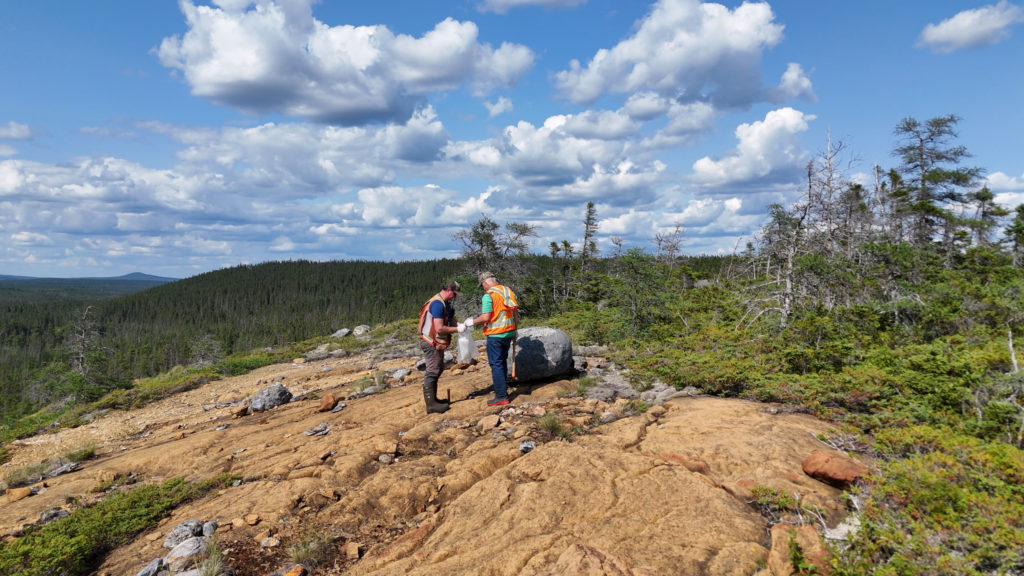
Over the past year, the companies have been evaluating the Pipestone Ophiolite Complex, analyzing geological and geophysical data as well as infrastructure across the 30-kilometer belt.
Laboratory testing of Pipestone rock samples at Vema's Orléans facility in France confirmed hydrogen production through stimulated serpentinization, indicating that the formation is well suited to EMH, Vema said, adding it will leverage the experience gained in its established site in the Thetford ophiolite in Quebec, where Vema operates the world's first EMH project.
The collaboration also positions both companies to explore how locally produced hydrogen could reshape energy planning for remote industrial sites. By pairing EMH supply with critical mineral development, the partners aim to demonstrate a model that strengthens regional energy resilience while reducing reliance on long-distance fuel transport.
"Engineered Mineral Hydrogen is a promising new primary energy source for regions withiron-rich rock, like at Pipestone," Vema CEO Pierre Levin said.
“Now with validated rock samples and permitting in place, we have a clear path to advance EMH at Pipestone and to expand the model across North America."


Comments