Reducing uncertainty in surface mining: From blast execution to ore recovery
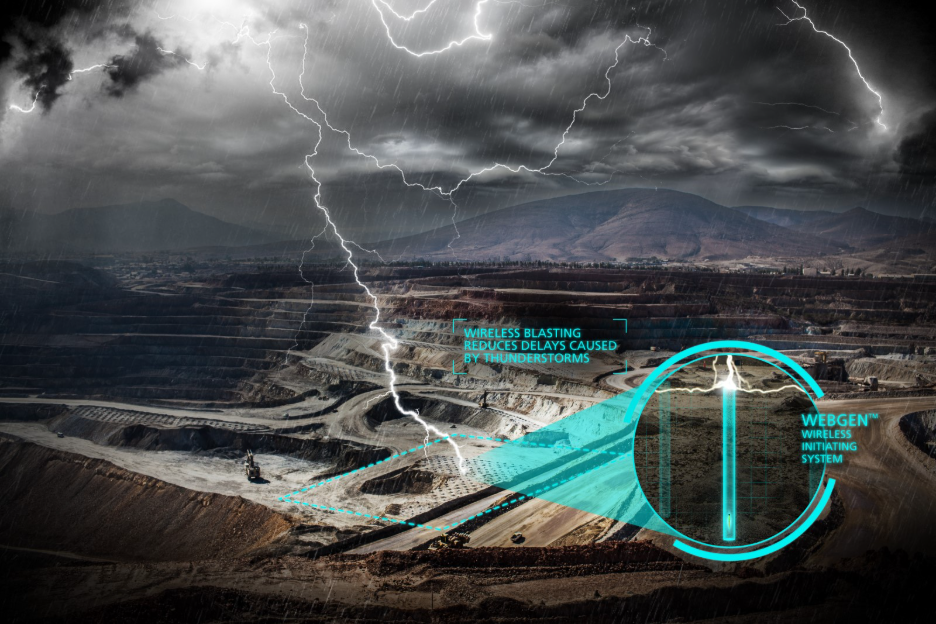
Surface mining teams are being asked to deliver more with greater consistency — even as weather, complex orebodies and production pressure make day-to-day decisions harder.
Two areas often create the most uncertainty: getting a blast safely and efficiently executed and understanding where the ore has moved once the blast is complete.
When lightning forces crews away from a loaded pattern, production can stop. When blast movement changes ore boundaries, valuable material can be misclassified, lost or diluted. In both cases, the challenge is the same: operations need more confidence in the decisions that shape productivity, safety and value recovery.
Orica technologies including WebGen wireless initiation and OREPro 3D Predict are helping surface mines reduce this uncertainty — supporting safer execution before the blast and more accurate ore control decisions after it.
Maintaining production confidence during lightning events
Lightning events can quickly disrupt surface mining operations, especially when traditional wired initiation systems require exclusion zones around loaded blast patterns. In storm-prone regions, this can delay ore access, reduce equipment utilization, compromise planning and make it less predictable.
WebGen wireless initiation helps reduce this constraint by removing surface wires from the blast pattern. With no downlines, trunklines or lead wires connecting initiation points, the primary conductive pathway between the surface and in-hole system is eliminated.
Once a WebGen pattern has been loaded and unused explosives have been cleared from the bench surface, operations may be able to continue working around the loaded pattern during lightning events without the need for a traditional exclusion zone. This does not apply during active charging or on benches where mixed initiation systems are used.
The technical basis is straightforward: without conductive wires, lightning-induced currents cannot transfer directly to initiation points. Magnetic and electrical fields generated during a lightning strike cannot replicate the encoded signal required to initiate a WebGen unit, while pressure and temperature effects dissipate rapidly in the ground and do not impact explosives loaded at depth.
Standard blast design, loading practices and site procedures still apply, including appropriate primer placement. But by removing the wired connection between the surface and the in-hole system, WebGen can reduce one of the key constraints that traditionally forces surface operations to stop during lightning events.
For mining teams, the outcome is practical: improved blast readiness, fewer lightning-related interruptions and greater confidence to keep production activities moving safely and productively around loaded patterns.
WebGen in action at Sierrita
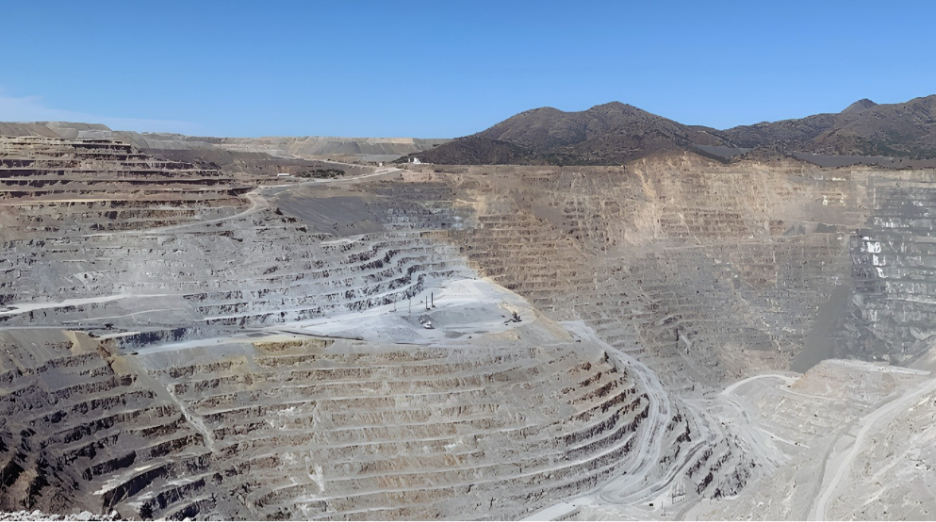
At Freeport-McMoRan’s Sierrita operation in Arizona, lightning events during the monsoon season regularly forced shutdowns of electric shovels and restricted access to loaded blast areas, delaying the mining of valuable ore.
To reduce this disruption, the operation evaluated WebGen wireless initiation across a series of blasts. By removing wires from the blast pattern, the site was able to reduce several common on-bench constraints.
The implementation helped
- eliminate tie-in time after loading,
- enable blasts to be ready to fire immediately after the final hole was stemmed,
- reduce risks associated with cut downlines and interaction with mobile equipment and
- improve on-bench productivity through more efficient stemming placement.
The site successfully executed four fully wireless blasts, marking the first WebGen blasts of this kind in the U.S.
“The system’s robust design has proven to be highly durable, even in the harsh conditions of our mining environment. Overall, the wireless detonator system is a potential gamechanger for our operations, providing us with the tools we need to enhance our efficiency and safety,” said Jason Wilkinson, senior drill and blast supervisor at Sierrita Mine.
For Sierrita, WebGen provided a practical way to reduce operational constraints in a storm-prone environment. More broadly, it shows how wireless initiation can help surface mines improve blast execution confidence, maintain productivity and support safer, more efficient daily production planning.
Ore and grade control optimization
Accurate ore control remains a critical challenge for large surface metal mining operations, particularly in complex orebodies where blast movement can significantly affect material classification. Traditional approaches often rely on manually delineated dig polygons supported by field observations, which can lead to inconsistencies between planned ore boundaries and plant performance.
Orica Digital Solutions’ OREPro 3D Predict is designed to address this gap by modelling blast movement and improving visibility of post-blast conditions. The software uses readily available mine data including blast designs, in-situ block models and post-blast surveys to simulate how material moves during detonation.
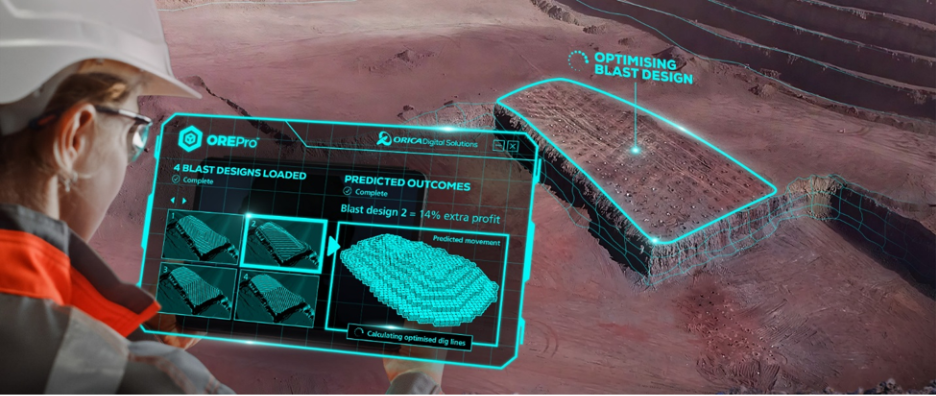
Using advanced algorithms, OREPro replicates blast dynamics across the full blast volume, generating what are known as SmartVectors. These vectors map how rock shifts during the blast, allowing the system to transform in-situ grade control models into accurate, post-blast representations of the muckpile. The result is a more reliable basis for defining dig boundaries and classifying material.
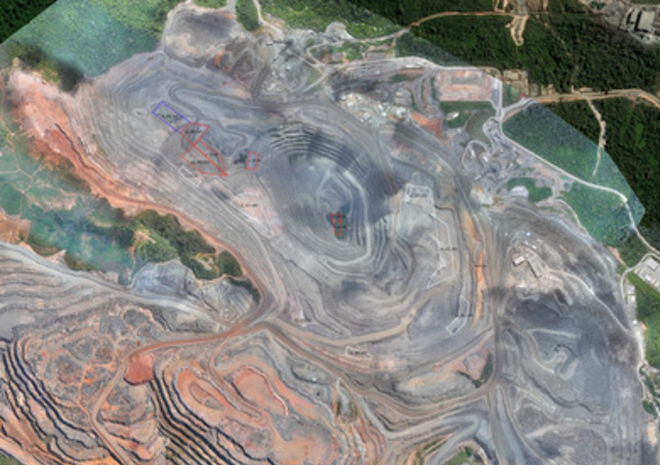
This capability is particularly valuable in operations where visual identification of ore and waste is difficult. At Vale’s Salobo mine in Brazil, one of the country’s largest copper operations, this challenge was amplified by the homogeneous appearance of blasted material and the mixing effects of blasting.
“Before implementing OREPro 3D Predict, it was extremely challenging to distinguish between different material types at the mining face because of the homogeneous colouration and the mixing of rocks caused by blasting. With the adoption of OREPro 3D Predic, we were able to significantly optimize the release process and consistently add value to each blasted area,” said Carlos Eduardo Costa, master geologist.
To improve reconciliation and reduce variability, Orica and Vale implemented OREPro 3D Predict across the operation. The system was deployed alongside existing workflows, enabling direct comparison between traditional methods and the optimised outputs generated by the software.
Over approximately 210 blasts, OREPro 3D Predict delivered a direct financial impact exceeding US$45.2 million in additional value, driven by improved ore recovery and more accurate material allocation.
In individual blast scenarios, OREPro 3D Predict demonstrated:
- 48% reduction in ore loss,
- 43% reduction in dilution and
- 14% decrease in material misclassification.
These improvements also supported downstream performance by enabling more consistent feed quality and reducing variability at the plant.
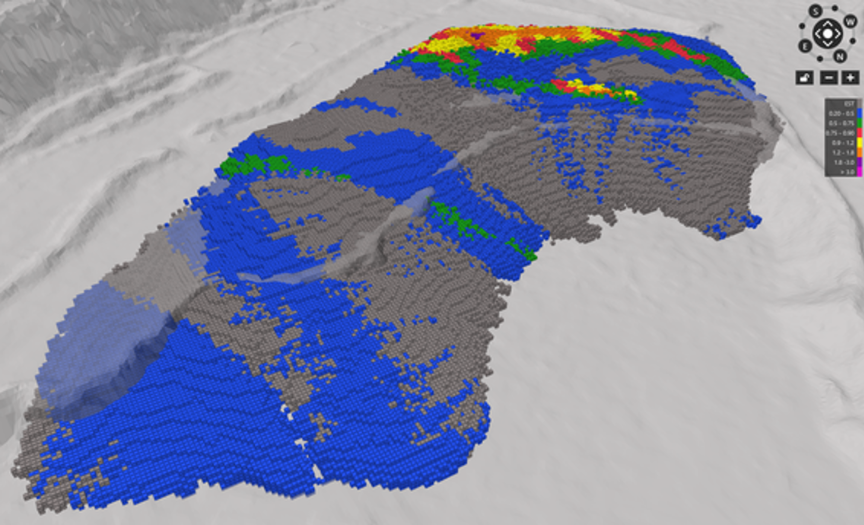
“After 14 months, OREPro 3D Predict delivered an additional value of US$45.2 million, surpassing our goal of reducing ore mass variability when reconciled against short-term models,” Costa added.
The Salobo case study highlights how a shift in mining from reactive, visually driven decision-making to predictive, data-led optimisation in blast movement modelling into ore control workflows can significantly improve accuracy and deliver measurable value. By improving accuracy at the mine face, digital tools like OREPro 3D Predict are helping operations unlock new levels of efficiency, safety and value from every blast.
As surface mining operations strive to improve productivity, safety and value recovery in increasingly complex environments, reducing uncertainty has become a critical focus. From maintaining blast readiness during lightning events with WebGen wireless initiation to improving ore recovery and grade control accuracy through OREPro 3D Predict, Orica’s technologies are helping mines make more informed decisions before and after every blast.
Related Posts
Caudalosa mine restart evaluated as as Silver Mountain reports 569 g/t silver hit

Liberty Gold stretches Black Pine’s reach in Idaho
October 22, 2026
Liberty Gold stretches Black Pine’s reach in Idaho

Weir names new president of minerals division
October 21, 2026
Weir names new president of minerals division
Hudbay, Mitsubishi approve Copper World construction
October 21, 2026
Hudbay, Mitsubishi approve Copper World construction
Sponsored video: Atex eyes Valeriano starter mine in Chile
October 20, 2026
Comments