
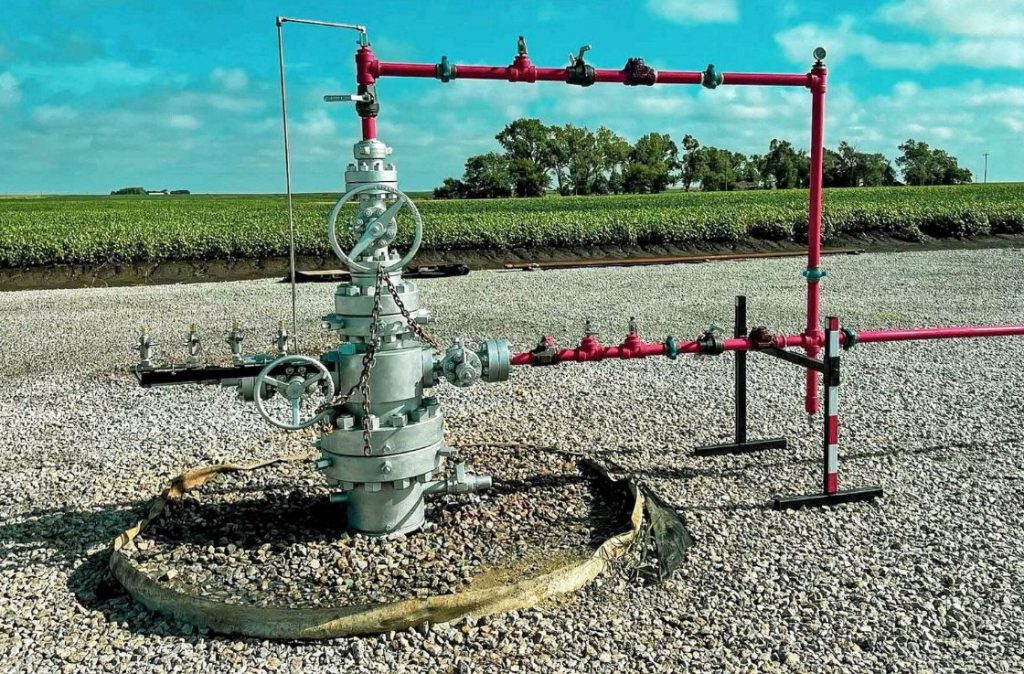
Quebec Innovative Materials Corp. (CSE: QIMC) has started its largest geophysical campaign to date, involving 2D seismic programs in Quebec and Nova Scotia.
The information gathered will be used to decide the focus of the company’s next phase of drilling, pressure testing, flow testing and accumulation characterization.
“This combined 78-kilometre 2D seismic campaign represents an important transition for QIMC from discovery toward the next phase of our pilot production pathway,” said John Karagiannidis, QIMC’s president and CEO.
2D seismic surveys use sound waves to map subsurface structures. QIMC says this program is non-invasive and requires no shot-hole drilling, explosives, fracking or reservoir stimulation.
Quebec program
The Quebec campaign is being monitored by the province’s ministry of economy, innovation and energy. The 36-km survey will map structures associated with the hydrogen anomalies — structures previously identified through its soil-gas surveys and drilling in St-Bruno-de-Guigues in western Quebec.
The news follows the passing of Quebec’s Bill 17 in June. The legislation authorized the implementation of government-backed natural hydrogen pilot projects. QIMC says the survey will “set the stage” for its pilot project pathway.
Nova Scotia program
In Nova Scotia, QIMC is combining data from a 2026 drilling campaign, about 6,000 soil-gas samples and ground magnetics to map the subsurface architecture underlying a 43-km exploration corridor.
The survey follows the company’s reported percent-level hydrogen concentrations at two drilling centres 15 kilometres apart, including a mud-gas reading of 30.0% H₂ in hole DDH-26-05 in Bennett Hill, Nova Scotia — a company record. QIMC says the 2D seismic program is designed to map how these drilling results and QIMC's extensive surface anomalies relate to the broader geological system.
Stock options
QIMC also announced it has granted 4,200,000 stock options to certain directors, officers, employees and consultants as part of its equity incentive plan. Each stock option is exercisable to acquire one common share at a price of $0.65 apiece for a period of three years.


Comments