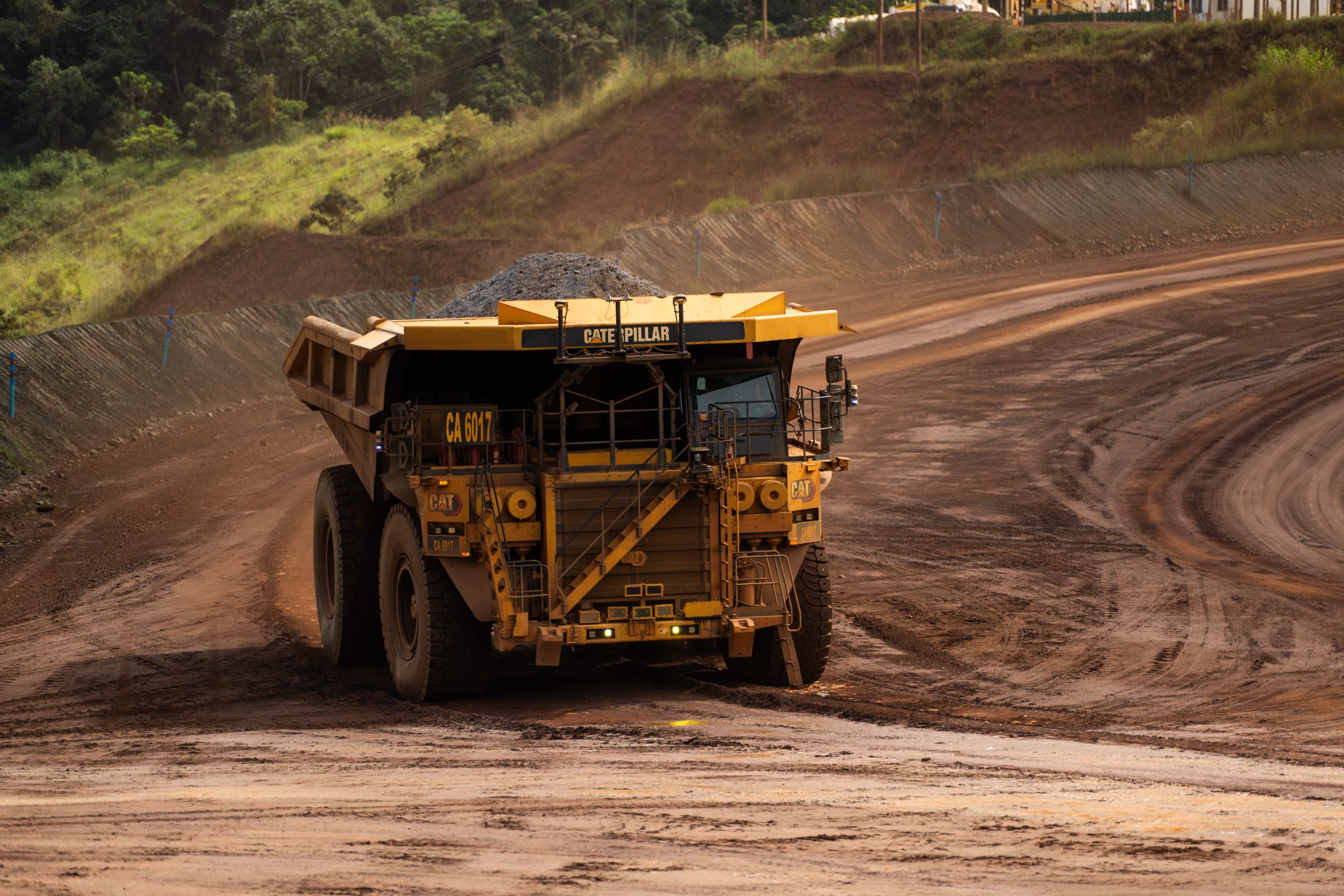

Brazil’s push to become a global critical minerals powerhouse risk being derailed by chronic underfunding and staffing shortages at its National Mining Agency (ANM), a new study shows.
The Instituto Escolhas, an independent Brazilian think tank for sustainable economic development, focused the study on understanding what role Brazil’s ANM will play as the country advances its newly announced critical minerals program.
Instituto Escolhas found that since ANM was created in 2017, it has struggled with funding restrictions and lack of personnel, making it harder for the agency to approve and manage mining permits, supervise operations, protect the environment and fully develop the mining sector in Brazil to its full potential.
The impacts of scarce funding and people available to do the work go beyond just project delays. Of the 906 registered dams, 72 are classified as high risk, yet the agency lacks the resources to inspect them, making accidents an imminent threat.
With over 68,000 mining applications still waiting to be assessed by the agency there is more judicial insecurity and less economic efficiency for a sector vital to establish Brazil in the global economy and rush for critical minerals.
To financially establish and restructure ANM is just what the Brazilian government may need to do next if it wants its critical minerals program to work out.
Irregular funding
Since its creation, ANM has struggled to secure adequate funding despite legislation entitling it to a share of the country’s mining royalties, known as Compensação Financeira pela Exploração de Recursos Minerais (CFEM).
The agency receives most of its funding through the federal government’s annual budget and is legally entitled to 7% of CFEM revenue, which is guaranteed by the legislation. However, the government has withheld an average of R$321 million ($55 million) annually in royalty allocations intended for the regulator,
Between 2018 and 2026, about 80% of the total funding that was supposed to go to the agency was withheld by the government and redirected to other needs, according to the study.
The federal annual budget sets how much money each government agency is able to use for that year. The federal government withholds the CFEM funds that were destined for the ANM through annual budget laws that put this money in a reserve.
There has also been an undercollection of the CFEM because ANM is unable to fiscalize the funds regularly. Brazil’s Federal Court of Accounts (TCU) estimates that between R$9.4 billion and R$ 12.4 billion ($1.6 billion and $2.1 billion) in mining royalties went uncollected between 2014 and 2021.
Missing workforce
About 1,100 positions remain vacant at ANM, representing 60% of the workforce required to fulfil its responsibilities, which include managing mining rights, supervising operations and safeguarding the environment and communities affected by mining activities.
As a federal agency, ANM recruits employees through civil service examinations. Recruitment processes held in 2024 and 2025 resulted in the appointment of only 349 providers being nominated.
The study is asking for the other candidates approved to leave the candidate reserve and be nominated by the government so more positions can be filed. It requested 220 positions to be filled for 2026, but the government agency responsible for nominating candidates and contractors (MGI) only appointed 55 new employees and another 78 technicians from a previous exam.
Looking ahead
The study said that with the lack of funding and personnel, the agency and mining sector in Brazil can’t reach its full potential and development.
The lack of personnel makes it harder to get through the cases that still need analysis, making investors less likely to invest in the country knowing how long the process can take.
Instituto Escolhas calls for the government to release ANM’s full statutory share of mining royalties annually, hire all the people approved through the civil services exams and present a plan to restructure the agency’s management and workforce.
(With files from Bloomberg)

Comments