Feeling centered: The Zen of conveyor belt tracking
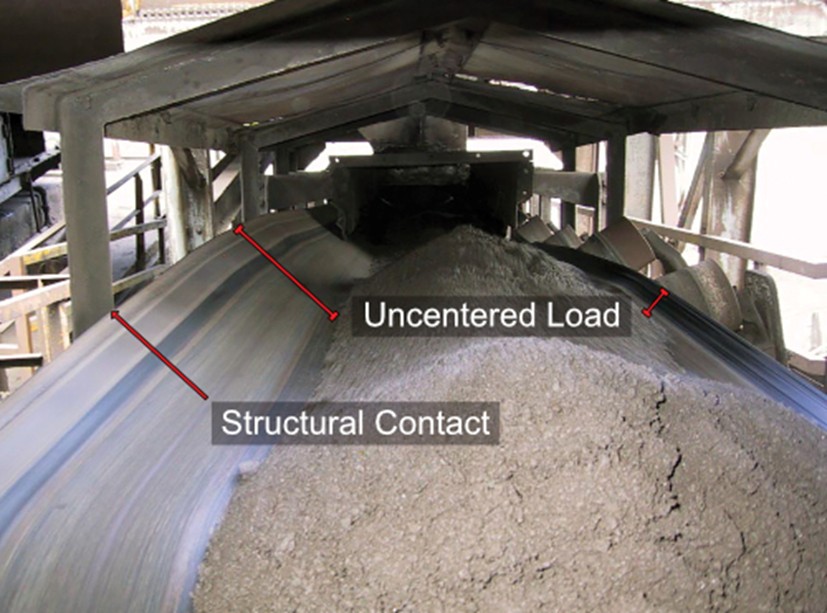
The moment a conveyor belt wanders, material spills, system safety and productivity quickly degrade, and operating costs rise. Spillage fouls idlers and pulleys, causing them to seize, leading to friction damage on the belt and potentially becoming a fire hazard. When a high-speed belt edge contacts the stringer, it can cause fraying, shredding, or splice damage and cut through steel mounts.
Mistracking is prevented by first understanding the basic patterns of belt behavior and then following established procedures to carefully align the structure and components to correct fluctuations in the belt’s path.
Mistracking indicators
Operators can identify mistracking through several warning signs. Belt edge damage indicates the belt has been rubbing against structural components. Excessive spillage shows material is falling off the sides rather than staying centered. Idler and pulley fouling occurs when spilled material accumulates on rotating components. An off-center belt position at the head or tail pulley reveals alignment problems.
Common causes of mistracking
There are three general groups of common causes for mistracking.
Belt and splice issues arise when the belt is poorly manufactured or stored improperly, causing it to bow or camber. Poor installation of a vulcanized or mechanical splice can result in a splice that causes belt tracking problems. Exposure to weather or chemicals can degrade the carcass (plies or cords) and the cover of the belt, leading to bowing, cambering or cupping due to unequal shrinkage between the top and bottom covers.
Conveyor structure problems develop from inaccurate alignment during the construction of the stringer, structural alignment degradation, machinery collision, seismic activity, or ground settling all spark the need for realignment.
Improper loading creates weight distribution issues since the load’s center of gravity will seek the lowest point of the troughing idlers. If the belt is not center loaded, the weight of the cargo pushes the belt toward the conveyor’s more lightly loaded side.
Smarter tracking
Standard tracking provided by conveyor OEMs is often inadequate, especially as the system settles and ages. Switch mechanisms that detect mistracking and stop the system are excellent for safety, but they can lead to excessive downtime. Rollers attached to the stringer prevent contact but cause the belt to fold over on itself. Neither of these approaches provides a preventive measure.
Credit: Martin Engineering
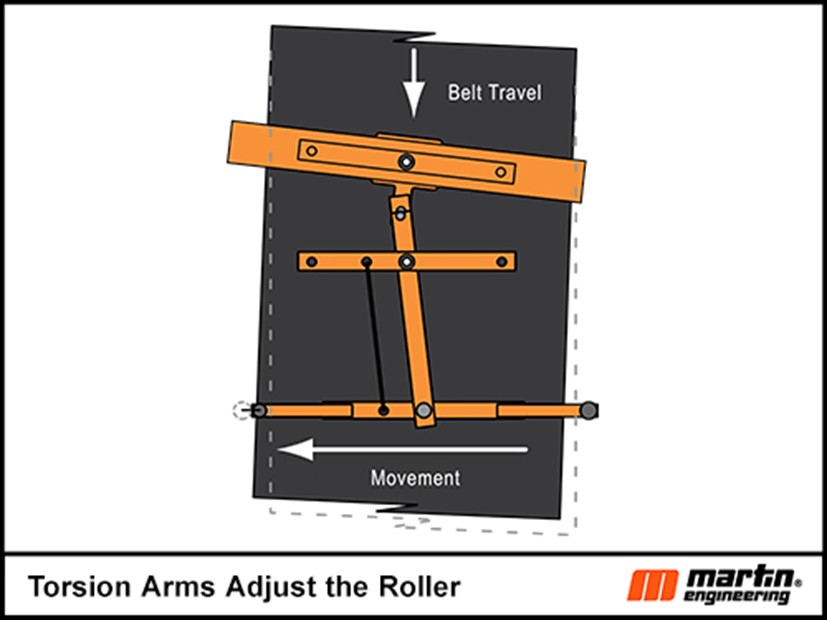
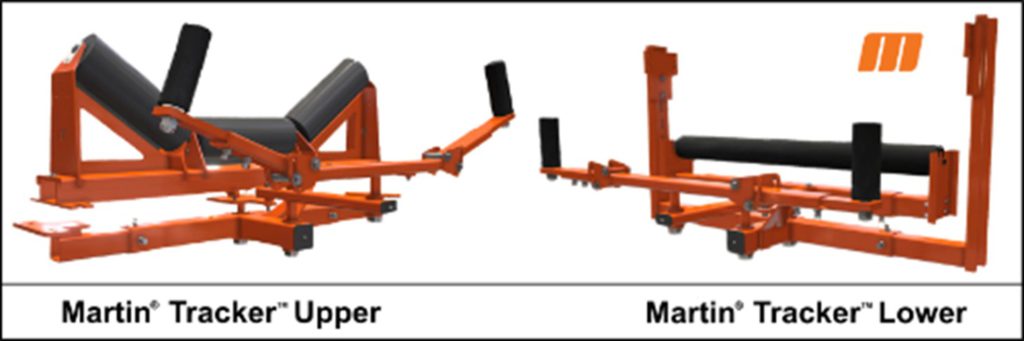
Multi-Pivot Belt Trackers like Martin Trackers use long arms to control a pivot roller. The guide rolls detect very slight misalignments and make immediate corrections. The longer arms require considerably less force to move the pivot roller, resulting in less counterforce and drag on the belt.
By reducing the energy required to correct the belt, wear on both the conveyor and tracking equipment is reduced, resulting in a longer, more efficient service life. This design has also been adapted for the belt return and reversing belts.
Credit: Martin Engineering
Belt tracker placement
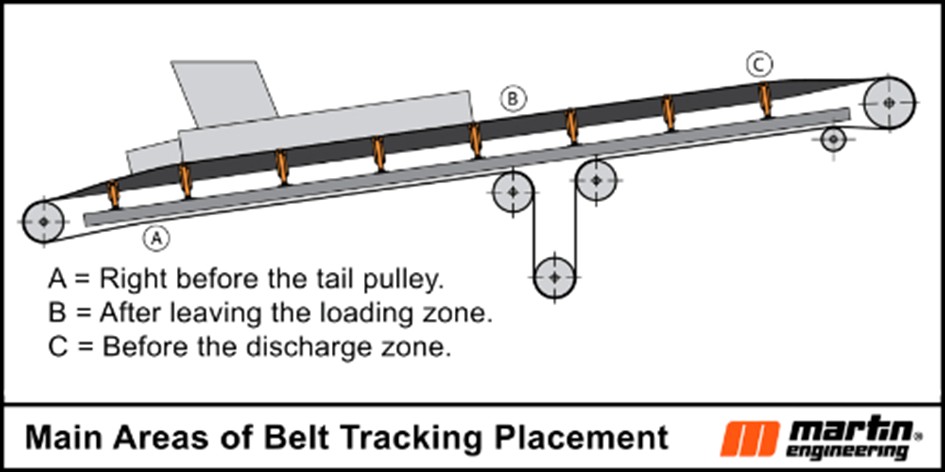
To avoid units competing and contradicting each other’s steering action, they should be positioned approximately 20 to 50 meters apart, depending on the severity of the mistracking problem. For proper loading, unloading, and settling, it is recommended to place trackers in some critical areas.
Credit: Martin Engineering
Typically elevated 10-20 millimeters higher than the rolls of the adjacent conventional idlers, a center roll or pivot roll increases the belt’s pressure on the tracking device, improving the corrective friction between the belt and the aligning roll. This approach is applicable to both troughed (carrying side) and flat (return side) self-aligning idlers. It helps to have rubber-covered rollers rather than “steel can” idlers.
Conclusion
The long-term benefits to efficient conveyor operations are well known. Keeping the belt centered and moving quickly is the key to high production, a low cost of operation and a safer workplace.

Dave Mueller is a long-time employee of Martin Engineering, having started his career with the company in 1986 and has since established himself as an expert in conveyor accessories. A graduate of Penn Foster College with a B.A. in Business Management, Dave has 10 years in Research & Development on conveyor products, 26 years as Conveyor Product Manager, is a prolific contributor of articles, and has several patents.
Comments