SRK Consulting and Tomra Mining transform pebble processing: Converting industry waste into economic value
Companies deliver up to 6% throughput increases by selectively processing previously discarded mining materials
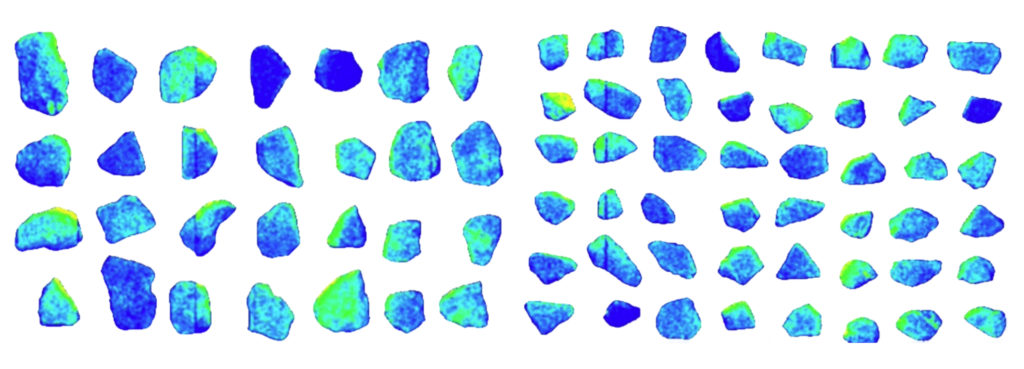
Mining operations worldwide recirculate pebbles as standard practice, accepting this costly, energy-intensive process that limits overall plant performance. SRK Consulting and Tomra Mining now challenge this approach, demonstrating that operators can significantly improve performance by selecting which pebbles to process rather than recycling everything.
The companies document cases delivering up to 6% throughput increases alongside clear economic benefits, fundamentally changing how the industry views grinding circuit efficiency.
Hidden costs drain mining operations
Large-scale mining operations processing hard, competent ore quietly struggle with a significant inefficiency that operators often overlook. Between 5% and 30% of material entering mills returns as larger, hard pieces called “pebbles” — particles that resist breaking and circulate within the process.
These pebbles consume valuable mill space, demand additional energy during reprocessing, and restrict throughput and stability. High pebble rate circuits experience considerable effects — every ton of returned pebbles displaces between 0.4 and 0.7 tons of fresh feed.
The inefficiency costs operations real money. Higher energy consumption, reduced throughput, and increased equipment wear translate into lost revenue and elevated operating costs. Pebble crushers managing these streams endure high mechanical stress, frequent maintenance, and operational challenges, particularly when grinding media enters the system.
Large copper operations document this challenge extensively, while gold and other mineral processing operations treating hard ore face identical issues.
Industry questions standard assumptions
Operations traditionally treat pebbles as uniform streams, assuming they carry enough value to justify reprocessing. However, closer analysis reveals a different reality. While pebbles may average similar value to feed material, individual particles vary dramatically — some contain little or no value, while others carry significantly higher metal content.
This gap between assumption and reality transforms how operators view grinding circuits. Instead of asking how to process all pebbles, operators now question whether they should process all of them.

Adrian Dance from SRK Consulting Canada’s Vancouver office explained that pebbles result from how different ore types respond to grinding. Some particles break easily, while others remain at “critical size,” where they resist further breaking. When these accumulate, they interfere with grinding efficiency.
Particle analysis reveals hidden value distribution
Operations typically evaluate pebbles as single streams, often reporting around 60% of feed grade, reinforcing assumptions about universal reprocessing. However, detailed studies show no clear relationship between particle size and metal content, meaning screening alone offers little upgrading or waste rejection opportunity.
At particle level, the picture changes dramatically. Pebble streams contain wide metal value distributions, with individual particles carrying significantly higher grades than average feed. Two similarly-sized pebbles can have completely different values — one below cut-off grade, the other containing substantially higher metal content.
Test work reviewed at SRK confirms this variability. “A significant portion of the contained metal can be concentrated within a smaller fraction of the mass, with up to 80% of the metal found in around half of the particles, leaving the remaining fraction largely below cut-off grade. This is not just a theoretical concept: selective processing of pebble streams has been shown to increase both feed grade and throughput, reinforcing the economic potential of this approach”, Adrian Dance said.
Technology enables selective processing
Tomra Mining addresses pebble stream variability through sensor-based sorting technology. “X-ray Transmission (XRT) technology analyses each individual particle based on its internal atomic density. As pebbles pass along a conveyor, the system scans every particle in milliseconds and separates valuable material from low-grade or barren rock,” Fernando Romero-Lage, area sales manager for TOMRA Mining explained.
Test work demonstrates that up to 80% of metal concentrates in around half of the material mass.

“This particle-by-particle approach directly addresses the variability observed in pebble streams. Rather than treating the material as a bulk flow, it allows operations to selectively retain value while rejecting material that would otherwise add cost without contributing to recovery,” Romero-Lage added.
Pebble streams suit this application particularly well. Typically already screened, washed and conveyed, they present controlled and stable feed, allowing sensor-based systems to operate efficiently and consistently.
Operations can now remove low-value pebbles before they add unnecessary load to circuits, while higher-value material continues downstream. Grinding circuits no longer process everything — only what adds value.
Operations document measurable results
Multiple mining operations implementing selective pebble processing report significant improvements. Case studies show throughput increases reaching 6%, with operations simultaneously reducing energy consumption per ton processed.
One copper operation documented a 4% throughput increase within the first quarter of implementation. The operation removed approximately 25% of pebble mass from recirculation while retaining over 90% of contained metal value. Energy consumption per ton of ore processed decreased by 2.8%.
Another operation achieved a 6% throughput increase by selectively processing pebbles containing higher metal grades. The facility reduced pebble crusher load by 30% while maintaining overall metal recovery rates.
These results compound over time. With fewer hard, resistant particles returning to circuits, grinding processes become more efficient and predictable.
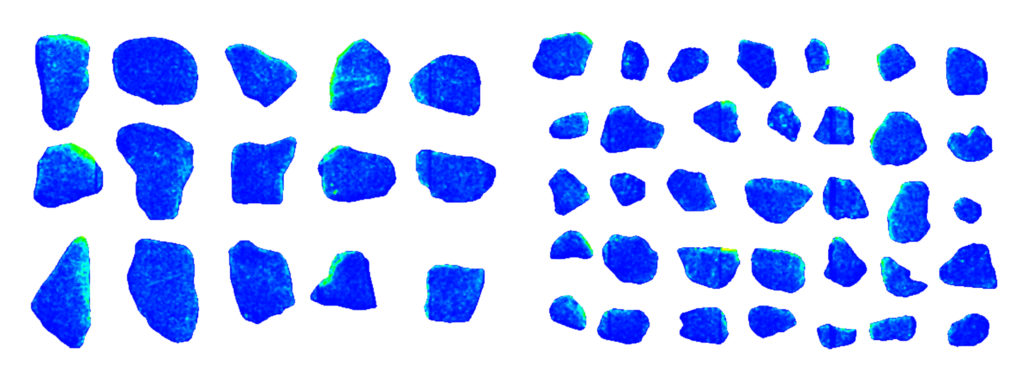
Simultaneously, operations reduce loads on downstream equipment. Lower recirculating volumes decrease demand on pebble crushing circuits, reduce wear, and minimize maintenance challenges — particularly in operations where crusher reliability concerns operators.
Technology transforms industry understanding
This approach fundamentally changes how operations understand grinding circuits. Companies no longer treat pebbles as unavoidable by-products, but as streams they can actively manage and optimize.
Sensor-based sorting enables operations to shift from processing everything to processing what truly adds value — converting a long-accepted inefficiency into measurable improvements in throughput, energy efficiency, and overall plant performance.
The technology proves particularly valuable as mining companies face increasing pressure to maximize efficiency while minimizing environmental impact. By eliminating unnecessary processing of low-value material, operations reduce energy consumption and carbon footprints while improving economic returns.
Market applications expand
SRK Consulting and Tomra Mining report growing interest across multiple commodity sectors. While copper operations initially drove adoption, gold, iron ore, and other hard rock mining operations now evaluate selective pebble processing technologies.
The companies expect continued market expansion as operations recognize the economic potential of treating pebble streams as manageable resources rather than processing burdens.
“We’re seeing a fundamental shift in how the industry approaches grinding circuit optimization,” Dance concluded. “Operations that implement selective pebble processing gain competitive advantages through improved efficiency, reduced costs, and increased throughput — advantages that compound over time.”
The technology represents a practical solution to a widespread industry challenge, offering measurable returns while requiring minimal operational changes. As more operations document successful implementations, selective pebble processing moves from innovative concept to standard industry practice.
For further information, visit www.Tomra.com and www.Srk.com
Comments