The rise of the autonomous mine
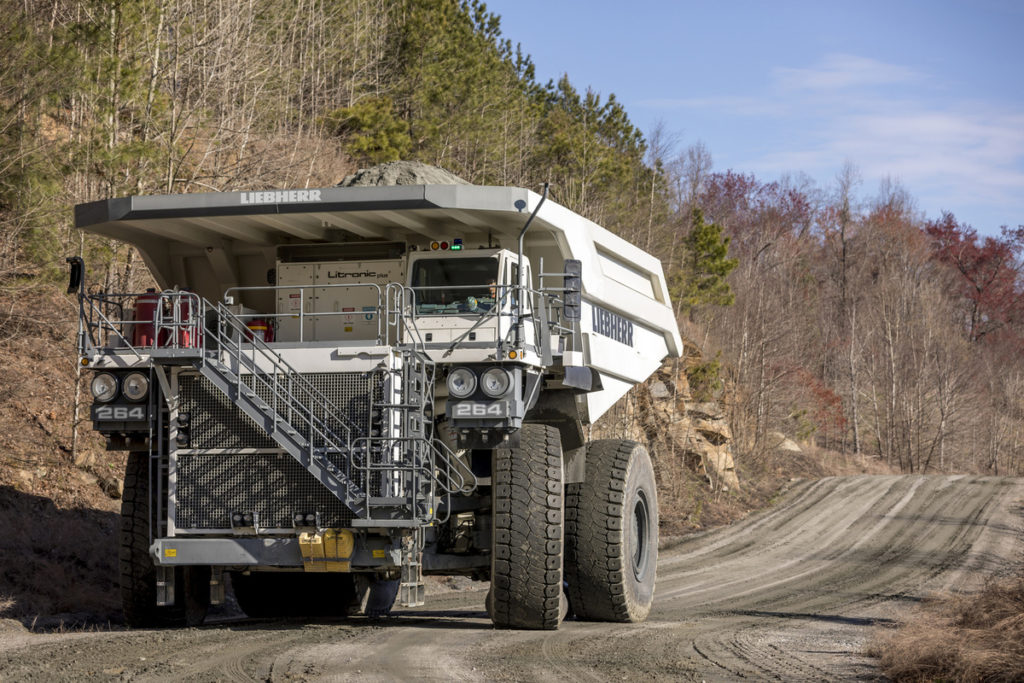
CREDIT: Liebherr.
The future of mining is not just automated, it is informed. Deep underground, mines are starting to rely less on instinct and more on data to decide where to drill, what to mine, and how to operate.
As companies face pressure to find deposits faster, control costs, and make better use of their budgets, they are turning to digital tools to guide decisions across the mining lifecycle. Artificial intelligence (AI), real-time data systems, and automation are improving efficiency, but more importantly they are changing how decisions are made from exploration through to production.
Nowhere is that shift more visible than in the push toward autonomous and semi-autonomous mining. What once took weeks of analysis can now happen much faster.
From interpretation to data-driven exploration
Exploration has long relied on geological interpretation and limited datasets. Today, companies are working with much larger volumes of data and need better ways to use it.
Platforms such as VRIFY help geologists bring together historical drilling, geophysical surveys, and mapping data into one place. VRIFY started as a 3D visualization tool to show ore bodies and communicate value to investors and has evolved into an AI-driven platform focused on identifying new exploration targets.
The goal is to help geologists make decisions faster and with more confidence. “Our products are built to enable, not replace geologists. We help reduce the time to discovery and remove bias when analyzing data and generating targets,” said Liam Labistour, vice-president of marketing at VRIFY.
This is already influencing drilling decisions. At Equinox Gold’s Valentine project in Newfoundland and Labrador, VRIFY’s AI identified a target outside the main shear zone. Follow-up drilling returned 32 metres grading 2.68 g/t gold and 39 metres grading 1.78 g/t gold, confirming a new area of mineralization.
Across the industry, companies are using AI to revisit old data, find missed targets, and improve drill planning. This is helping reduce doubt and improve results.
The hidden bottleneck: Data
While AI gets most of the attention, a bigger issue remains: data. Before it can be used, geological data needs to be cleaned and organized which takes time.
“Exploration teams often spend 60% to 80% of their time cleaning, validating, and organizing data before any meaningful analysis can begin,” said MinersAI CEO and co-founder Mason Dykstra.
Data is often spread across old systems, different formats, and includes years of reports. This makes it hard to use and slows decision-making.
“Poorly structured data leads to incomplete interpretations, overlooked signals, and lower confidence in targeting, ultimately increasing exploration risk and cost. Structured data enables faster synthesis of information, revealing patterns that improve target generation and prioritization,” said Dykstra.
The takeaway: AI works but only if the data behind it is usable. “AI is ready, but its impact is limited by poor data foundations. Data structuring remains the primary barrier,” said Dykstra.
Real-time decisions at the mine
At the mine site, data is now being used to make faster decisions. One example is ore sorting, where operators can determine earlier whether material should be processed or treated as waste.
Technologies from companies such as MineSense Technologies allow for real-time ore and waste decisions. This reduces the amount of waste sent to the plant, lowering costs and energy use. In simple terms, the most valuable tonne is the one that never needs to be processed.
Mines are also becoming more connected. Sensors, monitoring systems, and software now allow operators to track equipment and production in real time. This helps prevent downtime, improve planning, and increase safety.
The path to autonomous mining
These changes are leading toward more automated operations. Autonomous trucks, drills, and equipment are already being used at some sites.
Fully autonomous mines are still developing but many operations are using semi-autonomous systems today. Semi-autonomous mining means that equipment can operate on its own for certain tasks but still requires human oversight.
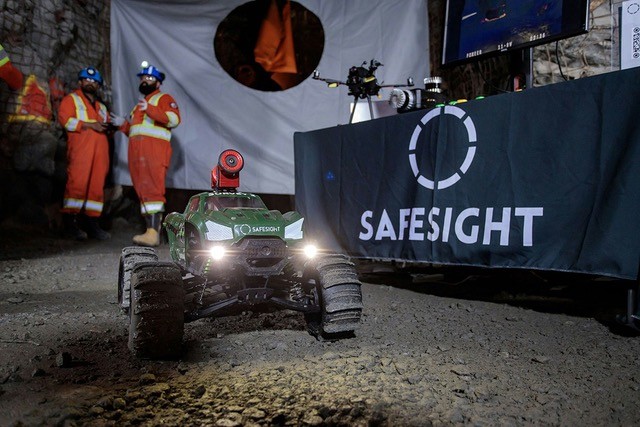
Credit: NORCAT
The shift toward automation is happening gradually. Mines are adding new technologies step-by-step, rather than changing everything at once.
Canada is playing a key role in this transition. Organizations such as NORCAT provide a place where companies can test new technologies before using them at operating mines.
“We do not just talk about innovation, we validate and accelerate it in an operating mine environment,” said NORCAT’s marketing communications manager Cynthia Furlotte.
Testing underground is important because conditions are different from controlled environments. Companies need to know how technology performs in real situations, including connectivity, safety, and daily operations.
“AI is only as effective as the data and context behind it, and underground environments are complex,” said Furlotte.
Initiatives such as “Mining Transformed,” held at the NORCAT Underground Centre, allow companies to test technology in a working mine. This helps move ideas from development to real use.
“We are seeing strong momentum in AI-driven analytics, real-time data platforms, and autonomous equipment,” said Furlotte.
Adoption remains the challenge
Even with these advances, adoption is not always straightforward. “Adoption is often less about the technology itself and more about integration and implementation,” Furlotte said.
Older systems, workforce training, and proving value at scale can slow progress. The challenge is no longer getting data but using it effectively to make decisions. At the same time, mines are becoming more connected and data driven. “We are moving toward increasingly connected, data-driven, and semi-autonomous operations,” she said.
The future of connected mining
AI is not a one-size-fits-all solution. Its success depends on the quality of data and how it is used. What is clear is that mining will not be shaped by one technology alone, but by how different systems work together.
“Ultimately, the future of mining innovation is not only about technology, but it is also about how it is integrated with people, training, and operations,” said Furlotte.
As digital tools continue to develop, mining is moving toward faster, more informed decision-making. The result is not only more data, but also better decisions at every stage of a project. 
Salima Virani is a freelance mining writer.
Comments