What have you done today that did not involve a mineral? Part 4: Minerals have rights
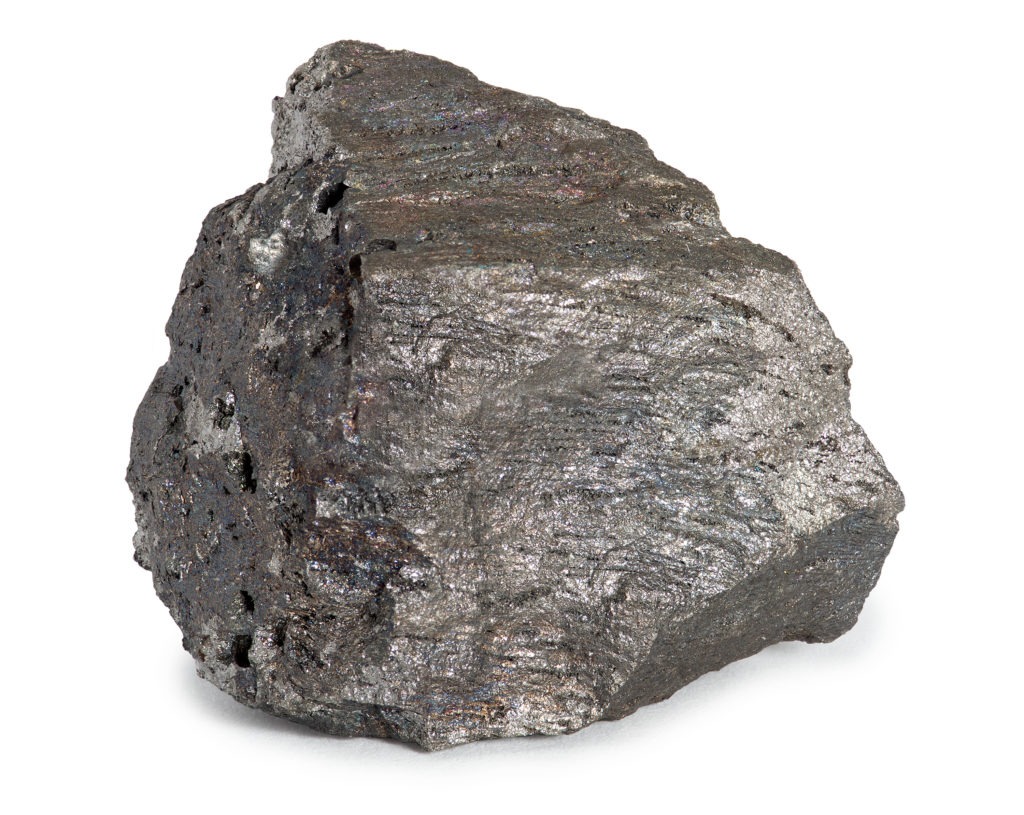
Jurisdictions around the world, including Brazil, Canada, India, and New Zealand, have recognized certain natural entities including rivers, glaciers, and even waves as having legal rights of personhood. For example, Quebec’s Magpie River has been granted legal rights, with guardians appointed to advocate on its behalf. According to a National Geographic article (April 2022), personhood for natural entities “relies on appointed guardians advocating on behalf of the river or forest” and “raises the profile of natural landmarks by drawing attention to their beauty and cultural significance.” Similarly, West Coast Environmental Law (WCEL) explains that granting rights to natural entities establishes their intrinsic right to remain unharmed. Their article states: “Polluting and damaging rivers, forests, lakes, water bodies, air, and glaciers will be legally equivalent to harming or injuring a person.”
For further reading, see the following:
Rivers: “These Rivers Are Now Considered People — What Does That Mean for Travelers?” National Geographic, April 2022.
Glaciers: “What Does It Mean When Glaciers Have the Right to Sue?” by West Coast Environmental Law, available at www.wcel.org, May 2017.
Waves: “Municipality of Linhares, Brazil: Law on the Rights of the Waves” on EcoJurisprudence.org, June 2024.
In this context, then should mineral deposits also be considered for legal personhood? Minerals form the foundation of all sustainable life and are essential to human existence. The question as posed in Part 1 of this series, “What have you done today that did not involve a mineral?” underscores their integral and indispensable role of minerals in sustaining mankind (Canadian Mining Journal, November 2024, p. 39). Minerals are not only recognized with scientific names but also by their rich histories of discovery, with many named after their discoverers. Minerals have formed over millions of years and have a timeless connection to Earth’s history. Minerals are still forming at present, though most predate the existence of mankind. A mineral deposit is defined as a natural accumulation of minerals that have the potential of being extracted. To be formally recognized as an economic resource, a mineral deposit trading on the Canadian stock exchange must adhere to NI 43-101 guidelines and requires classification within the proven, probable, and indicated categories.
Minerals are grouped into families based on their chemical composition (silicates, carbonates, halides sulfates, sulfides, native elements), just as people are grouped into families based on genetics. In this context, personhood suggests that the life cycle of a mineral deposit parallels that of a person. A mineral deposit progresses from formation (conceptualization) to extraction, mineral processing, product creation, waste, and ultimately leaving a legacy. This is much like a person’s life cycle from conception to growth, work production, retirement, and ancestry.
Also in Part 1, we stated that “Tell a person — they forget. Show a person — they remember. Engage a person — they learn.” Engaging in conversation is the purpose of this series. If corporations, as abstract entities, are also granted personhood to safeguard their existence and rights, could a similar argument be made for minerals? According to the article “Corporate personhood: Everything you need to know” (September 2022), available on www.upconusel.com, a primary reason for granting personhood is “personhood protects people.” Applying this logic, could granting minerals and mineral deposits legal personhood protect them? Unlike rivers, glaciers, and waves, minerals are deeply tied to financial transactions, yet this should not disqualify them from consideration because, after all, corporations also involve monetary exchanges.
Interestingly, glaciers owe their legal personhood to the mineral ice. However, a glacier’s personhood is inherently tied to its existence, so when the glacier melts, its personhood ceases to exist. In terms of the natural resources value chain presented in Part 2 of this series: Canadian Mining Journal, December 2024-January 2025, p. 38), glaciers would be considered a monomineralic rock, as they are composed of frozen water. As a solid, they could theoretically be mined. Once melted, they transition into the water cycle. That raises further questions about whether legal recognition could be extended to minerals themselves, independent of their physical state, to safeguard their enduring role in human life and the environment.
The water cycle and other minerals are deeply connected. For example, there are geochemical interactions of the fresh water in rivers with sediments that are composed of minerals. This interaction gives rivers their chemistry. Rivers transport minerals from source to some end point. The turbulence associated with wave action accentuates the interaction. Also in the water cycle, soils made up of minerals in conjunction with geochemical and microbial interactions provide nutrients for plants.
Culturally, minerals have been deeply embedded in human societies. Buddas carved from jade bearing rock hold religious significance, gold has served as currency, native copper has been traded and used as weapons, gems are used as jewelry, and soapstone has been sculped into works of art. These examples illustrate the profound impact that minerals have had on human history and culture.
Given their foundational role, we propose that mineral deposits be granted legal recognition and the special status of personhood. Mineral deposits should be recognized for their right to be mined and processed to provide sustenance to mankind. That is, they should be acknowledged as tangible entities being subject to intrinsic rights of existence, regeneration, alteration, and restoration. The law could strengthen the comprehensive status needed for conservation of all geological factors responsible for mineral attributes and preserving the geological cycle that makes all minerals unique. In other words, we (mineral title holders) are the guardians of minerals and can obtain their rights through ownership of mineral claims which entitle us to develop, extract, and process such minerals for the benefit of mankind.
This law would encompass the interconnected systems of Earth, comprised of air, water, soil, and rocks, acknowledging minerals as integral to these networks. A committee comprising geoscientists, engineers, and others representing the resource community, traditional custodians (i.e., mining associations such as Association for Mineral Exploration British Columbia, and Saskatchewan Mining Association), and a non-partisan government geoscience member must uphold the minerals and mineral deposits rights.
In summary, we propose that mineral deposits be granted legal personhood. This law would safeguard mineral deposits’ intrinsic rights, including the following:
Existence: Recognizing their essential role in being mined and processed to provide resources for mankind.
Sustainability: Ensuring their physical-chemical conditions remain suitable for continued balance with ecosystems.
Cultural connection: Promoting their significance in artistic, cultural, spiritual, and material contexts.
Representation: Establishing a committee of geoscientists, engineers, traditional custodians, and government representatives to advocate for minerals and mineral deposits rights.
Conservation: Integrating traditional knowledge with modern scientific practices to protect minerals and their geological cycles.
Accountability: Requiring remedies for damage caused by human activities.
Minerals and mineral deposits belong to everyone, everywhere. Their rights must be recognized to preserve the geological and ecological cycles that sustain humanity. By affording mineral deposits personhood, we not only honour their intrinsic value but also acknowledge their indispensable role in our lives and our shared future.
Connections within the industry can expand our knowledge. Bruce Downing, a geoscientist consultant based in Langley, B.C., combines research, education, geochemistry and industry expertise. Donna Beneteau, an associate professor in geological engineering at the University of Saskatchewan, combines academic insight with industry experience in mining.
5 Comments
Alan Young
While appreciate that the authors are making a provocative rhetorical point to highlight the importance/essential nature of minerals for our societies and economies – something that is absolutely undeniable, the logic does not hold in terms of drawing the analogy to personhood status for minerals… they have in fact inverted the underlying premise of the right to personhood.
Their argument is clearly based on the utility value of minerals and not to their inherent rights of being. To argue that a mineral has the right to be mined is equivalent of saying that, because of its hydro potential for humans, a river has the right be dammed…
Utility for human use is EXACTLY what inherent personhood rights are NOT about. They are about preventing and protecting against the default to being used for human convenience and profit. Far be it from us to project our needs onto minerals ‘desires for fulfillment.’
I know geologists are truly and rightly passionate about all the fascinating aspects of minerals, but I am afraid that this expression of wonder is not well-grounded in their attempts to make the argument for personhood in terms of contributions to human civilization. Nice try, but wrong argument… ;-P
That said the issues about why, how, where and when we choose to extract minerals for all the essential uses the authors outline are extremely important socio-economic and political debates that many of us are involved in, whether this is for wealth creation and development, the minerals intensive nature of the green energy transition or whatever. However, these are socio-economic and political debates, not philosophical and existential debates.
So as interesting and thought provoking as this article is (thanks Bruce and Donna), alas it does not make a successful case for personhood. It is us who want and in fact need minerals not the other way around. Minerals do what they do to in the natural world to sustain ecosystems without our help. While it is fun to consider what a copper deposit might actually want in order to manifest its inherent god-given identity, but I would not want to project my hope that it is being part of battery…
Again – thanks for the article it highlights many important issues as we continue to and increasingly rely on minerals to achieve our societal goals.
ClydeP
This is satire. Right? Has to be.
Inherent to “personhood” is the ability to independently make decisions and act upon those decisions. A horse can decide when to eat, when to sleep, when to run. A horse can decide to submit to and follow direction from a human. Does a river or a glacier decide to change course? No. Any changes are the result of physical forces.
Likewise mineral deposits are formed by a combination of physical forces and chemical reactions.
To imagine the “personhood” of a mineral deposit would be assuming the deposit has the ability to decide to not be exploited to not be taken apart and no longer exist…
Does a mineral deposit
Jim Couprr
One could make the same arguments on behalf of gasses. Thus we could have gasses suing minerals.
John Sandlos
I appreciate the thought-provoking nature of the argument. In the field of history, there has been some recent writing recognizing the role that materials play in human history, rather than just the ideas, capital, labour, etc. that humans apply to those materials. But unfortunately, this argument cannot be sustained for a number of reasons. First, it is really an argument for corporations (not “everyone”) to exploit minerals wherever, and whenever they want (it does not take into account what the rights-holder — the mineral — actually wants, if that were possible). Second, it assumes that all mineral are essential to humanity, which is true to an extent, but hard to extend to some precious metals and diamonds, not to mention the amount of wasteful use of base metals, etc. (are nuclear weapons really necessary?). Third, it is difficult to argue that something has a right to be exploited by humans (think about how animals might feel about this). Fourth, establishing a right for minerals to be exploited would mean that governments could theoretically compel companies to mine uneconomic deposits, with no compensation, so be careful what you wish for. And finally, the argument ignores the fact that mining involves digging up a complex mixture of minerals, only a tiny percentage of which is useful to humans. Often, the minerals surrounding the “target” mineral are harmful to humans, polluting air and water. Do they have a right to be exploited also? How do we weigh the benefits of the target mineral against the costs associated with the polluting material? Does the environmental cost of mining a particular deposit ever “cancel” a mineral’s right to be exploited, given the fact that the rights claim is based on the mineral’s benefit to humanity.
The authors are correct to point out that contemporary humans are thoroughly dependent on minerals, and hence mining. That has not always been the case, and it may not be in the distant future. From a historian’s point of view, it is a coalescence of historical forces — technology, fossil energy, labour, capital, and transportation infrastructure — that allows mining to occur on the scale that it does. The “rights” of the mineral to be exploited has nothing to do with it.
Donna Beneteau
I am genuinely pleased to see thoughtful discussion from the four individuals who have engaged with this article so far. We can’t keep doing things the same way, and anything that sparks new conversations is a step in the right direction! Encouraging greater respect and understanding for how we use the Earth’s resources is essential.
I am looking forward to reading the new book “The Price of Gold: Mining, Pollution, and Resistance in Yellowknife” by Arn Keeling and John Sandlos. My copy is already on the way. Their earlier book “Mining Country: A History of Canada’s Mines and Miners” should be required reading for everyone in the industry, and beyond.