
Central banks are increasingly weighing geopolitical uncertainty alongside traditional financial risks when managing gold reserves, while new technology and retail investors reshape how the precious metal is held and traded, according to a new report by the Official Monetary and Financial Institutions Forum (OMFIF).
The report, Holding power: How reserves, technology and investors are reshaping the gold market, draws on four confidential working group meetings held throughout 2026. It examines the competing priorities influencing reserve management amid a more fragmented and volatile global economy.
The findings suggest gold's role is becoming more complex as central banks balance diversification objectives against emerging geopolitical vulnerabilities, while technological advances create new opportunities to use existing holdings.
However, the report cautions that innovations such as tokenization cannot automatically replicate the characteristics that make physical gold attractive to central banks, particularly as investor behaviour adds another layer of uncertainty to the market.
Shifting priorities
Diversification remains the primary reason central banks hold gold, with most institutions citing portfolio rebalancing or the need to maintain target allocations.
Although central banks generally rejected geopolitical risk as the main driver of their purchases, they acknowledged that the distinction between conventional financial threats and geopolitical vulnerabilities is becoming increasingly blurred.
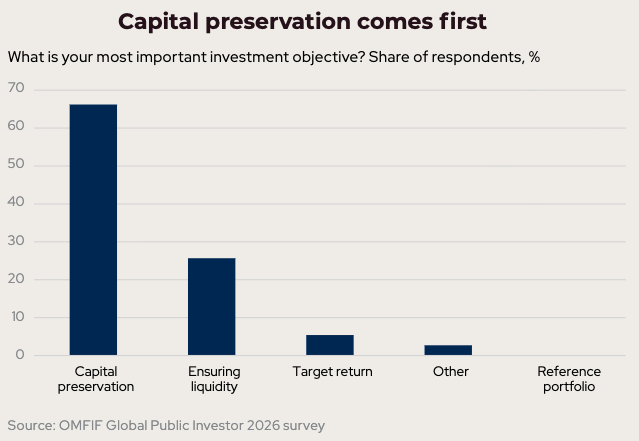
The findings build on OMFIF's 2024 report, Gold and the new world disorder, which explored changes in central bank gold policies and the motivations behind official purchases.
The latest research broadens that analysis to examine the operational, technological and environmental dimensions of gold ownership, alongside the implications of geopolitical developments.
Technology and investors
Tokenization could make gold easier to transfer, pledge as collateral and deploy across financial markets, potentially improving the efficiency of existing reserves without requiring central banks to change their strategic allocations.
Faster settlement and automated collateral processes could also make gold more accessible for financial transactions.
Yet the benefits of digital infrastructure come with limitations. Greater technological convenience does not necessarily preserve the security, control and other qualities that central banks associate with physical ownership.
Retail investment presents a different challenge.
While most individual investors buy gold to preserve wealth over the long term, the report identifies a smaller segment of active traders whose transactions can amplify price movements and contribute to volatility.
That distinction complicates the assumption that retail demand consistently provides stability to the gold market.
Taken together, the findings point to a market in which gold's traditional role as a reserve asset is increasingly intersecting with financial innovation and changing investment behaviour.
The report suggests that central banks and market participants will need to assess not only why they hold gold, but also how evolving financial systems could affect its use, liquidity and strategic value.




Comments