Critics’ uranium fears in Nova Scotia are premature, says mineral deposits geologist
As discussions about potential uranium mining in Nova Scotia grow more heated, critics and activists raise concerns about environmental impacts, proximity to […]
As discussions about potential uranium mining in Nova Scotia grow more heated, critics and activists raise concerns about environmental impacts, proximity to communities, and safety risks. However, Dr. Erin Adlakha, an associate professor in the Department of Earth Science at Saint Mary’s University in Halifax, Nova Scotia with over a decade of research on uranium deposits, argued these fears are largely speculative until a specific project is proposed and thoroughly assessed.
Dr. Adlakha specializes in the mineralogy, geochemistry, and geochronology of hydrothermal mineral occurrences. Her research focuses on understanding deposit formation and developing tools for mineral exploration. For over a decade, her work has primarily centered on uranium, tungsten, and iron-rich multi-metal systems (e.g., Cu-Co-Ni-rare earth elements), with additional experience in other metal types.
A significant portion of her expertise lies in uranium deposits, stemming from her PhD research on northern Saskatchewan sites. This included fieldwork and sampling at the McArthur River uranium mine for several weeks, as well as assisting with fieldwork at the advanced-stage Wheeler River property. Prior to her academic career, she gained practical experience in advanced mineral exploration at a Yukon gold mining camp and at a base metal mine in Sudbury, Ontario.
Activism raises concerns without scientific evaluation
Many activists in Nova Scotia pointed to worries about the proximity of potential mines to communities, dust from open-pit operations, and increased rainfall risks. However, Dr. Adlakha emphasized that no environmental assessments have been conducted—because no license applications have been submitted.
"There hasn’t been an environmental assessment in the province because there are no proposed mines. No economic uranium deposits have been discovered in Nova Scotia, and it’s possible there may never be one. Finding and characterizing an economic deposit takes decades of mineral exploration and even then, it is extremely unlikely."
"An economic deposit is one that can be mined at a profit. The price of the metal, amount of metal in the rock (or “grade”, usually reported in percent or grams of metal per ton of rock) and amount of mineralized rock (“tonnage” of metal) combined must be high enough to exceed all expenditures, including mine infrastructure, processing, salaries, environmental protections, remediation etc. The commonly reported statistic is that 1 in 10,000 exploration projects ultimately become a mine, and attests for the rarity of economic mineral deposits."
She said all views should be aired but with a focus on facts and evidence. Dr. Adlakha said: "I believe we always need to consider opposing perspectives that challenge our own views to understand both sides of a problem. Activism is an important mechanism to voice concerns and hold governing bodies accountable. However, the issue is when facts, science, and rigorous scrutiny are ignored. Both sides need to evaluate the data fully to make educated and well-informed decisions."
In the end, she advocated for a science-based approach, where risks are evaluated during proper licensing procedures rather than through conjecture.
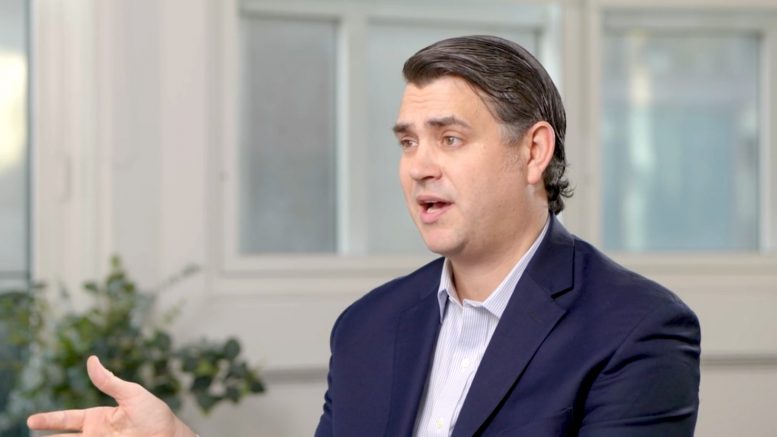
Erin Adlakha is an associate professor with the Department of Earth Science at Saint Mary's University i n Halifax, Nova Scotia. PHOTO: Saint Mary's website.
The debate over uranium exploration in Nova Scotia is a stark example of how science can be hijacked by political activism, often leading to misinformation and public confusion. Some community and activist groups have been vocal opponents of lifting the uranium ban in the province. They frequently cite scientific experts to support their claims, but critics argue that the use of science in this context is often selective and weaponized to serve political agendas.
Some of these scientists have publicly warned about the health risks posed by naturally occurring uranium and radon. But their assessments, critics claim, are sometimes used by activist groups to broadly oppose resource development, regardless of the specific project or its regulatory safeguards. However, when activist groups highlight her warnings out of context, they risk amplifying fears and dismissing the rigorous scientific and regulatory processes that can ensure safety.
This phenomenon illustrates a broader problem: when scientists are perceived or portrayed as activists, their objectivity becomes compromised, and their findings can be wielded as tools in ideological battles. The critics argue that this politicization damages trust in science and hampers rational decision-making.
While experts provide valuable insights, the challenge lies in ensuring that science remains a neutral, fact-based foundation for policy. Otherwise, the real risks—whether environmental, health-related, or economic—are obscured by a polarized narrative, making sound resource management and public safety far more difficult to achieve. Ultimately, the integrity of science must be preserved so that decisions reflect evidence, not agendas.
Risks and safety can only be fully assessed once a project Is proposed
Dr. Adlakha explained that the Canadian Nuclear Safety Commission (CNSC) is responsible for regulating uranium mining in Canada. The CNSC’s role is to ensure that any project complies with rigorous safety, environmental, and security standards before receiving a licence.
She stressed the CNSC operates independently from both the industry and government, with a clear mandate to prioritize public safety and environmental protection. Every stage of a licensed project, from construction to operation and decommissioning, undergoes continuous oversight through inspections, audits, and public consultations.
Dr. Adlakha emphasized: "Any proposed mining activities in NS must be examined by the CNSC on a case-by-case, or deposit-by-deposit, basis. All mineral deposits are different in terms of their geology and environment. Thus, each potential deposit presents unique challenges and risks, including those that involve neighboring communities or amount of precipitation, that must be evaluated and addressed accordingly. If a risk is deemed too high and/or cannot be mitigated, the license would not be approved by the CNSC and mining would not commence."
CNSC’s role and oversight in uranium mining
The Canadian Nuclear Safety Commission (CNSC) clarified that it neither supports nor opposes uranium mining projects. Its primary role is to ensure any nuclear-related activity, including uranium mining, can be carried out safely for people and the environment, all while respecting Canada’s international obligations. The CNSC clarified all nuclear activities, including uranium mining, are tightly regulated in Canada to avoid risks to workers, communities, and the environment, both now and in the future.
Michael Gosselin, a representative for CNSC media relations, underscored the agency’s role is strictly to regulate and oversee safety — not to support or oppose projects — ensuring that if a project ever proceeds, it does so with strict safeguards in place.
While the CNSC does not regulate mineral exploration, any proposed uranium mine in Nova Scotia or elsewhere in Canada must obtain a licence from the CNSC before construction begins. The commission maintains that it will only issue a licence if it is confident that the project can be operated safely for workers, the public, and the environment throughout all phases — from development through decommissioning.
Assessment of a licence application involves extensive consideration of the project’s potential environmental and community impacts. The CNSC evaluates whether the project complies with all safety, environmental, and security regulations. As an independent agency, the CNSC operates without industry or government influence, with a clear mandate to protect Canadian health, safety, and environmental security, and to uphold international commitments related to the peaceful use of nuclear energy.
If a licence application for a uranium mine is submitted in Nova Scotia and meets all regulatory requirements, the CNSC will hold public hearings. These hearings enable an independent review by the CNSC’s commission, which assesses detailed technical analyses from experts and considers interventions from community members, Indigenous Nations, and other stakeholders.
The CNSC employs highly trained scientists, engineers, and inspectors who review all facets of proposed projects. This includes water and waste management, radiation protection, emergency preparedness, and environmental monitoring. If a licence is granted, CNSC oversight continues through regular inspections, mandatory reporting, and ongoing engagement with communities.
The CNSC emphasizes that safety always remains its top priority as Canada’s independent nuclear regulator. For more information, the CNSC provides extensive public reports on the safety of existing uranium mines and mills in Canada, including the 2023 report available online. The CNSC also oversees the Independent Environmental Monitoring Program (IEMP), which publicly reports results from environmental sampling around current uranium operations, and supports the Eastern Athabasca Regional Monitoring program, which conducts independent sampling in uranium mining regions with similar findings.
The CNSC’s report titled “Environmental Performance of a Uranium Mine or Mill Regulated Under the Nuclear Safety and Control Act” concluded that licensed uranium operations are expected to operate in ways that protect both human health and the environment.
Regarding Nova Scotia specifically, the CNSC stated it has not conducted studies on uranium mining in the province because no license application has been received from any project proponent there.
Exploration in Canada and its relative safety
Dr. Adlakha highlighted mineral exploration for uranium in Canada remains a low-risk activity under current regulations. She explained Nova Scotia's past ban (it was lifted in March 2025) on exploring rocks with certain concentrations was unjustified and had negative effects on mineral exploration in the past.
She said: "This ban made it very financially risky for companies to explore for metals that may or may not be associated with uranium. For example, there are multi-metal iron, nickel, cobalt and copper occurrences in the province. If we look at mineral deposits that have a similar composition globally, we can see that some have elevated levels of uranium. The ban has hampered mineral exploration for these commodities because there is a significant chance that >100 ppm uranium will occur alongside the other metals and would render the deposit illegal to mine,"
She concluded: "By removing the ban, we open the province to more diverse mineral exploration and increase the potential of discovering multi-metal deposit types."
Learning from Saskatchewan’s experience
Drawing on her research and experience studying uranium deposits across North America, Dr. Adlakha noted that Saskatchewan’s decades-long history of safe uranium mining demonstrates how modern technology and stringent regulations can effectively mitigate environmental and health risks. Continuous, transparent environmental monitoring shows that radiation levels, groundwater quality, and soil contamination remain within safe limits in active mining regions.
"Thus, decades of robust environmental monitoring has illustrated that the mining operations are not contaminating the environment and present low to negligible risk to humans, including the Indigenous communities that live in the area and the workers on the mine sites. These facts would not change if there was a higher population in the area," she noted.
Conclusion: Risks Are project-dependent and require evidence-based oversight
Ultimately, Dr. Adlakha reiterated that assessing the risks of uranium mining in Nova Scotia is impossible until a specific project is proposed, with a thorough environmental review and formal licensing process. She underscored the importance of relying on science, transparency, and rigorous regulation to protect communities and the environment.
Until a proponent submits a licence application, the entire debate remains hypothetical. Therefore, experts cautioned the most responsible course is to focus on facts, trust in the regulatory system, and ensure all decisions are based on comprehensive, scientific evaluation supported by strong regulatory oversight.
mining interests must be both very happy…with the current provincial and federal governing parties pro-mining stance, and very afraid-with the loud resistance of both First Nations and Settlers, based on historical precedent and the culturally valid principle of prevention in regard to risks involved in uranium disturbance and mining in general. have a look at our existing landscape littered with mine-wastes and multi-million dollar publicly funded remediation of those 19th century sites currently taking place, or the ten year old leaking fracking ponds, or the five year old gold-mining waste-site threatening a river system on the Eastern Shore that the new owners can’t seem to remediate in a contractually timely manner.
communities, the public, have a right to decide whether they want to spend limited financial and human resources on a case-by-case basis or apply a binding boundary policy reflecting the preventative principle.



Comments
David Cameron
mining interests must be both very happy…with the current provincial and federal governing parties pro-mining stance, and very afraid-with the loud resistance of both First Nations and Settlers, based on historical precedent and the culturally valid principle of prevention in regard to risks involved in uranium disturbance and mining in general. have a look at our existing landscape littered with mine-wastes and multi-million dollar publicly funded remediation of those 19th century sites currently taking place, or the ten year old leaking fracking ponds, or the five year old gold-mining waste-site threatening a river system on the Eastern Shore that the new owners can’t seem to remediate in a contractually timely manner.
communities, the public, have a right to decide whether they want to spend limited financial and human resources on a case-by-case basis or apply a binding boundary policy reflecting the preventative principle.