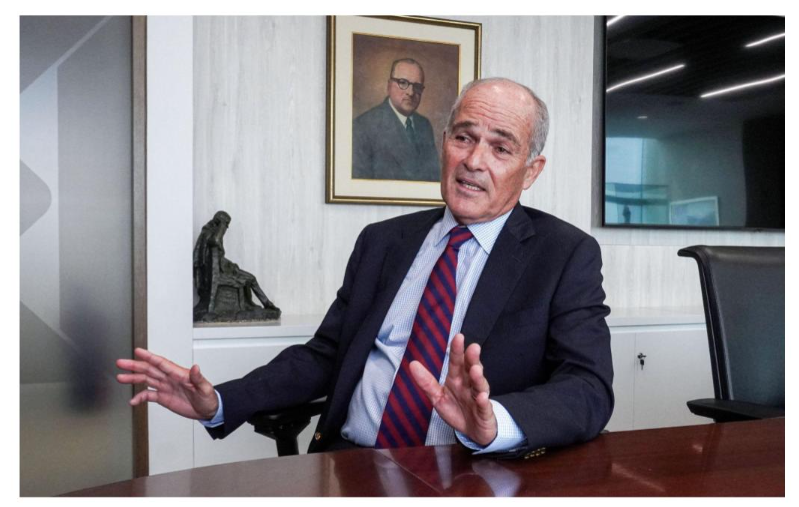
The global mining industry faces a critical race against time. Demand for copper and other essential minerals continues to accelerate. Meanwhile, permitting delays and regulatory bottlenecks threaten new project development. Roque Benavides, Chairman of Compañía de Minas Buenaventura and a leading Latin American mining executive, issued this warning in an interview ahead of the World Mining Congress (WMC), set to return to Peru in 2026.
Benavides emphasized the urgency, stating, “In five or six years’ time, there is not going to be enough copper in the world for the demand of copper.” He underscored the intensifying demands from electrification, renewable energy, electric vehicles, and decarbonization efforts worldwide. Copper, he stressed, has evolved beyond a mere industrial metal.
“Copper is the metal of the future. It’s the metal of the environment, the metal of electric cars, the metal of alternative energies,” he said. He added that while copper holds a central position in the transition, other metals such as gold, silver, zinc, lead, and tin will remain indispensable for global development.
Permitting delays: A global bottleneck
Benavides identified permitting timelines as a primary challenge for mining globally, affecting both emerging economies and all other jurisdictions. He stated, “If we want to develop projects faster, we have to understand that responsible mining needs to go ahead with the project as fast as possible.”
He further added, “Governments have to deal with permitting, but bureaucracy is not the answer.” According to Benavides, excessive delays risk undermining the world’s ability to meet future mineral demand, especially for copper, where supply gaps are already emerging. “We cannot lose time,” he stressed, warning that failure to bring new projects into production will have global consequences for energy security and economic growth.
A global platform for cooperation
Benavides described the World Mining Congress as a uniquely influential platform, distinct from regional or technical events. It allows governments, companies, and industry leaders to address shared challenges. He said, “The community of mining countries is not that extensive. Canada, Australia, the United States, China, Chile, and countries across Latin America all play an important role. The World Mining Congress brings that global community together.”
The World Mining Congress 2026, to be held in Lima from June 24–26, aims to address precisely that challenge. It seeks to redefine how the industry can deliver more minerals, in less time, while maintaining the highest environmental and social standards.
For more information, visit www.Wmc2026.org

Comments