Uranium to SMRs: Eagle Energy Metals eyes Project Manhattan 2.0 as nuclear demand surges
Eagle Energy Metals is positioning itself at the centre of America’s nuclear resurgence as it works to advance the Aurora and Cordex uranium projects while developing proprietary small modular reactor (SMR) technology. The company, which plans to merge through a SPAC to become the first U.S.-based uranium resource developer with an integrated SMR platform, is pitching a vertically integrated model aimed at rebuilding domestic uranium supply and meeting soaring power demand from artificial intelligence (AI), data centres, electrification, and defense. In this interview with the Canadian Mining Journal, CEO Mark Mukhija outlines how the company is allocating capital across mining and nuclear development, its view of the federal policies reshaping the sector, and how the Aurora project could anchor a supply chain increasingly seen as a national-security priority.
SPAC, or special purpose acquisition company, is essentially a publicly listed shell company created to merge with or acquire a private company and take it public.
Q: With Eagle Energy Metals aiming to merge via SPAC and become the first domestic uranium-resource company with SMR capability, how do you prioritize capital allocation between advancing the Aurora/Cordex uranium projects and developing your proprietary SMR technology? what are your internal hurdles or gating factors on each side?
A: Eagle Energy Metals is strategically allocating proceeds to advance our dual mission of strengthening domestic uranium supply and developing next-generation SMR technology, with planned uses, including (i) corporate and public company costs, (ii) advancement of the mining work program, (iii) initial SMR Phase 1 development, and (iv) transaction expenses. Proceeds are being directed toward advancing the uranium project through early technical and prefeasibility-stage work, including recent metallurgical optimization testing that delivered high uranium recoveries and lower processing costs, while concurrently funding early-stage SMR concept development and validation. Currently, the focus is on moving Aurora project forward because the mining work program is what anchors Eagle’s resource base and supports the longer-term nuclear opportunity. SMR concept validation is happening in parallel, but the mining side is the near-term driver.
Q: Given the structural supply deficit in uranium and the heavy U.S. dependence on imports, how do you see Eagle Energy Metals’ role in reshaping the U.S. uranium supply chain — and what are your biggest near-term risks? Can you explain how federal incentives and/or executive orders can or cannot offset those risks?
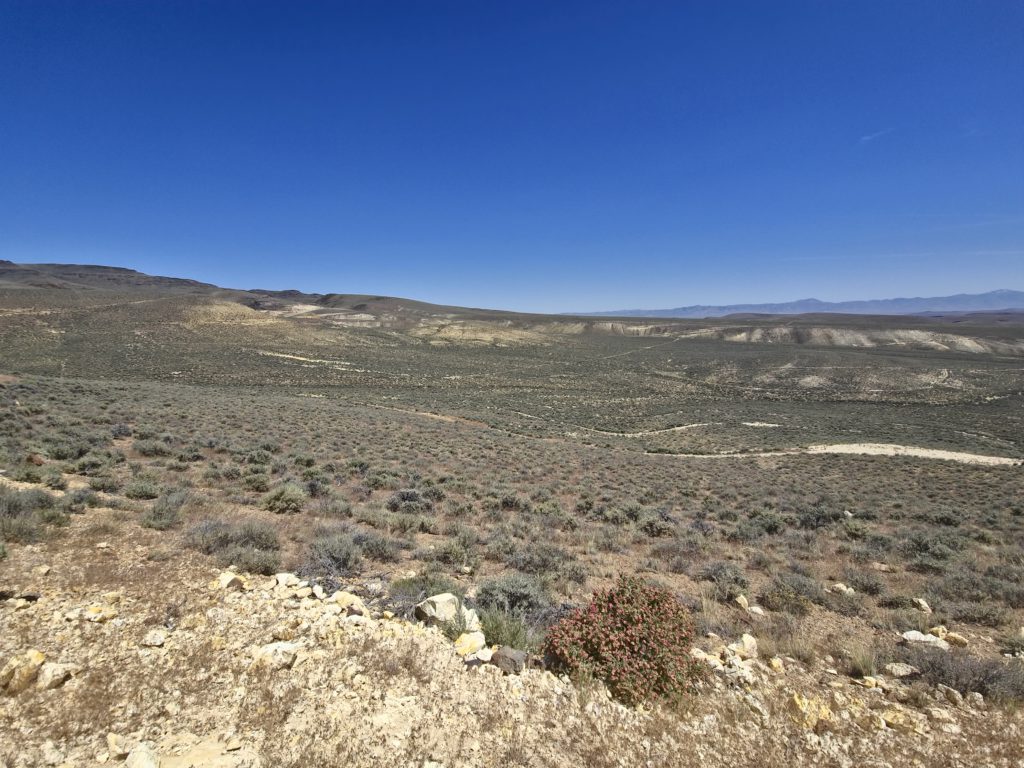
A: The U.S. still imports most of its uranium, so our company has a significant opportunity to help rebuild a domestic supply chain through the Aurora project. Aurora represents the largest mineable measured and indicated uranium deposit in the U.S., positioning the company to play a central role in restoring domestic uranium independence. The 2025 Executive Orders are aimed at speeding up reactor approvals. They streamline NRC approvals and invoke the Defense Production Act to prioritize U.S. uranium supply, which directly benefits projects like Aurora located on BLM land (land managed by the U.S. Bureau of Land Management, a federal agency under the Department of the Interior) in an agreement state.
The main near-term challenges are ones you would expect, such as permitting, environmental reviews, and infrastructure, but because Aurora sits on BLM land, federal initiatives such as the Fast 41 program can directly benefit our project.
Q: You have called this era a “Project Manhattan 2.0” for uranium. From your perspective, what scale/pace of deployment is necessary to meet demand from AI, data centers, electrification, and defense applications?
A: Global electricity demand is projected to nearly triple by 2050, driven largely by AI, cryptocurrencies, and data-center expansion. Nuclear remains one of the few energy sources that can reliably meet this kind of around-the-clock power demand. We can no longer decouple AI from national security, and with power being the bottleneck for AI advancement, we are in a “Project Manhattan 2.0” moment where we need to generate as much power as we can to remain competitive with other nations.
Q: Aurora asset is described as low-risk, near-surface with significant drilling already done. What are your plans for de-risking further (e.g., geotechnical, metallurgical, hydrology, environmental baseline), and what is your intended pathway to prefeasibility and then production?
A: The Aurora project has been defined by roughly 600 drill holes, so the team already has a strong foundation to build on. Recent metallurgical optimization results show uranium recoveries in the high-80% range with lower processing costs, further validating the project’s quality and economics. Moving forward, we plan to conduct step-out and infill drilling along with exploration drilling at the Cordex deposit to potentially expand our resource base. We would also drill holes for metallurgical test work, hydrogeology, and geotechnical studies, which will all feed into a prefeasibility study. We aim to commence prefeasibility work by the end of 2026 with completion of a prefeasibility study by 2027, followed by a definitive feasibility study commencing in 2028, leading into construction and commissioning.
We have started cultural studies and began the process of engaging consultants for the baseline environmental studies.
Q: Finally, in terms of vertical integration and strategic optionality, do you envision Eagle Energy Metals licensing its SMR designs, deploying reactors at your own mines, or offering reactor + uranium bundles to customers (e.g., datacentres and remote communities)? What is your go-to-market model?
A: Eagle Energy Metals has the unique strategic advantage of having a fuel supply along with SMR technology. The SMR technology can be deployed across a wide range of applications, including remote communities, mine sites, disaster relief, and military applications. We can also deliver turnkey solutions for data centers and remote communities by providing “reactor + uranium” or “power as a service” packages. Because we control upstream uranium production, we can guarantee a U.S. fuel source and potential long-term price stability.
There is also an opportunity to license and co-develop our reactor with U.S. partners to expand capacity.
At later stages, we can operate as an independent power producer by owning and managing our SMR units under long-term offtake contracts or selling clean baseload power directly into regional grids or microgrids serving AI data centers, military bases, or industrial applications.
Related Posts

Canada courts $1 trillion with mining at centre of pitch
September 14, 2026
Canada courts $1 trillion with mining at centre of pitch
Sponsored video: AME urges tax fix to advance projects
September 1, 2026
Sponsored video: AME urges tax fix to advance projects
NexGen expands Sask program after high-grade uranium results
August 26, 2026
NexGen expands Sask program after high-grade uranium results
Ontario ready to cut off electricity, critical minerals to US amid trade war
YMP Scholarship Fund grows to $300,000
August 17, 2026
Comments