Debt for minerals swaps: Turning public debt into public value
What have you done today that did not involve a mineral? Part 10
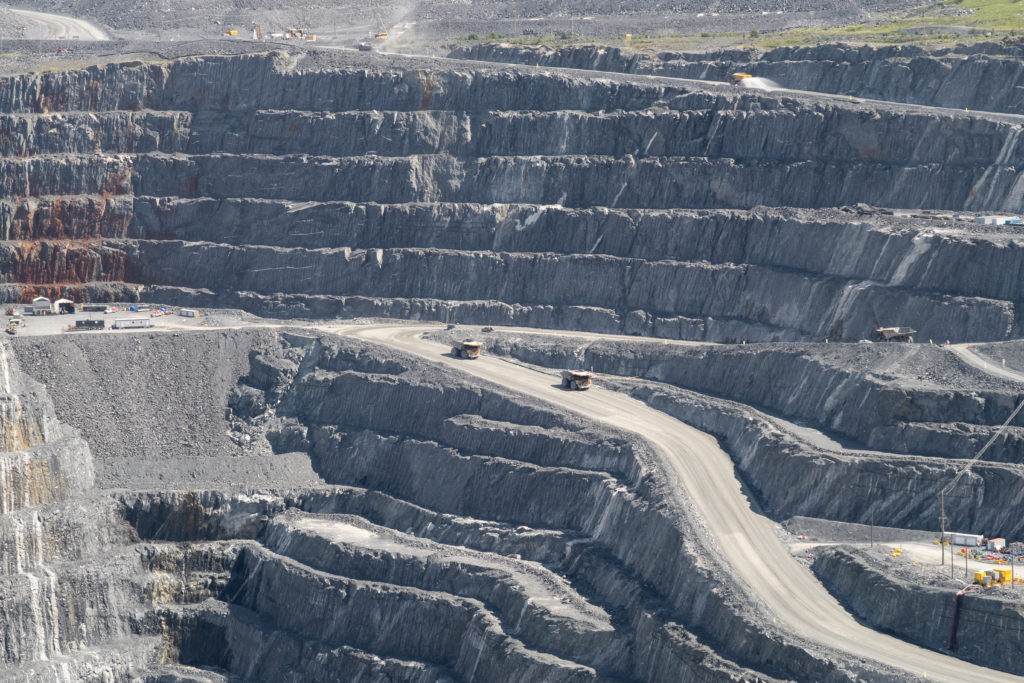
Political considerations are increasingly taking precedence over economic priorities, with a growing emphasis on control and influence that often comes at the expense of long-term economic resilience. For example, major mineral projects in Canada often face extended timelines, where regulatory complexity and evolving political priorities delay development well beyond normal investment timelines. Against this backdrop, one financial innovation that has gained traction in recent decades is the debt-for-nature swap. These arrangements offer a triple win for creditors, debtors and the environment, and numerous transactions have demonstrated their effectiveness. For example, Ecuador restructured more than US$1 billion of debt in 2023 in exchange for long-term funding commitments for marine conservation in the Galapagos Islands. Yet, a parallel opportunity has gone largely unexplored.
Urban populations are often disconnected from resource extraction, particularly in northern regions of Canada. The opening or closure of a mine can feel remote, even though modern life depends fundamentally on minerals. Hospitals, schools and most forms of infrastructure are built on them. As we have asked before, what have you done today that did not involve a mineral? This disconnect remains a significant communications challenge for the mining sector, which continues to face questions about public credibility, while communities focus on economic opportunity, quality jobs and whether their regions have a sustainable future. At the same time, governments face a growing and unavoidable issue in public debt. Whether paid today or deferred to future generations, the burden is substantial and raises concerns about long-term economic stability.
Mining companies already contribute to communities through taxes, sponsorships, partnerships and investments in public facilities, ranging from community infrastructure to cultural, educational and local development initiatives. However, these contributions are typically discretionary and often viewed as part of corporate social responsibility or community engagement. While these efforts are important, they are not typically integrated into a broader financial framework that addresses public debt and long-term infrastructure needs. A complementary financial framework is proposed to address both challenges. Debt for Minerals Swaps, or D4MS, would evaluate and structure agreements based on three criteria: debt volume, discount achieved and tangible human, social and environmental outcomes. By linking debt relief to visible public benefits, well-designed swaps can create funding streams for economic development while also contributing to the reduction of broader public debt burdens. These benefits may include investments in infrastructure, health care, education and community resilience, all areas increasingly strained by rising debt obligations.
As health care costs rise and fiscal pressures intensify, governments are being squeezed between servicing debt and investing in the future. While no single solution will resolve this tension, D4MS offers a mechanism to address both challenges simultaneously. A D4MS transaction involves a conditional reduction of government debt in exchange for a resource company committing to invest in domestic mineral exploration, development and production. A distinguishing aspect of this approach is the potential integration of legal personhood for mineral deposits (published in this publication in the August 2025 issue, page 55), whereby the deposit itself becomes a legal entity that provides a form of surety within the transaction.
Land designated for development could be classified as a “mineral park,” a defined project area that includes access and supporting infrastructure and, in some cases, may be structured to provide long-term, secure tenure for the operator. The aim would be to create a clear and integrated framework that aligns resource development with associated infrastructure and public benefit outcomes. Within this framework, D4MS agreements would be tied to specific public assets such as hospitals, schools, bridges, water treatment facilities or Indigenous-led projects. This direct linkage ensures that the benefits are visible and meaningful to the public, helping to strengthen support for resource development.
To align incentives and reduce risk, permitting timelines would need to be more predictable. If approvals are delayed, financial penalties could apply, or the company could receive ownership interest in the associated public asset. In return, companies would assume borrowing costs for the facility, potentially offset by negotiated tax adjustments. These commitments could also strengthen access to bankable financing for mining projects. Additional features might include tax credit treatment, eligibility as charitable contributions and requirements to use domestically produced minerals in associated infrastructure projects. The framework could potentially align with broader national interest and/or security initiatives such as large-scale project funding or sovereign-level investment strategies.
Indigenous participation would be essential. First Nations should be able to participate where mineral resources fall within their traditional territories or where infrastructure projects align with their community priorities. This includes opportunities for co-ownership and shared management of both resource and infrastructure assets. Risk must be clearly defined. If a government fails to meet its obligations, the company may receive compensation or partial ownership in the facility. If a company defaults, the government retains the asset, and no repayment is required. Once facility debt is repaid, ownership and management could transition into a joint arrangement with shared responsibilities.
Creditors may also play a role by selling debt at a discount to participating companies, while banks and institutional investors could support the structure through blended or philanthropic capital.
The primary barrier to implementing a D4MS model is time. Complex negotiations between governments, companies and other stakeholders can delay agreements, often beyond favourable market conditions. In rapidly changing sectors such as critical minerals, the window of opportunity can close before deals are finalized. Debt for Minerals Swaps represent an evolution in both financial and resource policy. By aligning fiscal responsibility with tangible public outcomes, this framework offers a path to reduce public debt, enable responsible resource development and deliver visible economic and social benefits. At its core is a simple reality that modern society depends on minerals, yet our financial systems have not fully reflected this dependence.
A financial framework for Debt-For-Minerals-Swap will be presented in the September edition of the Canadian Mining Journal.
Bruce Downing is a geoscientist based in Langley, B.C. Donna Beneteau is an associate professor in geological engineering at the University of Saskatchewan (USask). Carlos da Costa, PhD, is an adjunct professor of finance at the University of British Columbia (UBC) and a seasoned financial professional.
Related Posts
Stormlands lifts Clarence Stream valuation 52.8% in new model
September 14, 2026
Stormlands lifts Clarence Stream valuation 52.8% in new model

Komatsu, SMS tapped to supply $1.5B-fleet to Crawford project
September 14, 2026
Komatsu, SMS tapped to supply $1.5B-fleet to Crawford project
Canada courts $1 trillion with mining at centre of pitch
September 14, 2026
Canada courts $1 trillion with mining at centre of pitch

Beyond the walk-around: Building a rotary drum inspection protocol that prevents downtime

KROHNE releases two new radar level transmitters
September 11, 2026
Comments