What Canadian mining companies need to know to operate in Latin America
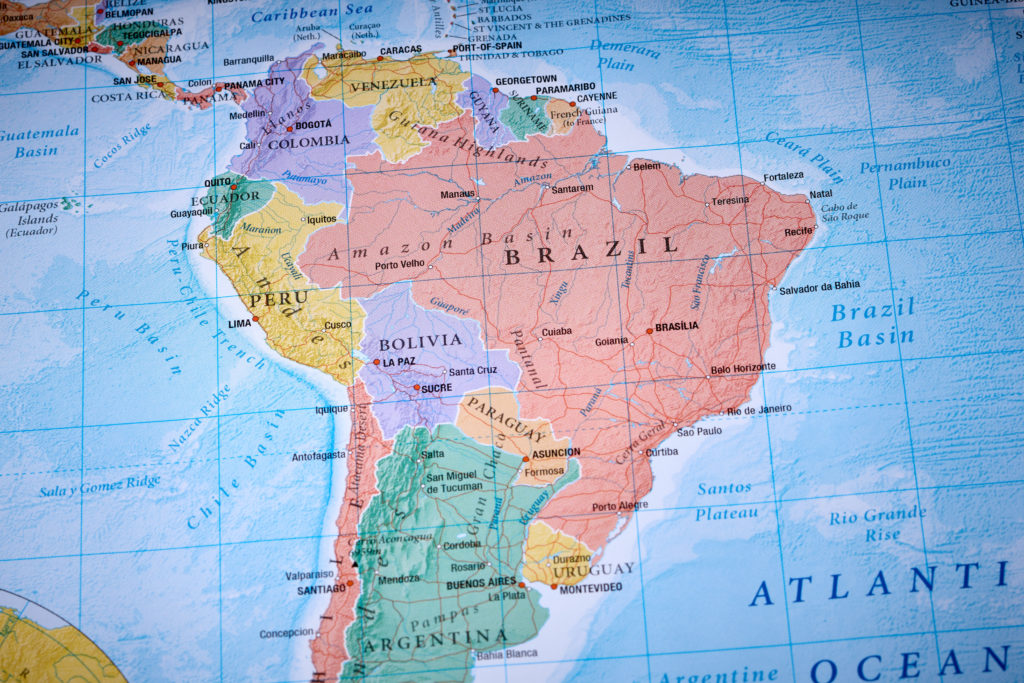
As a Brazilian living in Canada and working in the mining sector, I am familiar with several important aspects of Canadian mining operations in Latin America that are sometimes overlooked. Central and South America present distinct challenges and complexities that can be identified and managed throughout a mining project, from exploration to mine closure. Although there are many factors to consider — including regulatory issues, complex systems, corruption and political instability — I will focus on the areas I address daily as a mining consultant: ESG, social licence to operate, Indigenous peoples’ rights and corporate reputation.
First, let’s remember that Latin America brings together strategic countries for mining, with abundant reserves, including their potential in minerals critical to the energy transition. Canadian mining companies are obviously aware of these expansion opportunities and are likely to occupy a prominent place in the future scenario, since Canada is already one of the largest global financial and corporate centres of mining. The major Canadian players listed on the exchanges have operations in countries such as Brazil, Mexico, Ecuador, Peru, Guyana, Chile and Argentina, and numerous junior companies raise investments with new projects in these territories and others.
However, to operate in Latin America successfully, investments, technical excellence and regulatory compliance are not enough. It is necessary that these companies have a deep knowledge of the social and human aspects linked to the business, understanding historical, cultural, social dynamics and, often, conflicts that afflict a large part of the host communities of mining projects, especially in the Andes and Amazon regions.
Social licence is as important as environmental licence
Comparing mining in Canada with Latin American countries, we can highlight some common aspects, such as the relevance of existing projects, because of the large natural reserves, and the experience in dealing with business-sensitive issues, such as Indigenous communities. However, there is a fundamental difference in operations in these countries: Latin America faces important social differences, with unrepaired historical inequalities, tensions related to land issues, intense conflicts related to drug trafficking, illegal logging, and artisanal mining that significantly compromises natural reserves and threatens the lives of Indigenous peoples and local communities. In addition, institutional fragility compromises the execution of projects designed from the point of view of Canadian structures, which are more mature and predictable.
It is a fact that, in Canada, the relationship between mining companies and Indigenous peoples considers formal consultation processes, community benefit agreements, hiring of labour and reconciliation policies. All this in a more stable political environment than in Latin America, where personal and collective interests are often mixed in political, legal and social representation spheres. In the case of the Andes and the Amazon, for many Indigenous peoples, territory does not only represent land or economic asset: it represents identity, ancestry, spirituality and culture. By disrespecting this connection, companies can face embargoes, international repercussions and stoppages.
The scenario is much more challenging. It is necessary, in a short line of reasoning, to map the critical issues of the territory and the stakeholders that are directly related to the area of influence and can compromise the future of the projects; and develop, from the exploratory phase, a strategy for managing and engaging these audiences, with a willingness to engage in a dialogue aimed at the collective construction of solutions. Issues related to the rights of Indigenous peoples, as well as the basic need for development of neighboring communities, should not be treated as a one-off demand, but an integral part of the strategy of a sustainable business, with concrete legacies for society.
When there is no such understanding, it is not uncommon to see projects being barred for social issues and not just environmental or regulatory ones. In some situations, those responsible for this embargo are opportunists who take advantage of the fragility of neighboring communities and “talk” to them before the mining companies, reporting a biased history of mineral exploration and wealth extraction of which they, the communities, are not a part. In addition to these discourses, public opinion is also influenced by environmental tragedies linked to mining companies. As a result, we have witnessed protests and lawsuits that affect the viability of the business and the reputation of companies, generating delays and financial losses on the stock exchanges. Having a good image construction in Canada does not guarantee anything when talking about remote territories in Latin America, where no one knows or has heard of foreign companies.
How, then, should companies address sensitive social issues that extend beyond legal compliance and the protection of biodiversity? Based on my experience working on complex projects in the Amazon rainforest and addressing the challenges outlined above, engaging host communities and developing a strategy for building relationships with key stakeholders are not enough. Companies must also know how to communicate effectively.
In this sense, I have seen that a good dialogue can and should be made by local agents, who deeply understand their specificities and have “free” transit to dialogue with stakeholders, establishing relationships of trust between the company and the affected communities.
In this sense, it is necessary to have strong local teams, with professionals specialized in social issues and experience in conflict management. It is necessary, in the company’s strategic planning, to include long-term management and stakeholder engagement plans, with continuous participation of community leaders and other agents involved. It is necessary to effectively have operational transparency and adapt to the local reality to move forward in terms of negotiation and social performance.
ESG, social performance and the collective construction strategy
When it comes to Latin America, robust ESG standards are basic and non-negotiable requirements to guarantee the operating licence, given the environmental sensitivity and social complexity of mining regions. A solid reputation involves the incorporation of internally recognized frameworks, such as GRI, ISSB/IFRS Sustainability and ICMM. However, it is necessary to adapt these international standards to the demands of the territory, which requires understanding the mined regions. Beautiful marketing campaigns and superficial social programs are not enough, which do not effectively respond to local needs.
In some social performance projects of Canadian companies in Brazil, I realized how important it is to have people from the communities acting directly in the relationship strategies with stakeholders, but in a guided way and with systematized and analyzed data collection. Field data is critical for decision-making. Often, based only on socioeconomic data from the region, companies tend to infer: the local community needs renovations in the local school or health center. However, when talking to leaders and key members, we found that the priority demands are different — sometimes much simpler and easier to meet.
What makes a social strategy effective is the constant dialogue with the stakeholders mapped at the beginning of the process and who must be updated throughout the project in order of influence and priority. Zones of tension and conflict can be avoided when dialogue is open and when listening is active. It is not enough for a manager to sit at his computer and think he knows everything that is happening in the field, even though he has all the data. It is necessary to follow in person, look into the eyes of people in the communities and help build lasting partnership relationships. This proximity is essential for the company to establish pillars of credibility and corporate reputation.
It is worth noting that Latin America is not a homogeneous bloc. What applies to one community in Peru is not what makes sense to another in Mexico. It is necessary to understand the specificities and needs of each one, however, keeping in mind international ESG standards, the best practices of socio-environmental responsibility and respect for human rights. Basically, it is necessary to put into practice what every human being wants: presence, transparency, security and opportunity for growth. Development must be inclusive, the construction of solutions must be collective and the distribution of value must be shared. The idea of wealth extraction and evasion increasingly faces social resistance. The future of mining is relational.
Flavia Fonseca is a Corporate Communications and ESG professional. Email flaviasmfonseca@gmail.com to exchange ideas.
Related Posts
Caudalosa mine restart evaluated as as Silver Mountain reports 569 g/t silver hit
Sponsored video: Atex eyes Valeriano starter mine in Chile
October 20, 2026
Sponsored video: Atex eyes Valeriano starter mine in Chile
Bravo buys Canaã copper property, plans drill program
October 20, 2026
Bravo buys Canaã copper property, plans drill program
Metso to buy Italbronze to strengthen crushing tech aftermarket growth
Copper surplus masks looming $332B mine shortfall
October 20, 2026
Comments