Northcliff Resources’ (TSX: NCF; US-OTC: NCFFF) new feasibility study for the Sisson tungsten-molybdenum project in New Brunswick puts its post-tax value at […]
Northcliff Resources’ (TSX: NCF; US-OTC: NCFFF) new feasibility study for the Sisson tungsten-molybdenum project in New Brunswick puts its post-tax value at more than four times the cost to build it, compared with less than one times initial capital in a study 13 years ago.
The updated study estimates a $6.9-billion (US$4.98-billion) post-tax net present value (NPV) at an 8% discount rate against initial capital of $1.53 billion, for a 50% internal rate of return and 1.6-year payback, Northcliff said Aug. 31. The 2013 study put post-tax NPV at $418 million against $579 million in initial capital, with a 16% return and 4.5-year payback.
“Metal prices, particularly for tungsten, have increased since 2013, and the change in exchange rate have improved the financial results,” President and CEO Andrew Ing said in a release. “Increases in inflation and provincial tax rates since that time have increased capital and operating costs and income taxes.”
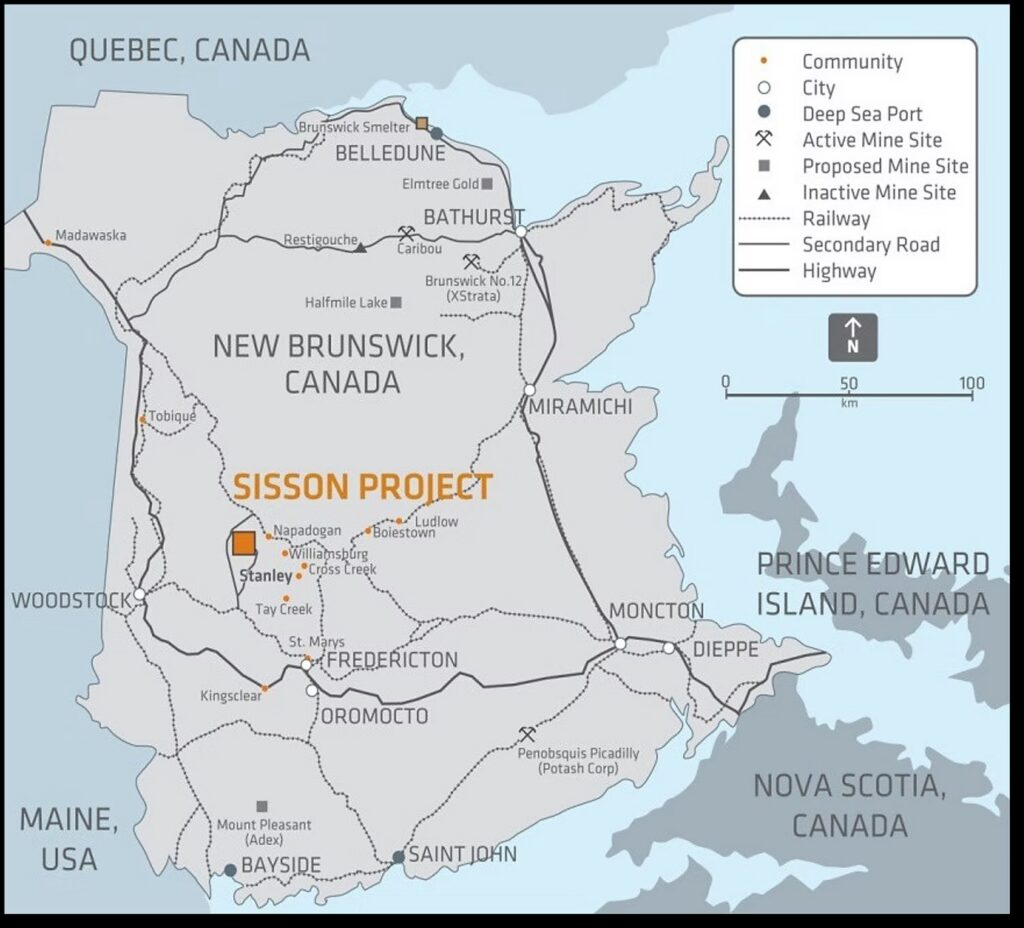
Sisson, about 100 km by road northwest of Fredericton, was fast-tracked by Ottawa to its Major Projects Office in November as Canada seeks to rebuild domestic tungsten supply. At planned output, the mine could supply roughly a quarter of current tungsten mine production outside China, which dominates world supply. The project has major federal and provincial environmental approvals and received US$15 million from the U.S. Department of Defense and $8.2 million from Ottawa last year.
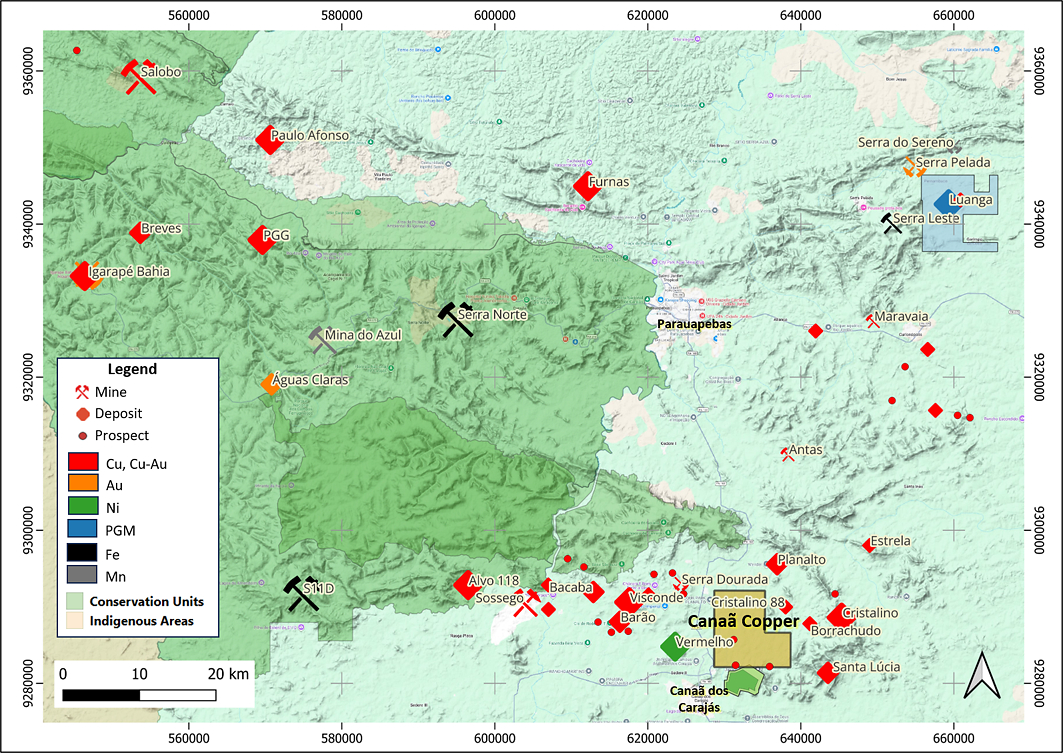
Map courtesy of Northcliff Resources.
Major new supply
The 27-year open-pit operation would process 30,000 tonnes per day and produce an average 598,000 metric tonne units, or mtu, of tungsten trioxide annually, plus 4.2 million lb. of molybdenum. Higher-grade material in the first five years would lift tungsten production to an average 767,000 mtu annually.
An mtu represents 10 kg of tungsten trioxide. Sisson’s average output therefore equates to 5,980 tonnes of tungsten trioxide, containing about 4,740 tonnes of tungsten metal.
China produced an estimated 67,000 tonnes of tungsten last year out of 85,000 tonnes globally, or 79%, according to the U.S. Geological Survey. That leaves about 18,000 tonnes of mine production outside China, making Sisson’s planned average output equivalent to about 26% of current non-Chinese supply.
During its first five years, Sisson’s planned 767,000 mtu of annual tungsten trioxide production equates to about 6,080 tonnes of contained tungsten, or 34% of current mine output outside China.
Canada has produced no tungsten since its last mine closed in 2015, according to the Major Projects Office. Tungsten’s hardness and heat resistance make it important for cutting tools, steel alloys, aerospace applications, military munitions and protective equipment.
Tungsten reset
Sisson’s new economics reflect a dramatic shift in the tungsten market as well as a change in what the mine would produce. China imposed export controls on selected tungsten products in February 2025, helping push prices sharply higher outside the country.
European tungsten concentrate was assessed at US$2,400 to US$2,600 per dry mtu in mid-August, Argus said, even after prices began retreating from record levels. That remains well above the new Sisson study’s forecast of US$1,520 per mtu in 2030, rising to US$1,765 in 2035 and US$1,880 from 2040 onwards.
The 2013 study assumed US$350 per mtu for ammonium paratungstate, or APT, and included a plant at Sisson to convert tungsten concentrate into the intermediate product. The new plan would instead sell tungsten concentrate directly.
Northcliff said an Argus market study concluded that tight concentrate supplies, including increased Chinese imports of concentrate, make that product preferable in the current market. The company is retaining the option of adding APT production later.
Initial capital has increased 164% since the 2013 study. Northcliff attributed the increase to inflation, higher provincial taxes and changes to the mine plan, tailings facility and other infrastructure. Removing the APT plant partly offsets the increases, the company said.
Reserves grow value
Proven reserves total 85.6 million tonnes grading 0.079% tungsten trioxide and 0.025% molybdenum, containing 6.8 million mtu of tungsten trioxide and 47.8 million lb. of molybdenum. Probable reserves add 191.2 million tonnes grading 0.073% tungsten trioxide and 0.021% molybdenum, containing 13.9 million mtu and 90.6 million lb., respectively. The reserve estimate is effective Aug. 11.
Measured and indicated resources, which include reserves, total 421.6 million tonnes grading 0.063% tungsten trioxide and 0.020% molybdenum, containing 26.6 million mtu of tungsten trioxide and 185.9 million lb. of molybdenum. Inferred resources add 182.9 million tonnes at 0.048% tungsten trioxide and 0.020% molybdenum, containing 8.8 million mtu and 80.6 million lb., respectively. The resource estimate is effective Dec. 31, 2025.
The mine would require about 500 workers during its two-year construction and employ about 300 during operations. Northcliff estimates it would generate $19.9 billion in post-tax undiscounted cash flow and $14.5 billion in taxes and royalties over the mine life.
2030 start
Northcliff plans to move into basic engineering while arranging project financing and preparing orders for long-lead mining equipment. Ing said the company is working towards a construction decision in the latter part of 2027 and production in 2030.
That schedule is later than the January 2027 final investment decision New Brunswick Natural Resources Minister John Herron cited in February in an interview with The Northern Miner. At the time, Herron said permitting was in good shape as Northcliff worked to satisfy conditions attached to its environmental assessment approvals.
New Zealand’s Todd Corp. owns 82% of Northcliff after converting a loan into shares last month. Northcliff in turn owns 88.5% of the Sisson partnership, while a Todd subsidiary holds the other 11.5% directly.
Northcliff shares closed 22% higher at 36¢ on Tuesday, the first trading day after the study was released. The company has a market value of about $227 million.

Comments