SuperCritical Materials Corp. has partnered with the University of Michigan to test whether its uranium-from-seawater technology can withstand the mechanical demands of industrial-scale offshore deployment.
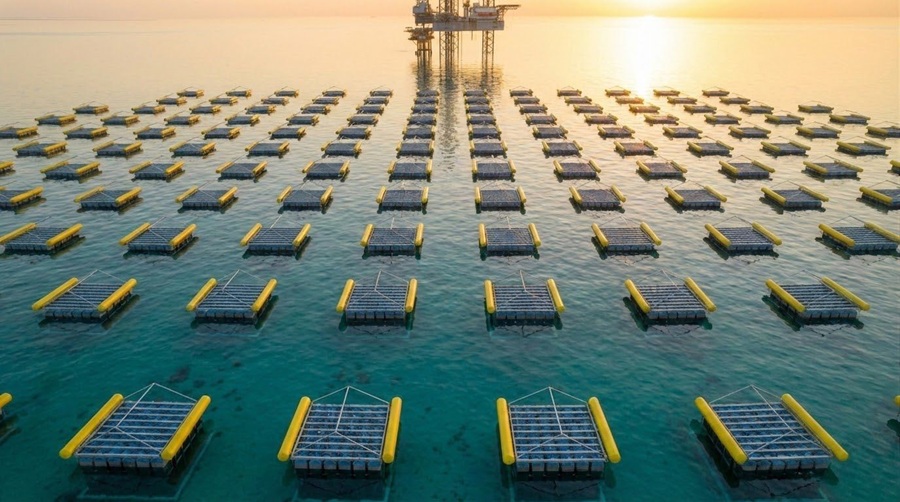
The research will focus on the mechanical design, prototyping and testing of systems using SuperCritical’s licensed adsorbent technology, which captures dissolved uranium as seawater passes across its surface. The material is retrieved after a defined exposure period and processed to recover the uranium.
“This collaboration combines SuperCritical’s technology and development program with the University of Michigan’s expertise in offshore system design, hydrodynamics and experimental validation,” Dr. Maha Haji, research lead, assistant professor of mechanical engineering at the University of Michigan and director of the symbiotic engineering and analysis laboratory said. “Together, we are working to develop part of the fuel layer needed to support clean, firm energy through the next century.”
The partnership comes as the US looks to expand and strengthen domestic nuclear-fuel supply and reduce its reliance on foreign uranium supply.
SuperCritical aims to be part of the US nuclear-fuel supply chain through its nearshore development program that is engineering industrial-scale and cost competitive design for uranium extraction from seawater, as oceans contain 4.5 billion metric tons of dissolved uranium.
The work moves Supercritical’s adsorbent material method towards a key engineering challenge: determining whether large quantities of the material can be deployed, exposed to seawater and recovered repeatedly and efficiently under marine conditions.
The research
The University of Michigan research program will examine how SuperCritical’s adsorbent behaves under different mechanical stresses such as packing, deployment, ocean exposure and retrieval.
“Extracting critical materials from the ocean requires more than a high-performing absorbent,” Dr. Haji said. “It requires an offshore system that can operate efficiently, reliably and responsibly under demanding marine conditions.”
Testing is expected to take place at the University of Michigan’s Aaron Friedman Marine Hydrodynamics Laboratory, which includes tanks capable of simulating waves, currents and other marine conditions in a controlled environment.
"The question is whether the adsorbent can be deployed, exposed and retrieved efficiently and repeatedly at industrial scale,” said Alexander Canon Bryan, president and CEO of SuperCritical Materials.
The research will proceed in phases, which will mechanically characterize the adsorbent, evaluate packing configurations, develop prototypes, hydrodynamic testing it, and refine systems for future offshore pilot deployments.
Developing and testing systems that can deploy and retrieve large quantities of adsorbent through repeated operating cycles is the next step to then move on to offshore testing.
Results from the University of Michigan program are also expected to inform a future feasibility study aimed at advancing SuperCritical’s system towards an industrial-scale design.



Comments