Customization is key: Tailormade haul truck solutions play a crucial part in sustainability
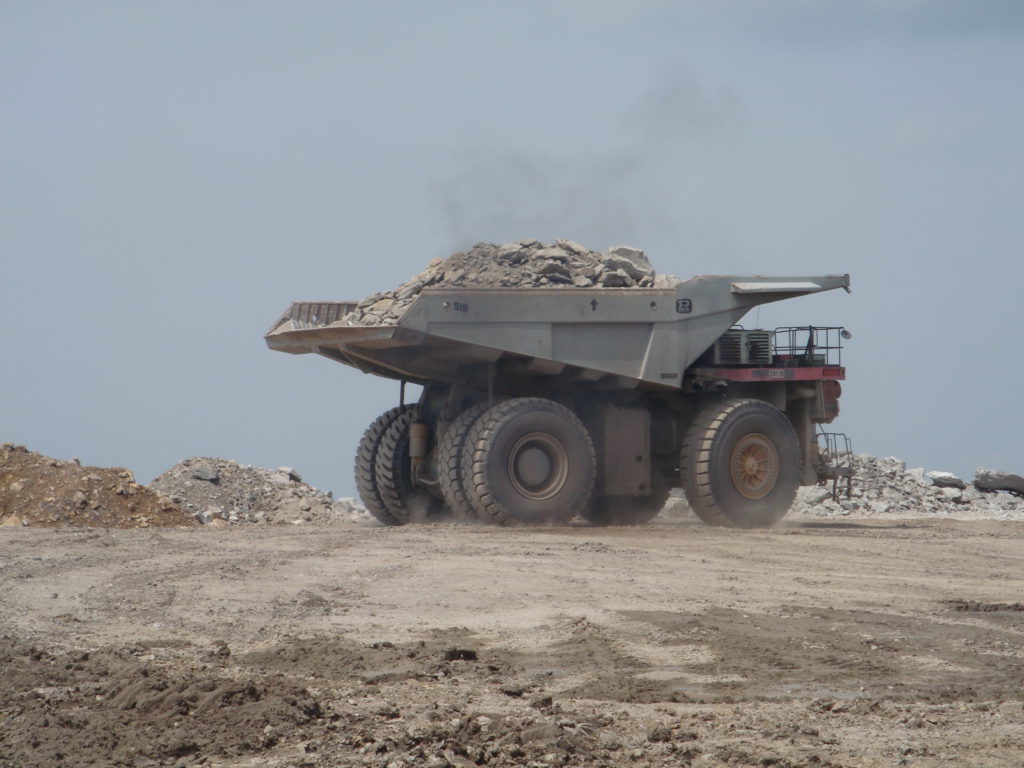
Sustainability. It is not just a buzzword; it is an important consideration for the long-term health of communities, industries and the planet. In mining, equipment choices directly influence operational sustainability, yet one key aspect often flies under the radar: haul truck body components.
Standard haul truck bodies may get material from point A to point B, but they rarely haul at peak capacity, leading to more trips back and forth, more fuel consumed and a less sustainable hauling operation. These hauling inefficiencies combined with where the steel was sourced, the type of material used and excess steel in the body design hinder an operation’s ability to reach its environmental goals. Choosing to opt for custom-engineered truck bodies and water tanks for either new or existing haul trucks can help an operation not only be more efficient, but also more environmentally sound.
More productivity, less emissions
While standard haul truck bodies offer multipurpose, utilitarian benefits, they frequently fall short when it comes to meeting the specific demands of mining operations. A customized truck body, engineered to match the unique characteristics of the material being hauled, the truck’s rated weight and the operation’s goals, can dramatically improve hauling performance. These tailored designs optimize load distribution, reduce spillage and enhance durability, resulting in fewer trips, lower fuel consumption and extended equipment life. For operations looking to increase their hauling efficiency and sustainability, a custom body is not just a luxury; it is a strategic investment.
Enhanced efficiency
An engineered-to-order body design considers each mine’s unique specifications, from material being hauled to make and model of truck to create a body that maximizes payload. By planning for material density and weight, these bodies allow producers to haul the truck’s full rated capacity and carry the greatest amount of material possible with each pass — and each gallon of fuel.
After optimizing the truck’s payload, simply retaining material in the haul truck body has a considerable impact on hauling efficiency and sustainability. Reducing material spillage eliminates the need to constantly deploy support equipment to clear haul roads, reducing fuel emissions and contributing to a more environmentally sound hauling process. Cleaner haul roads also preserve truck tires, minimizing the need for replacements and helping to conserve the resources that go into new tires. Custom bodies are designed to minimize spillage by optimizing the body dimensions and considering site-specific characteristics of the mine. Operations can choose to add a tailgate and sideboards to their standard truck body to reduce spillage but typically opt for a custom body to maximize the hauling efficiency and sustainability benefits.
Considering the entire operation in the body design also ensures the proper dimensions to pair with the site-specific loading equipment, providing a larger loading target to more evenly distribute the material.
Longer lasting
By facilitating a balanced load distribution — one third of the weight on the two front tires and two thirds on the four rear tires — custom body designs extend the life of tires and other key haul truck components as compared to standard body designs. Standard body designs naturally force the bulk of the material toward the front of the body, often resulting in around 40% or more weight on the front tires. This added pressure on the tires, suspension and chassis requires more frequent replacement and the use of more resources for these new spare components.
Durability is a crucial sustainability metric, and it starts with material selection. Some custom bodies are constructed with ultra-high-strength steel with a nominal Brinell hardness of 450 to 500 that features lower points of carbon than most other steels, providing strength and hardness without being brittle in cold-weather climates. By utilizing 500 Brinell steel, a body can be up to 12% lighter with the same strength as if built by 450 Brinell steel. Sure, a fully custom solution that is engineered with the best-quality steel will have a steeper upfront cost. But rather than focusing solely on upfront costs, think about the total cost of ownership. Consider the case of an operation that invested in custom bodies for a West Virginia coal mine. These bodies were installed in 2009, and to this day, still operate at two different coal mines in the U.S. This example speaks of the longevity gained by investing in a tailormade, durably built haul truck body.
The point of durability extends beyond bodies to other custom equipment, like tailgates. Tailgates are often utilized by mining operations that haul liquid tailings as they help contain the liquid while moving. A custom tailgate with high-quality steel can last beyond the haul truck’s lifetime. Some generic tailgates come with a smaller price tag but also the downsides associated with that lesser cost. They are made with milder steel instead of high-strength and will only last a couple years before needing to be fully replaced, making them an unsustainable option in the long term.
Reduced carryback
Carryback is another factor that impacts hauling and fuel efficiency, especially when moving stickier materials such as clay, dirt, mud and fly ash. On every trip, more material builds up in the truck body and is carried back and forth, decreasing volumetric capacity by about 1% each round. If a haul truck is running all day, that number balloons, sometimes up to 50%, meaning more trips needed, more fuel consumed and a less sustainable operation.
To address this, operations can turn to a couple different custom-engineered options. Tailormade bodies reduce material carryback through strategically placed hydrophobic steel liners, along with a high-abrasion liner in the rear third of the floor. This provides high durability when working with abrasive materials and ensures as much material as possible leaves the body during dumping. Another option, a load ejector system, addresses the specific areas of the body where material tends to build up. As the body is in the dump position, load ejector plates slide down and out of the body to eject sticky material. This leaves behind an empty truck bed with its full capacity for the next load.
Upgraded water tanks
The same points about operational efficiency and reducing emissions can be applied to water tanks. Standard water tanks often underutilize a truck’s rated capacity by 20%, requiring additional trips and fuel to haul the same volume. A tailormade water tank allows operations to safely haul water at full capacity, lessening the number of trips needed to effectively control dust on haul roads and stockpiles. Add to that capacity advantage the more focused and durable design implemented in custom water tanks and the benefit is a lifespan of four to five times that of a standard water tank.
In several cases, a purpose-built water tank has operated in various parts of the Americas for over 20 years. One water tank was originally installed about 18 years ago in the U.S. From there, it worked in Canada and eventually Brazil. In its many years of operation, there has been only one parts order for the tank — a new water pump. The structure remains corrosion and rust free.
Sustainable from the start
Operations will quickly notice the gains in hauling productivity and fuel efficiency of custom equipment, and the environmentally friendly contributions begin long before installation in the early design phases. While custom-engineered solutions incorporate a purpose-built design that applies only the required amount of steel for each product, standard OEM truck bodies, owing to their general-purpose design, often incorporate excess steel.
As environmental regulations tighten and sustainability goals increase, greener material choices are entering the market. Some manufacturers have started offering fossil-free and zero-emission steel as an option for haul truck body upgrades. Zero-emission steel reduces the carbon impact before the haul truck hits the road and offers the same benefits in terms of toughness and fit for equipment. While this option currently carries a higher upfront cost, prices are expected to drop as technology advances.
With advances in steel technology, utilizing harder grades of steel reduce environmental impacts, enabling manufacturers to use less steel to build stronger yet lighter and more resource-efficient equipment that lasts longer. The reduction in product weight decreases freight expense of the truck bodies and water tanks to the mine site.
Reach your goals
Sustainability is a continuous journey, and it is never too late to optimize a hauling operation. New solutions do not have to be for a new haul truck. Custom-engineered upgrades can be retrofitted to any make and model of off-highway haul truck in an existing fleet. Every haul truck presents an opportunity to move the sustainability journey forward. From reducing fuel consumption and carryback to maximizing payload, these changes compound into measurable progress.
Josh Swank is Philippi-Hagenbuch’s chief growth officer.
Related Posts

Sponsored video: Canagold nears build decision at New Polaris
October 9, 2026
Sponsored video: Canagold nears build decision at New Polaris

Sponsored video: Westhaven and Dundee eye a new B.C. gold camp
October 9, 2026
Sponsored video: Westhaven and Dundee eye a new B.C. gold camp
The great Canadian white gold rush
October 9, 2026
The great Canadian white gold rush
Canadian mines need an AI decision log before automation scales
October 9, 2026
Canadian mines need an AI decision log before automation scales
Comments