Electrified and automated drilling is reshaping surface mining
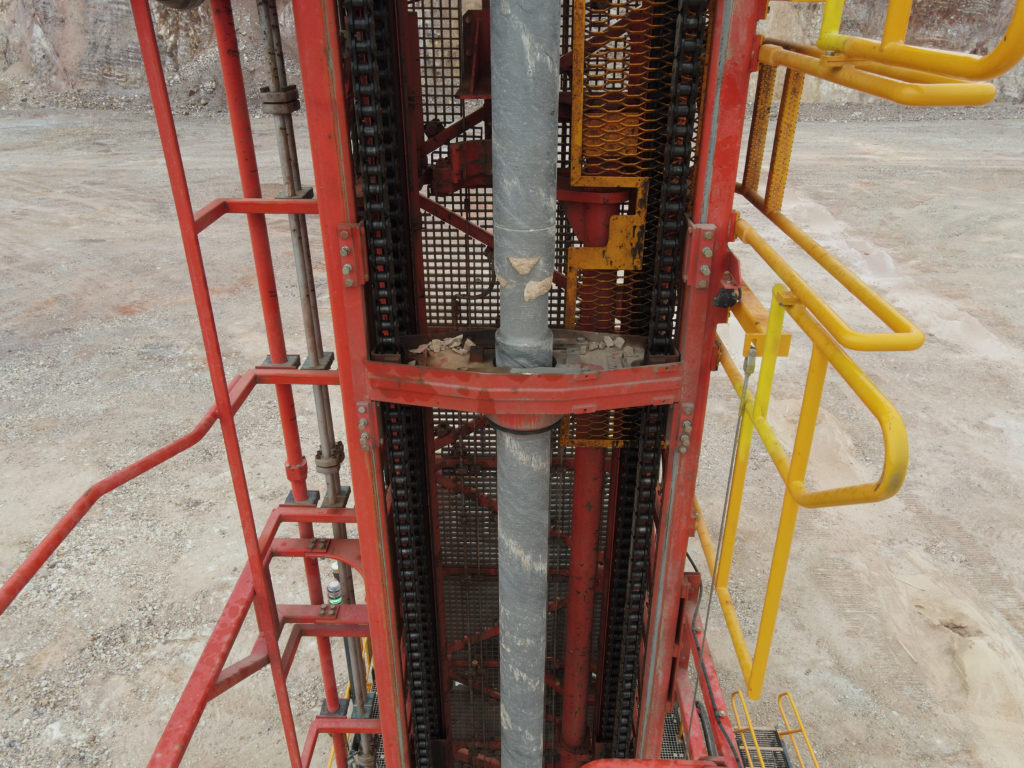
Automation, digitalization and electrification are reshaping how mines plan, execute and optimize drilling activities, while advances in equipment design continue to improve performance and efficiency.
Sandvik has been introducing new technologies aimed at enhancing drill productivity, reducing operating costs and supporting the industry’s sustainability goals. We recently discussed the latest innovations in surface drilling with Nellaiappan Subbiah, product line manager, equipment, and Anu Niittynen, product line manager, digitalization, from Sandvik’s Rotary Drilling Division.
Q: Sandvik recently highlighted its award-winning Alpha 340 drilling system and broader advances in rock drilling technology. How DO SANDVIK’S DRILLING SYSTEMS improve penetration rates, bit life and overall productivity in surface mining?
A: For single-pass drilling applications, Sandvik’s unique Traveling Centralizer — exclusive to our rotary drill range — enables operators to apply maximum weight on bit with confidence. The result is straighter, more accurate holes while protecting drill pipes from damage, significantly extending consumable life. This directly reduces operating costs in surface mining. Powered by Sandvik’s robust chain feed system across all models, the Traveling Centralizer delivers a distinct and unmatched value advantage in drilling performance and efficiency.
Driving smarter performance in rotary drilling, we continuously refine our onboard AutoDrill algorithm using extensive real-world data — from rotation and feed to flushing dynamics. This intelligent optimization maximizes penetration rates, extends bit life, and boosts overall production to meet diverse application demands. With application-specific recipes precisely tuned, the system minimizes operator input, delivering seamless, autonomous drilling performance and consistent results every time.
Q: What level of autonomy is now in demand in rotary drilling fleets, and how is Sandvik integrating digital tools and automation into day-to-day drill operations?
A: Sandvik is responding to the mining industry’s growing demand for higher levels of automation in rotary drilling fleets. Today, customers typically expect at least semi-autonomous functionality, including automated drill navigation, hole positioning, machine leveling and real-time performance monitoring. In more advanced operations, the expectation is moving toward highly autonomous or near fully autonomous drilling, where the operator’s role shifts primarily to supervision and optimization rather than manual control.
Sandvik integrates digital tools and automation directly into its drill rigs and daily operations through advanced machine control systems, onboard sensors and cloud-based data platforms. These technologies enable real-time optimization of drilling parameters, predictive maintenance and improved fleet utilization. The result is more consistent drilling quality, higher productivity and reduced downtime.
In day-to-day operations, connectivity and data-driven workflows are becoming central. Drilling data is shared across systems to support better decision-making, improve blast outcomes and enhance overall efficiency. At the same time, automation features are designed to improve safety by reducing operator exposure to hazardous environments and minimizing variability between shifts.
Q: How do you see electrification influencing the future design of rotary DRILLS in terms of energy efficiency, emissions reduction and mine-site operating costs?
A: Switching to electric removes several standard diesel components, such as filters, cooling packages, exhaust systems and fuel tanks — all of which involve considerable maintenance. This results in a prolonged lifespan for drilling equipment. Moreover, while a diesel engine converts only about 30% to 35% of chemical energy into mechanical energy, a high-voltage electric motor achieves an efficiency of 90% to 95%.
Along with the energy efficiency, the direct carbon emission is significantly reduced with electric drills. Companies that switch to electric power — thereby reducing carbon dioxide emissions — often benefit from receiving electricity at a subsidized rate compared with diesel fuel. This makes the shift more cost-effective.
The electric-powered drills should reduce the total cost of ownership (TCO) markedly compared with diesel-powered drills. TCO refers to the full cost of purchasing, operating and maintaining equipment over its lifetime, including energy, maintenance and replacement expenses. Estimated savings can be up to 15% based on the energy cost, parts and maintenance costs, considering the overall life span of the drill.
Q: What are the biggest drilling challenges facing mine operators today, and where can smarter drilling technology deliver the greatest gains over the next five years?
A: Drilling in mining is currently challenged by increasingly variable geological conditions, labour shortages and growing pressure to improve utilization while reducing downtime. In many operations, large volumes of drilling data are collected but not fully used in real time, which limits optimization. In addition, equipment wear, consumable costs and unexpected breakdowns continue to reduce overall productivity.
Over the next five years, the biggest gains will come from smarter and more automated drilling systems. Real-time sensor data combined with adaptive drilling parameters will allow rigs to continuously adjust to changing rock conditions, improving penetration rates and reducing tool wear. Predictive maintenance will also play a key role by identifying failures before they happen, minimizing unplanned downtime. Finally, the biggest step-change potential lies in optimizing the entire drill–blast–crush chain as a connected system, rather than individual stages, unlocking significant improvements in cost efficiency and throughput.
Related Posts
Metso to buy Italbronze to strengthen crushing tech aftermarket growth
Volvo to launch a mining division to meet global equipment demand
October 19, 2026
Volvo to launch a mining division to meet global equipment demand
Richemont, Signet weigh joining De Beers consortium bid
October 15, 2026
Richemont, Signet weigh joining De Beers consortium bid
Eldorado’s Skouries mine wins EU strategic status
October 13, 2026
Eldorado’s Skouries mine wins EU strategic status
CEMTEC, Eirich partner on industrial grinding solutions
October 7, 2026
Comments